: +86 15874211461
The bond system of a grinding wheel is the critical component that holds the abrasive grains together and determines how the wheel performs. Selecting the right bond type is just as important as choosing the correct abrasive material—it directly impacts material removal rates, surface finish quality, wheel life, and overall grinding efficiency.
In this comprehensive guide, we'll explore the four primary bond types used in modern grinding wheels and help you understand which bond is best suited for your specific applications.
1. Overview of Bond Types
Grinding wheels are classified primarily by their bond type. Each bond system offers unique characteristics that make it suitable for different grinding conditions:
| Bond Type | Bond Strength | Porosity | Best For |
|---|---|---|---|
| Resin Bond | Medium | Low to Medium | High-speed grinding, hard materials |
| Metal Bond | Very High | Low | Precision grinding, long wheel life |
| Vitrified Bond | High | Very High | General purpose, high material removal |
| Electroplated Bond | High | None | Complex shapes, single-pass grinding |
2. Resin Bond Grinding Wheels
Resin Bond Characteristics
Resin bonds use organic resins (phenolic, polyimide, or epoxy) to bond abrasive grains. They are the most commonly used bond type for superabrasive grinding applications.
Advantages:
- Self-dressing capability: The bond wears away gradually, constantly exposing fresh abrasive grains
- High grinding speeds: Can operate at peripheral speeds up to 80 m/s
- Good surface finish: Produces smooth finishes on hard materials
- Vibration dampening: Absorbs vibrations better than rigid bonds
- Versatile: Suitable for wet and dry grinding applications
Limitations:
- Susceptible to heat degradation above 300°C
- Lower stock removal rates compared to vitrified bonds
- Requires careful coolant management
Common Applications:
- Carbide tool grinding
- Ceramic material grinding
- Precision hard part grinding
- Automotive component manufacturing
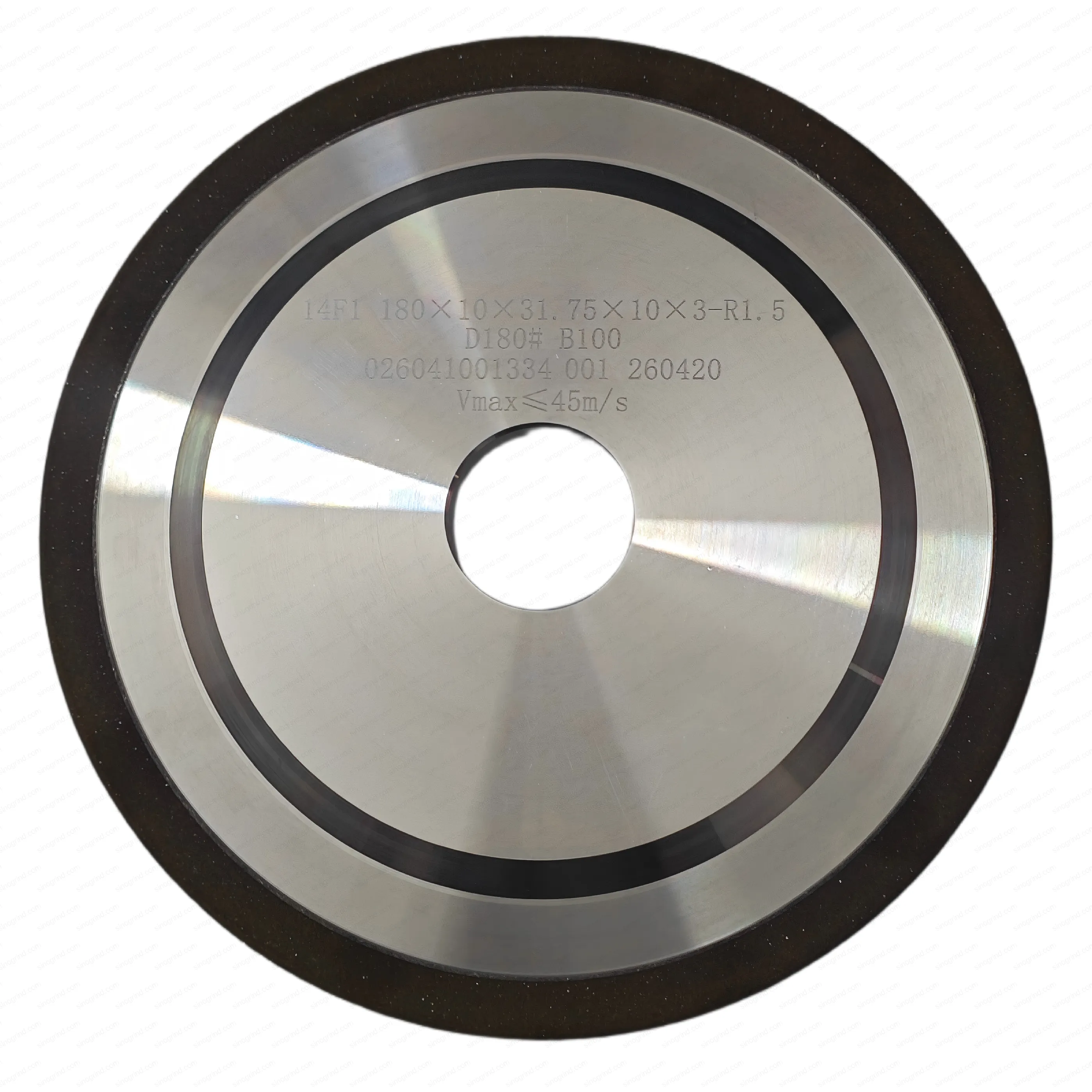
3. Metal Bond Grinding Wheels
Metal Bond Characteristics
Metal bonds use metallic matrices (bronze, copper, or steel) to hold abrasive grains. They offer exceptional durability and precision for demanding grinding applications.
Advantages:
- Extended wheel life: Metal bonds can last 3-5 times longer than resin bonds
- Excellent form retention: Maintains wheel profile for precision grinding
- Superior heat resistance: Withstands high grinding temperatures
- High rigidity: Ideal for precision form grinding
- Good thermal conductivity: Dissipates heat effectively from the grind zone
Limitations:
- Requires more aggressive dressing
- Less forgiving than resin bonds
- Higher initial cost
Common Applications:
- Precision optical grinding
- Ceramic substrate grinding
- Semiconductor wafer processing
- High-volume production grinding
4. Vitrified Bond Grinding Wheels
Vitrified Bond Characteristics
Vitrified bonds use glass-ceramic materials to bond abrasive grains. They offer an excellent balance of cutting ability, wheel life, and surface finish quality.
Advantages:
- High stock removal rates: Open structure allows aggressive material removal
- Excellent coolant flow: Porous structure promotes coolant delivery
- Self-sharpening: Controlled bond breakdown maintains cutting ability
- Versatile: Suitable for a wide range of materials and applications
- Cost-effective: Good balance of performance and wheel life
Limitations:
- More brittle than resin bonds
- Requires proper storage to prevent moisture absorption
- Limited to lower grinding speeds than resin bonds
Common Applications:
- General purpose cylindrical grinding
- Tool and cutter grinding
- Camshaft and crankshaft grinding
- High-production surface grinding
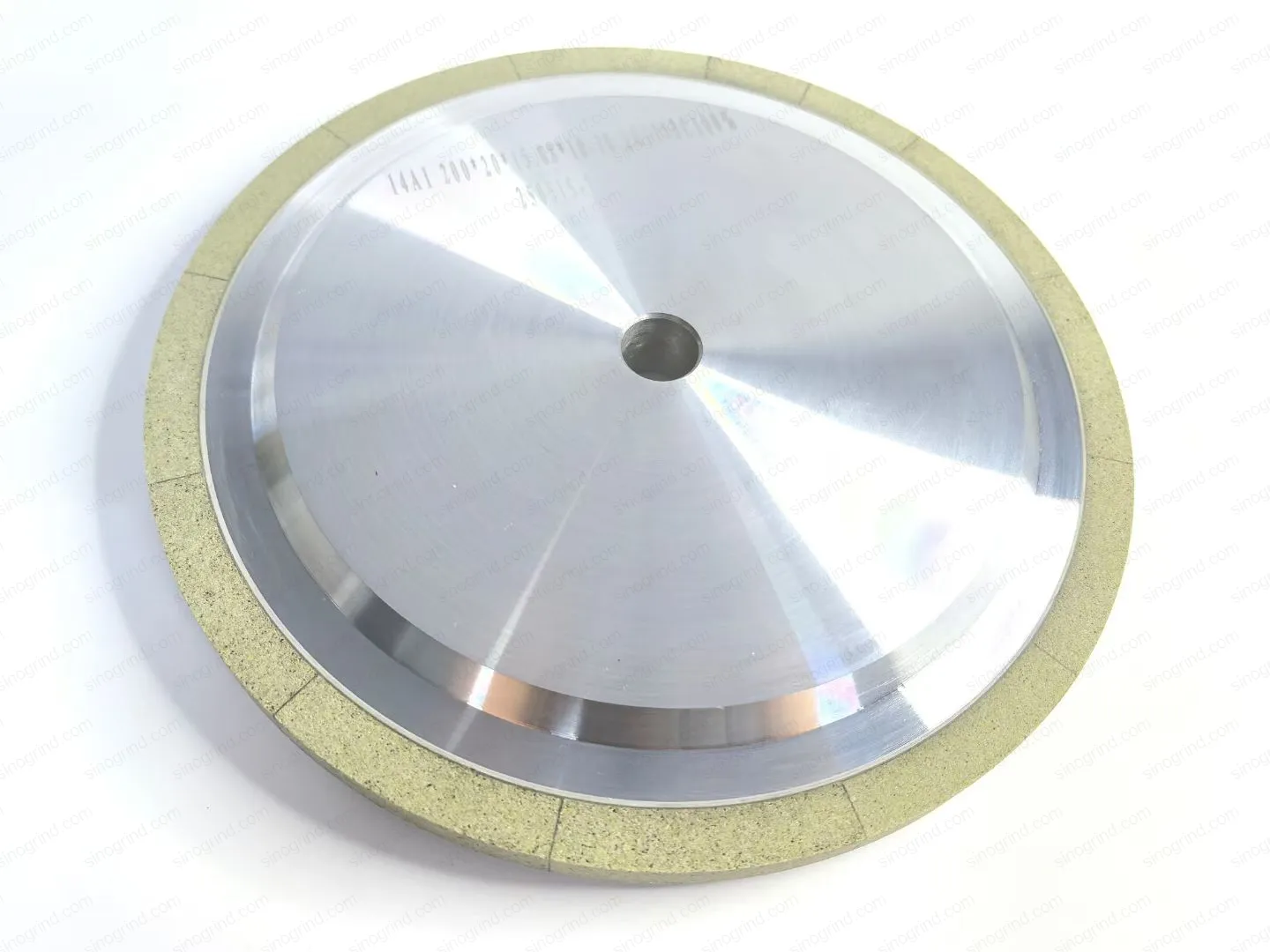
5. Electroplated Bond Grinding Wheels
Electroplated Bond Characteristics
Electroplated bonds use nickel or other metals deposited through electroplating to create a single layer of abrasive grains on a precision mandrel.
Advantages:
- Maximum exposed abrasive: Single-layer design provides highest cutting ability
- Complex shapes: Can be plated into virtually any profile
- No dressing required: Ready to use out of the box
- Consistent performance: Uniform grain distribution throughout wheel life
- Cost-effective for short runs: Lower initial cost for specialized shapes
Limitations:
- Limited wheel life (single layer of abrasive)
- Cannot be redressed
- Less suitable for heavy stock removal
Common Applications:
- Profile grinding of complex shapes
- Groove and slot grinding
- Thread grinding
- Short-run and prototype work
6. Bond Selection Decision Matrix
Use this decision matrix to select the optimal bond type for your application:
| Application Requirement | Recommended Bond | Reason |
|---|---|---|
| Highest precision | Metal or Vitrified | Excellent form retention |
| Maximum material removal | Vitrified | Open structure, aggressive cutting |
| Longest wheel life | Metal | Superior durability and wear resistance |
| Best surface finish | Resin or Metal | Controlled grain exposure |
| Complex profiles | Electroplated | Can be plated to any shape |
| Hard materials (carbide, ceramic) | Resin | Self-dressing, good finish |
| High-volume production | Metal or Vitrified | Long life, consistent performance |
7. Bond and Abrasive Combinations
The optimal bond type also depends on the abrasive material being used:
- Diamond + Resin: Best for carbide and ceramic grinding
- Diamond + Metal: Ideal for precision form grinding of hard materials
- Diamond + Vitrified: Excellent for high-production carbide grinding
- CBN + Resin: Superior for hardened steel and aerospace alloys
- CBN + Vitrified: Best for high-production ferrous material grinding
- CBN + Electroplated: Ideal for complex profiles in hardened steel
Conclusion
Understanding grinding wheel bonds is essential for optimizing your grinding operations. Each bond type—resin, metal, vitrified, and electroplated—offers distinct advantages for specific applications. By matching the bond type to your material, precision requirements, and production needs, you can achieve superior results while maximizing wheel life and cost efficiency.
At SinoGrind, we offer grinding wheels in all bond types to meet your specific requirements. Our technical team can help you select the optimal bond and abrasive combination for your applications. Contact us to discuss your grinding challenges and discover how our expertise can improve your operations.