: +86 15874211461
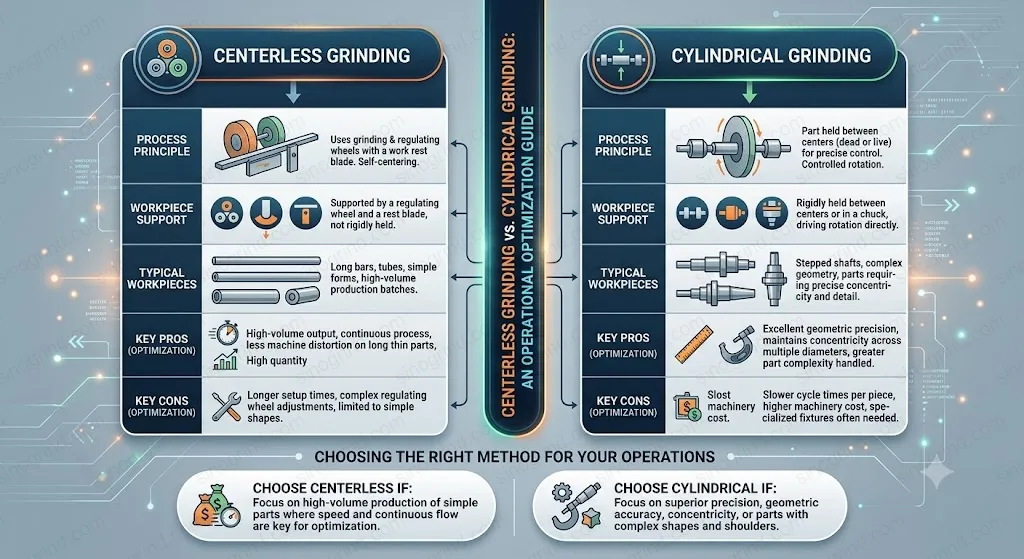
Choosing the right grinding method is critical for achieving optimal results in precision manufacturing. Two of the most common external cylindrical grinding methods are centerless grinding and cylindrical (OD) grinding. While both achieve similar results—precise external diameter surfaces—they differ significantly in setup, capabilities, and ideal applications. This guide helps you understand when to use each method.
What is Centerless Grinding?
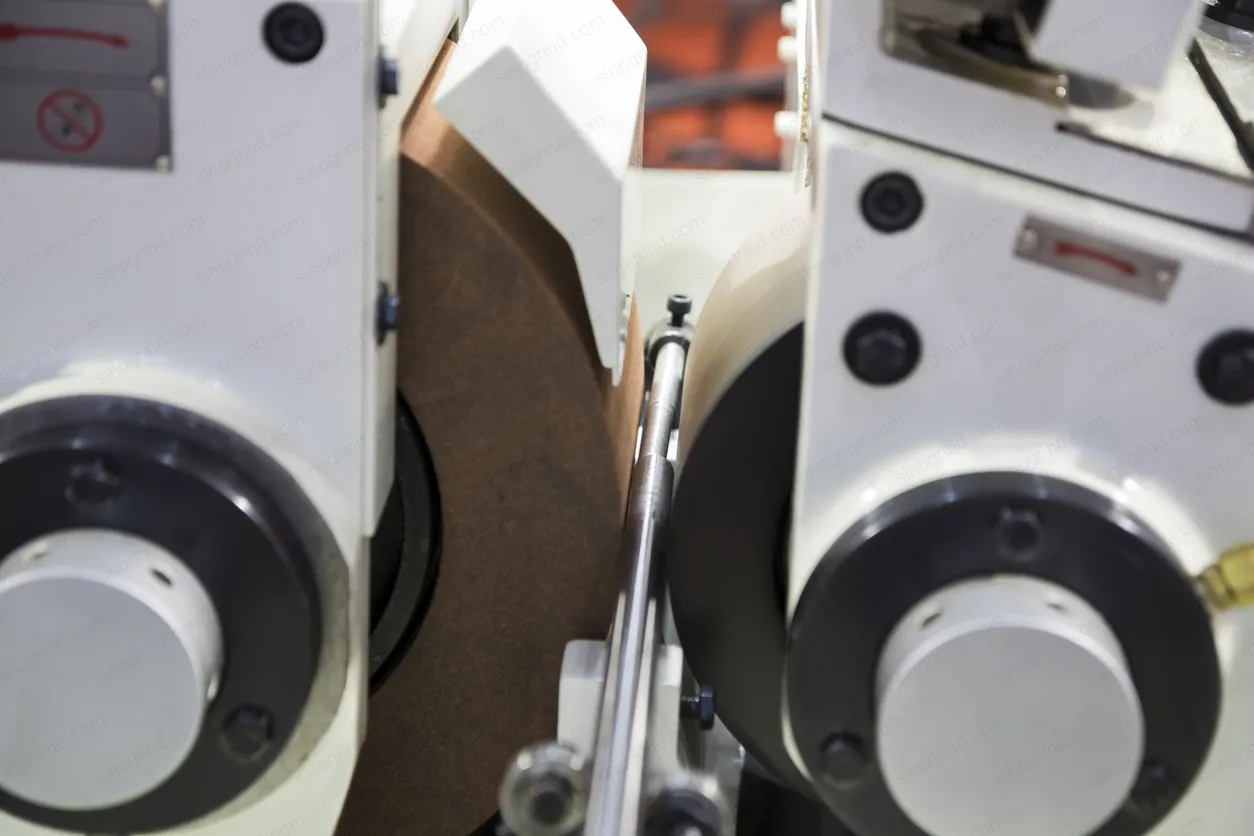
Centerless grinding is a unique process that supports the workpiece between three components:
- Grinding Wheel: The abrasive wheel that removes material
- Regulating Wheel: Controls the workpiece rotation speed
- Work Rest Blade: Supports the workpiece during grinding
The workpiece is not held between centers or in a chuck—it is supported only by the three contact points. This allows for continuous, high-speed grinding of cylindrical parts without the need for center holes or specialized fixturing.
What is Cylindrical (OD) Grinding?
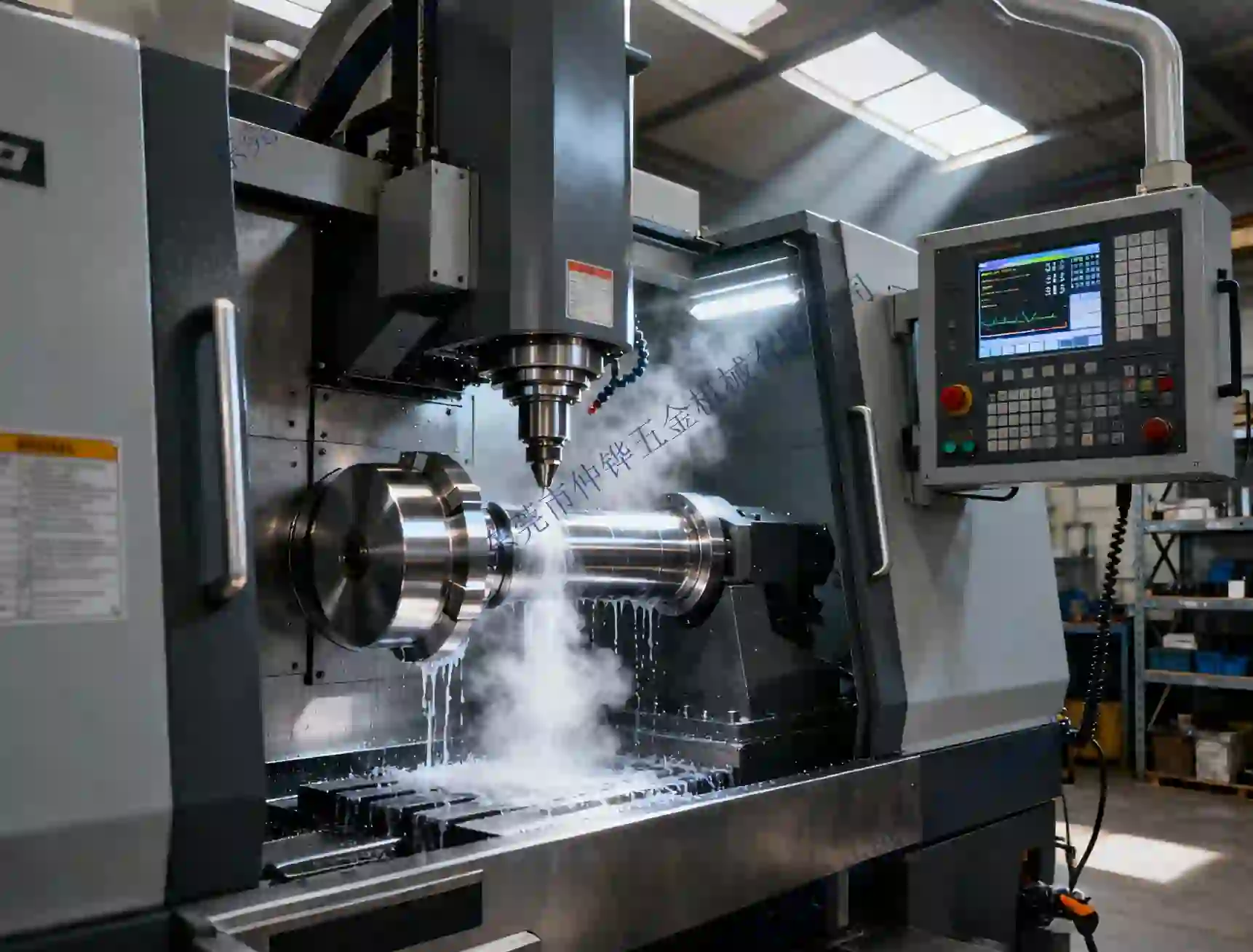
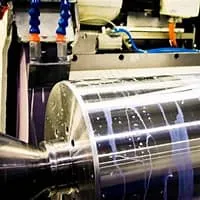
Cylindrical grinding (also called OD grinding) is a more traditional method where the workpiece is held between centers or in a chuck. The workpiece rotates while the grinding wheel traverses along the outer diameter to remove material.
Key Components:
- Workhead: Holds and rotates the workpiece between centers
- Wheelhead: Contains the grinding wheel spindle
- Table: Provides longitudinal traverse movement
Head-to-Head Comparison
| Feature | Centerless Grinding | Cylindrical (OD) Grinding |
|---|---|---|
| Setup Time | Minimal - no centering required | Longer - requires centering and fixturing |
| Production Rate | Very High - continuous through-feed possible | Moderate - one piece at a time |
| Accuracy | Good (±0.001") | Excellent (±0.0001") |
| Surface Finish | Good to Excellent | Excellent to Mirror Finish |
| Workpiece Geometry | Simple cylindrical only | Complex profiles, tapers, shoulders |
| Minimum Length | Can grind very short pieces | Limited by center support |
| Volume Suitability | High volume (1000+ pieces) | Low to High volume |
When to Choose Centerless Grinding
Centerless grinding excels in the following scenarios:
- High-volume production: When you need to grind thousands of identical parts quickly
- Long, slender parts: Shaft, pin, and rod grinding where center support would cause deflection
- Parts without center holes: Workpieces that cannot accommodate center drilling
- Through-feed grinding: Continuous feeding of parts for maximum throughput
- Automated production lines: Easy integration with automated loading systems
Common Applications: Automotive crankshafts, camshafts, piston pins, bearing races, hydraulic cylinder rods, precision shafts, and fasteners.
When to Choose Cylindrical (OD) Grinding
Cylindrical grinding is preferred when:
- Tight tolerances are required: When you need tolerances tighter than ±0.001"
- Complex profiles: Grinding tapers, shoulders, radii, or contoured surfaces
- Small batch sizes: When setup time is acceptable for lower volumes
- Multiple operations: Combining OD grinding with facing, threading, or other operations
- High-precision components: Aerospace, medical, and tool-making applications
Common Applications: Precision shafts, bearing components, hydraulic valves, cutting tools, aerospace components, and medical implants.
"The choice between centerless and cylindrical grinding often comes down to volume, tolerance requirements, and part geometry. Many high-precision manufacturers use both methods for different stages of production."
Making the Right Choice
Consider these questions when selecting your grinding method:
- What is your production volume? (High → Centerless, Low/Medium → Cylindrical)
- What tolerances do you need? (Standard → Centerless, Ultra-precise → Cylindrical)
- Does your part have center holes? (No → Centerless, Yes → Either)
- Do you need complex profiles? (Yes → Cylindrical, No → Either)
- What is your cycle time requirement? (Fast → Centerless, Flexible → Cylindrical)
Conclusion
Both centerless and cylindrical grinding are valuable manufacturing processes with distinct strengths. Centerless grinding offers unmatched productivity for high-volume, simple cylindrical parts, while cylindrical grinding provides superior precision and flexibility for complex components. Understanding the strengths and limitations of each method allows you to optimize your grinding operations for quality, efficiency, and cost-effectiveness.
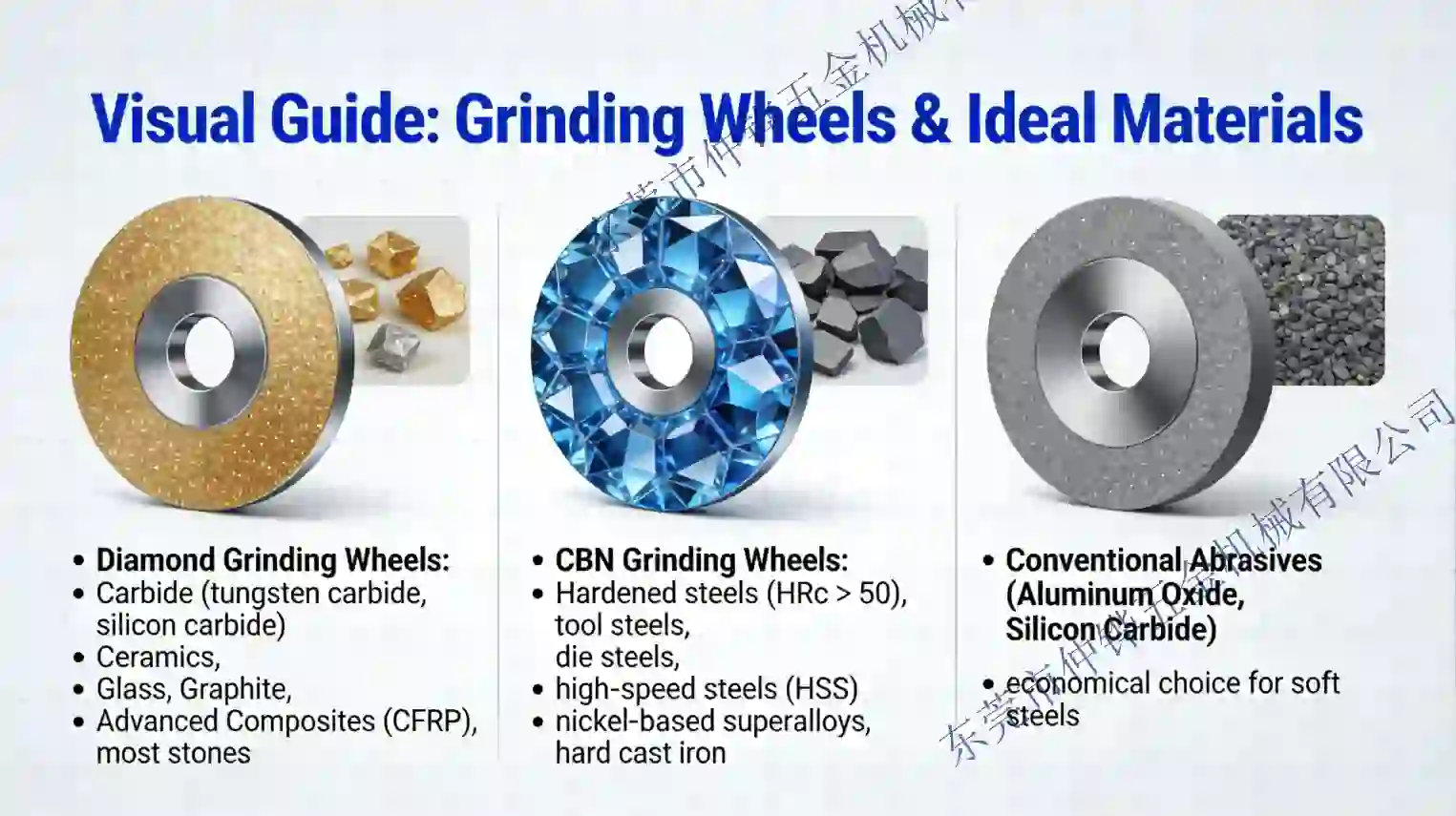
At SinoGrind, we manufacture grinding wheels and accessories for both centerless and cylindrical grinding applications. Contact us to find the right solution for your specific needs.