: +86 15874211461
How to Choose Grinding Wheel
A complete technical guide to selecting the right grinding wheel for your application.
Read MoreGenerate a structured diamond or CBN grinding wheel specification for quotation and technical communication.
A grinding wheel specification is a standardized code that describes every critical parameter of a grinding wheel — abrasive type, grit size, hardness grade, structure, bond, and dimensions. It acts as a universal language between buyers and suppliers, ensuring the wheel you receive matches exactly what your grinding process requires.
When submitting an RFQ (Request for Quotation), a complete and accurate grinding wheel specification eliminates costly back-and-forth, prevents miscommunication, and speeds up the quotation process. The specification generator above helps you build a structured, RFQ-ready code by walking you through each parameter — from wheel type and dimensions to grit size, concentration, and bond. Once generated, you can copy, download, or email the specification directly to your supplier. For deeper guidance on reading and writing grinding wheel specifications, see our grinding wheel specification guide.
Generate a ready-to-send RFQ document for your supplier.
General guidance for matching abrasive, workpiece material, and bond type. This is advisory — always confirm with your grinding wheel supplier.
| Workpiece | Abrasive | Recommended Bond | Notes |
|---|---|---|---|
| Cemented Carbide | Diamond | Resin / Metal | Resin for finishing, Metal for roughing |
| Ceramic | Diamond | Resin / Vitrified | Vitrified for high-precision |
| PCD / PCBN | Diamond | Metal / Resin | Metal bond for heavy stock removal |
| Glass | Diamond | Resin / Metal / Electroplated | Electroplated for profile work |
| Ferrite | Diamond | Resin / Metal | |
| Hardened Steel (HRC 45+) | CBN | Resin / Vitrified | Resin for general, Vitrified for precision |
| Tool Steel | CBN | Resin / Vitrified | |
| HSS | CBN | Resin | |
| Cast Iron | CBN | Metal / Vitrified | Metal for roughing |
| Aerospace Alloy | CBN | Resin / Vitrified | High heat resistance preferred |
This grinding wheel specification generator helps engineers, procurement specialists, and grinding machine operators create standardized specifications for diamond and CBN grinding wheels.
The generated specification code (e.g., D-150-10-31.75-D91-C100-R) is a simplified, project-specific format designed for clear communication between buyers and suppliers. It does not replace any manufacturer's or industry-standard wheel designation system (such as ISO 525, FEPA, or JIS standards).
For grinding wheel grit conversion between FEPA, ANSI, JIS, and micron standards, see the SINOGRIND grit size converter.
This specification generator helps grinding engineers, procurement teams, and abrasive distributors create structured diamond and CBN grinding wheel specifications. The generated specification can be used for quotation requests (RFQs), technical communication, and internal documentation.
A well-structured specification includes all parameters needed by manufacturers: wheel type, application, workpiece material, dimensions, abrasive type, grit size, concentration, bond type, and quantity.
A complete RFQ should include: wheel type (diamond/CBN), application, workpiece material, wheel dimensions (OD × Thickness × Bore), grit size, concentration, bond type, quantity, and any special requirements.
Concentration refers to the amount of abrasive grain in the wheel bond matrix. Standard concentration is 100% (4.4 carats/cm³ for diamond). Higher concentration means more cutting points but reduced chip space.
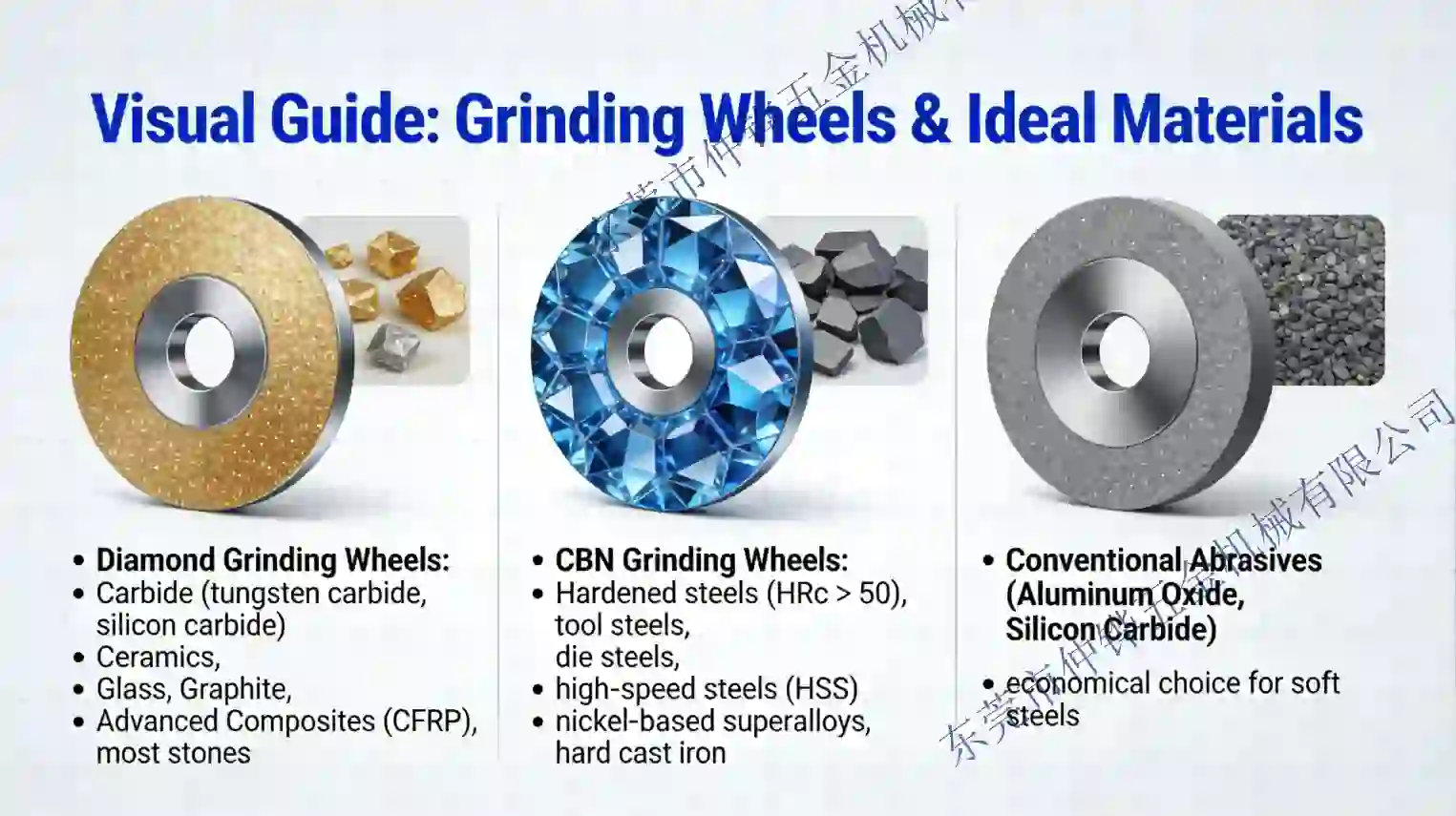
Use diamond for non-ferrous hard materials (tungsten carbide, ceramics, glass, silicon). Use CBN for ferrous materials (hardened steel, cast iron, tool steel). CBN has higher thermal stability for steel grinding.
Generated specifications are preliminary guidance for RFQ communication only. Final wheel design must be confirmed with your supplier based on actual grinding trials.
Specifying a grinding wheel correctly is the single most important step in getting an accurate quotation and a wheel that performs in your process. A complete specification answers five questions: what abrasive, what bond, what shape and size, what grit and concentration, and what operating conditions.
Diamond for non-ferrous hard materials (tungsten carbide, ceramics, glass, silicon, PCD). CBN for ferrous materials (hardened steels above ~45 HRC, cast iron, nickel superalloys).
Resin for fine finishing and tool grinding; vitrified for form retention and dressable precision work; metal for long life on ceramics/PCD; electroplated for complex profiles without dressing.
Always in millimetres. Example: 150 × 10 × 31.75 mm means a 150 mm outer diameter wheel, 10 mm wide, bored to fit a 31.75 mm (1¼") spindle.
Grit controls finish vs. removal rate (finer = smoother); concentration is the abrasive content in the bond layer (C100 = 4.4 ct/cm³ standard).
Tell the supplier your machine type and spindle speed, coolant availability, target stock-removal rate, and cycle-time goals. A wheel specified for a 20 m/s manual surface grinder differs greatly from one running at 50 m/s on a CNC line.
Not sure which values to choose? Generate a draft with the tool above and our engineers will refine it free of charge.
When requesting a quotation from any grinding wheel supplier, include these fields so the manufacturer can quote accurately without back-and-forth:
The code generated by this tool follows the pattern Type-Diameter-Thickness-Bore-Grit-Concentration-Bond. For example:
D-150-10-31.75-D91-C100-R
reads as: a Diamond wheel, 150 mm diameter, 10 mm thick, 31.75 mm bore, FEPA D91 grit (~91 µm), concentration 100, with a Resin bond. Paste this code directly into your RFQ email — suppliers worldwide recognise it.
These tools provide preliminary guidance based on general engineering principles. Every grinding application has unique variables — wheel specification, machine condition, coolant strategy, and process targets. With over 20 years of experience manufacturing diamond and CBN superabrasive wheels, the SinoGrind engineering team can review your application and recommend a wheel tailored to your exact requirements.
Free consultation • Custom wheel specifications • Global shipping
Generated code not enough? Send drawing or your current wheel marking and get quote from a China grinding wheel manufacturer and OEM supplier.
Send drawing or PDF of the wheel or part. We convert application data into grit, bond, concentration, and geometry.
Get quote for a custom grinding wheel with price, MOQ, and lead time from our engineers.
A complete technical guide to selecting the right grinding wheel for your application.
Read More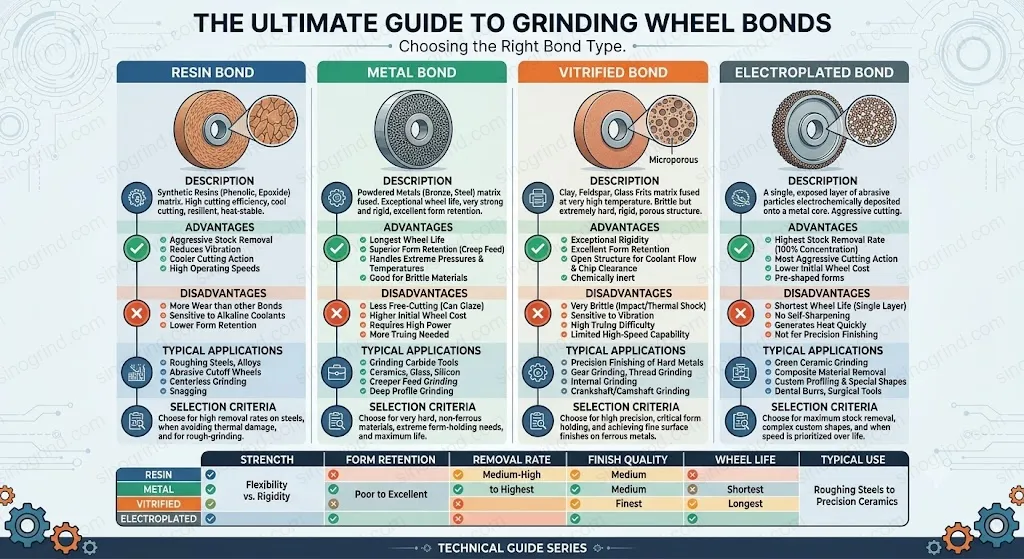
Choosing the right bond type: resin, vitrified, metal, and electroplated.
Read More
Selecting the right grinding wheel for your surface finish requirements.
Read MoreOver 20 years of grinding expertise. Diamond, CBN, and conventional abrasive solutions for precision manufacturing worldwide.