: +86 15874211461

.webp)
.webp)
How to Choose Grinding Wheel
A complete technical guide to selecting the right grinding wheel for your application.
Read MoreSelect and verify basic parameters for superabrasive grinding wheels
Calculating grinding wheel parameters before production is essential for achieving the right balance of material removal rate, surface finish, and wheel life. Surface speed directly affects grinding temperature and wheel wear — running too fast risks thermal damage to the workpiece and premature bond degradation, while running too slow reduces productivity and may cause glazing. Parameters such as depth of cut, table speed, and MRR (material removal rate) determine how aggressively the wheel removes material and how much power the spindle requires. By verifying these values upfront with this calculator, you can avoid costly trial-and-error on the machine, prevent overspeed failures, and ensure your diamond or CBN wheel operates within its optimal performance window.
| Parameter | Recommended Value | Unit | Notes |
|---|
| Parameter | Value | Unit |
|---|
This grinding wheel calculator helps engineers verify wheel parameters, surface speeds, and recommended grinding conditions for diamond and CBN superabrasive wheels. It calculates surface speed in m/s and ft/min, material removal rate (MRR), grinding power, G-ratio, and chip thickness.
The tool provides safety warnings for overspeed conditions and incorrect abrasive-material pairings, making it useful for both initial wheel selection and production parameter verification.
Surface speed (m/s) = π × Wheel Diameter (m) × RPM ÷ 60. For example, a 150mm diameter wheel at 3000 RPM has a surface speed of π × 0.150 × 3000 ÷ 60 = 23.6 m/s.
MRR = Depth of Cut × Wheel Width × Table Speed. It measures how much material is removed per minute, typically in cm³/min. Higher MRR means faster grinding but may affect surface finish.
Maximum safe speed depends on bond type: resin bond ≤35 m/s, vitrified bond ≤60 m/s, metal bond ≤30 m/s, electroplated ≤40 m/s. Exceeding these limits risks wheel breakage. These are typical industry values — always verify against the maximum operating speed printed on the specific grinding wheel.
Flood coolant is recommended for most diamond and CBN grinding operations. It extends wheel life, improves surface finish, and prevents thermal damage. Dry grinding is generally not recommended for resin bond wheels.
To convert wheel surface speed to spindle speed: RPM = (SFPM × 12) ÷ (π × wheel diameter in inches). For example, 4638 SFPM on a 6-inch wheel gives RPM = (4638 × 12) ÷ (π × 6) ≈ 2950.
G-ratio is the ratio of workpiece material removed to grinding wheel volume worn away. A G-ratio of 30 means 30 cm³ of material removed per 1 cm³ of wheel wear. Higher G-ratio means longer wheel life and lower wheel cost per part. Typical values range from under 10 for conventional abrasives to well over 100 for metal-bond superabrasive wheels.
Values provided by this calculator are typical industry estimates for preliminary setup only. Always verify against your machine specifications and the maximum operating speed stamped on the grinding wheel (per EN 13218 / ANSI B7.1). Run a trial grind before production.
These tools provide preliminary guidance based on general engineering principles. Every grinding application has unique variables — wheel specification, machine condition, coolant strategy, and process targets. With over 20 years of experience manufacturing diamond and CBN superabrasive wheels, the SinoGrind engineering team can review your application and recommend a wheel tailored to your exact requirements.
Free consultation • Custom wheel specifications • Global shipping
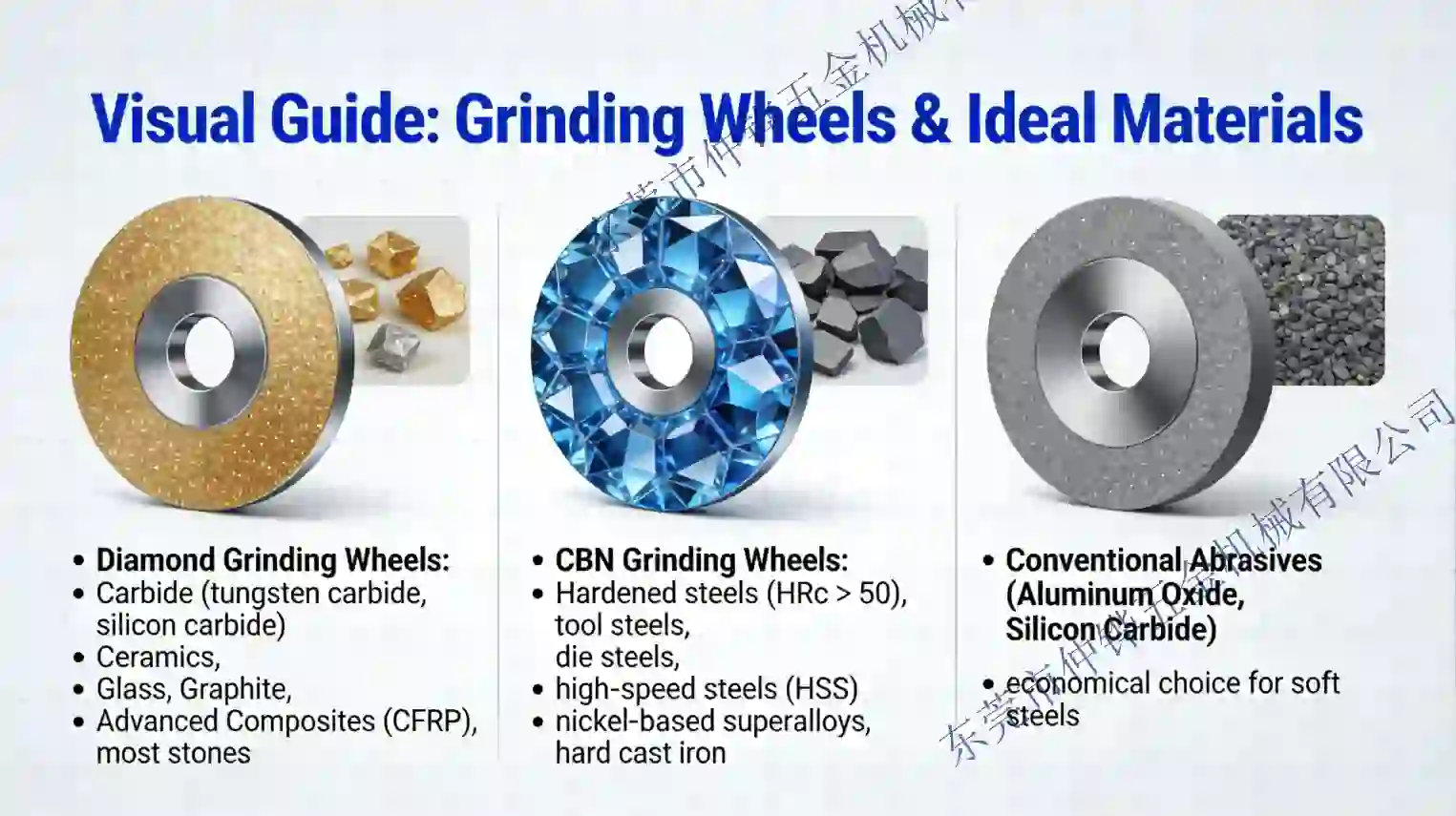
A complete technical guide to selecting the right grinding wheel for your application.
Read More
How grit size and wheel parameters affect surface finish quality.
Read More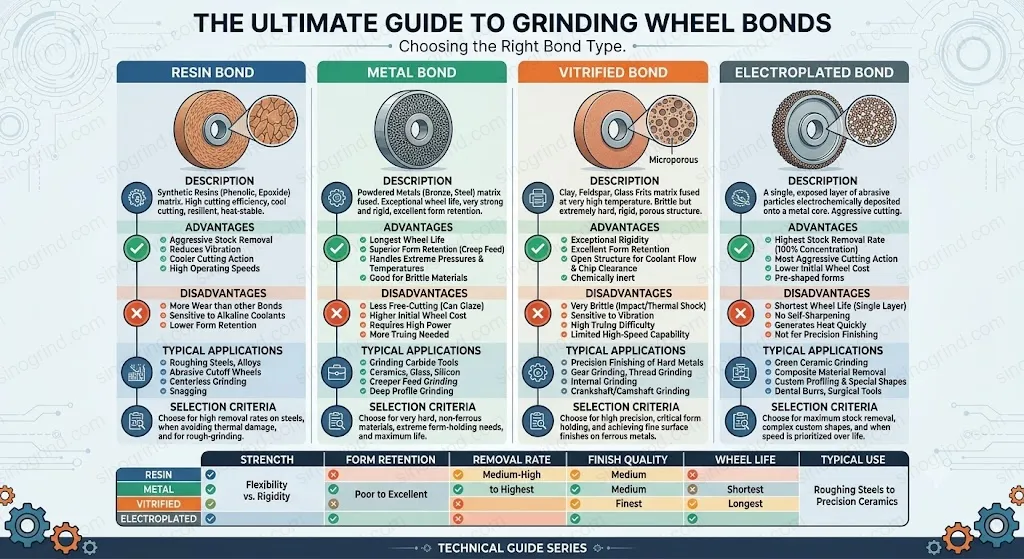
Choosing the right bond type: resin, vitrified, metal, and electroplated.
Read MoreOver 20 years of grinding expertise. Diamond, CBN, and conventional abrasive solutions for precision manufacturing worldwide.