: +86 15874211461

Understanding Grinding Wheel Bonds
Choosing the right bond type: resin, vitrified, metal, and electroplated.
Read MoreConvert diamond and CBN abrasive grit sizes between FEPA, US mesh, and micron designations for superabrasive grinding wheels
Quick reference for converting between grit designation systems. Values are approximate nominal ranges based on published standards.
| FEPA D (Diamond) | FEPA F (Bonded) | US Mesh | Micron (µm) | Abrasive | Notes |
|---|
Grit size describes the average particle dimension of abrasive grains used in grinding wheels, cutting tools, and lapping compounds. It determines surface finish quality, material removal rate, and heat generation. Coarse grits (large particles) remove material quickly but leave rough surfaces. Fine grits produce smooth finishes but cut slower. Grit designations vary by standard — FEPA (European), Mesh (US sieve), and micron-based systems each define particle size differently.
Industrial diamond abrasive grit sizes range from approximately 1 µm (microgrit for lapping) to over 2000 µm (coarse crushing grit). The FEPA D system designates diamond grit by the nominal average particle diameter in microns: D25 ≈ 25 µm, D64 ≈ 64 µm, D126 ≈ 126 µm. Diamond is the hardest known material, used for grinding cemented carbide, ceramic, glass, stone, and other hard-to-machine materials.
Cubic Boron Nitride (CBN) is the second-highest-hardness abrasive after diamond. CBN grit sizes follow the FEPA F system for bonded abrasives: F36 through F1200. CBN excels at grinding hardened steels, cast iron, and superalloys where diamond would react chemically with ferrous materials. Common CBN grit sizes for precision grinding are F80 to F400, balancing removal rate with surface finish.
FEPA (Federation of European Producers of Abrasives) defines grit by measured particle-size distribution using sieves and sedimentation. US Mesh is based on the number of openings per linear inch in a woven wire screen. A 60 Mesh screen has 60 openings per inch (~250 µm), while FEPA F60 also targets ~250 µm — but the measurement methods and tolerance bands differ. Cross-system comparisons should be treated as approximate.
Finer grit produces smoother surface finishes. Typical relationships: coarse grits (F36–F60) yield Ra 1.6–6.3 µm; medium grits (F80–F220) yield Ra 0.4–1.6 µm; fine grits (F320–F1200) yield Ra 0.05–0.4 µm. Actual finish depends on workpiece material, wheel bonding, machine rigidity, coolant, and feed rate — grit size alone does not determine surface quality.
Coarser grits remove more material per pass because larger grains create deeper scratches and higher cutting forces. F36–F60 grits are typical for rough grinding and stock removal rates above 10 mm³/mm·s. Medium grits (F80–F120) balance removal and finish. Fine grits (F220+) prioritize surface quality over removal rate. Selecting grit size is always a trade-off between productivity and surface integrity.
Start with your primary requirement: fast stock removal → coarse grit; fine surface finish → fine grit; both → use a coarse grit for roughing and a fine grit for finishing. Consider workpiece material hardness (harder materials may need finer grits to avoid damage), required tolerances, thermal sensitivity, and economic factors. When in doubt, consult your abrasive supplier and start with a medium grit, then adjust based on results.
These tools provide preliminary guidance based on general engineering principles. Every grinding application has unique variables — wheel specification, machine condition, coolant strategy, and process targets. With over 20 years of experience manufacturing diamond and CBN superabrasive wheels, the SinoGrind engineering team can review your application and recommend a wheel tailored to your exact requirements.
Free consultation • Custom wheel specifications • Global shipping
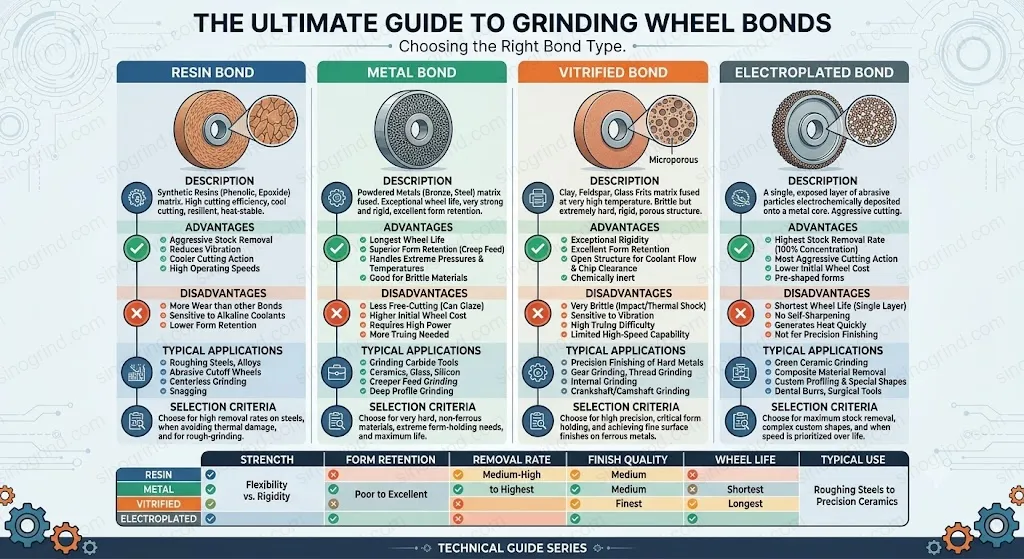
Choosing the right bond type: resin, vitrified, metal, and electroplated.
Read More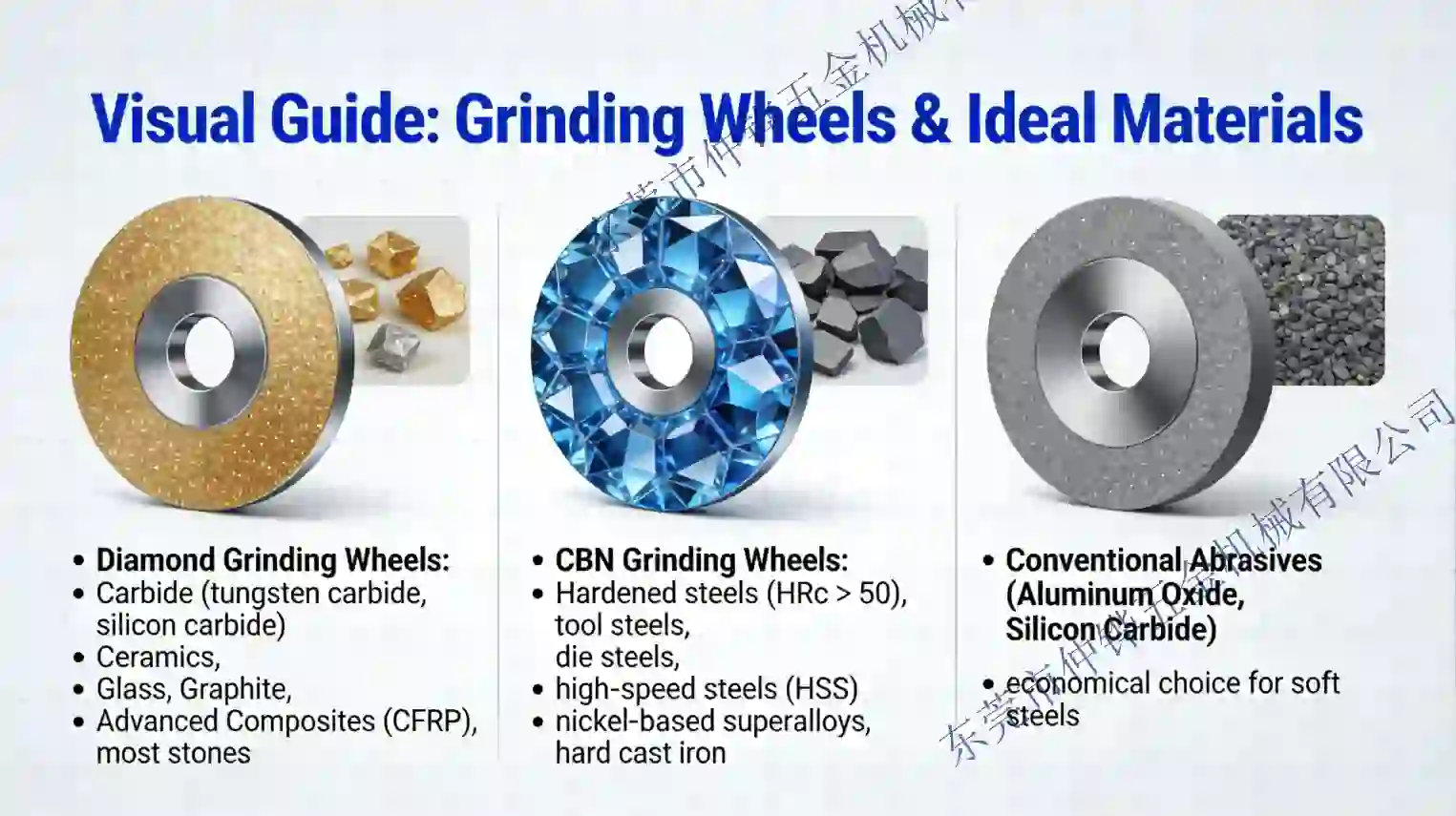
A complete technical guide to selecting the right grinding wheel for your application.
Read More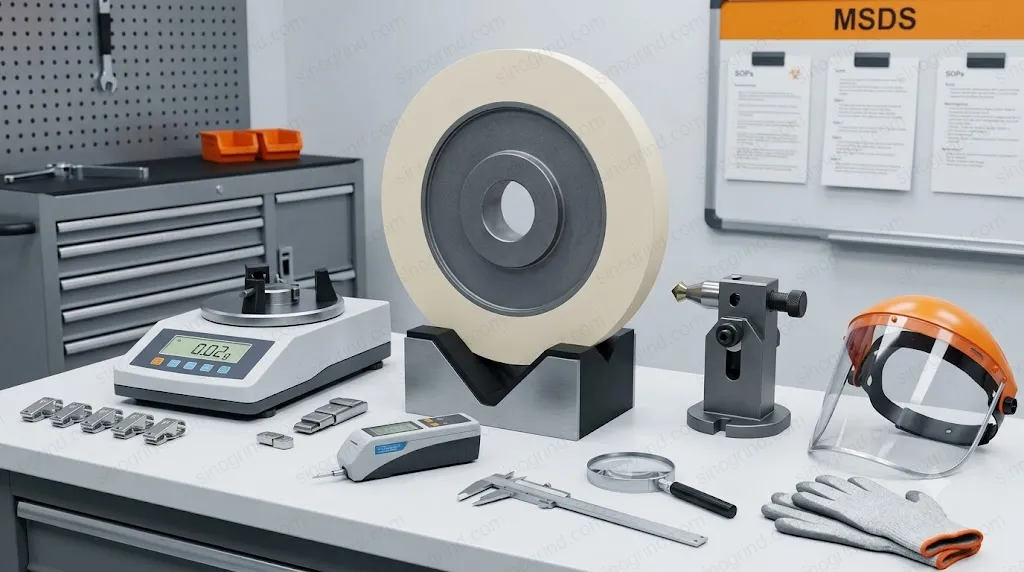
Maintenance best practices to maximize grinding wheel performance.
Read MoreOver 20 years of grinding expertise. Diamond, CBN, and conventional abrasive solutions for precision manufacturing worldwide.