: +86 15874211461
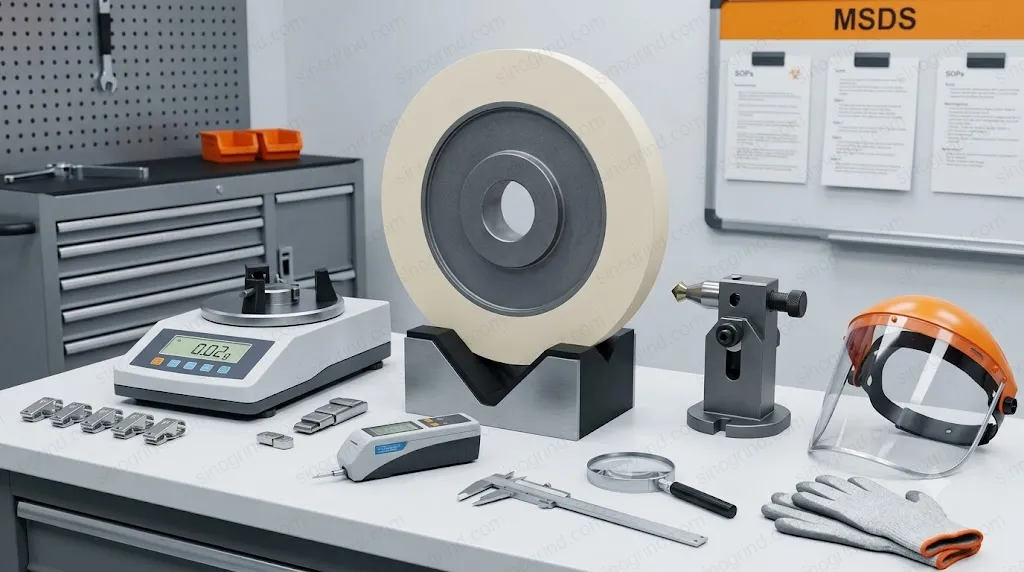
Grinding wheels represent a significant investment in your manufacturing operations. Proper maintenance not only extends wheel life but also ensures consistent part quality, improves safety, and reduces overall grinding costs. This guide covers essential best practices for storing, mounting, using, and maintaining grinding wheels to maximize their performance and lifespan.
1. Proper Storage
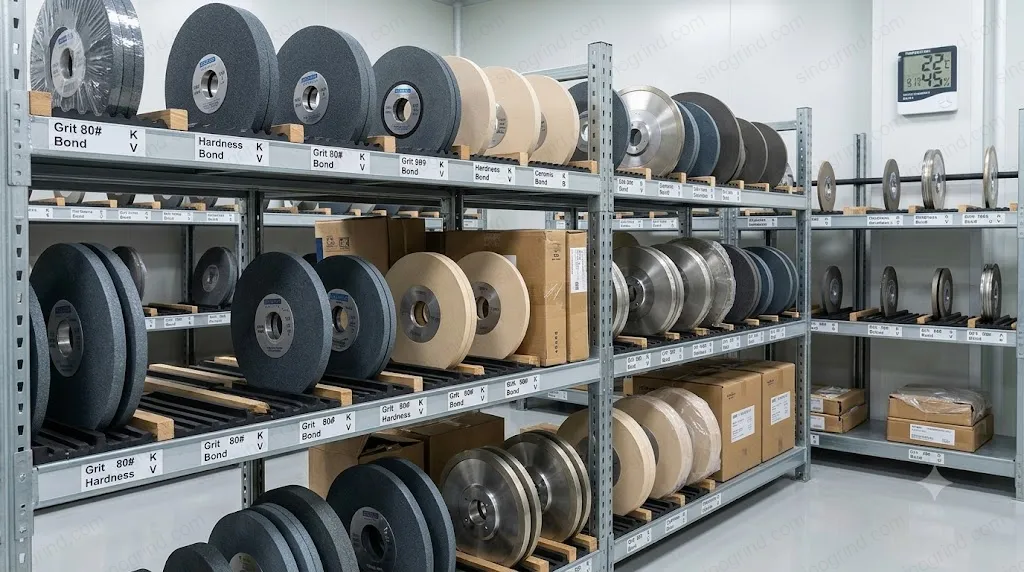
How you store grinding wheels before use directly impacts their performance:
- Temperature control: Store wheels in a dry, temperature-controlled environment. Avoid extreme temperature fluctuations that can cause condensation and damage the bond structure.
- Humidity protection: Resinoid and organic bonds are particularly susceptible to moisture. Keep wheels in their original packaging until ready for use.
- Vertical storage: Store flat wheels vertically on edge, not stacked flat. This prevents warping and stress on the wheel structure.
- Label identification: Keep wheels clearly labeled with their specifications (grit, grade, bond type) to prevent incorrect selection.
2. Mounting Best Practices
Proper mounting is critical for both safety and performance:
- Inspect before mounting: Check for cracks or damage by tapping the wheel gently—a clear ring indicates good condition, a dull thud suggests potential damage.
- Use proper flanges: Flanges should be at least 1/3 the wheel diameter. Both flanges should be the same size and have recessed centers.
- Tighten evenly: Use a torque wrench and tighten nuts gradually in a star pattern to ensure even pressure distribution.
- Allow for thermal expansion: Use fiber or cardboard gaskets between the wheel and flanges to accommodate thermal expansion during grinding.
3. Running-In Procedure
New or newly dressed wheels require a running-in period:
- Mount the wheel and run it at operating speed for 1-2 minutes without contacting the workpiece
- Make light dressing cuts to ensure the wheel is running true
- Gradually increase grinding pressure over the first few parts
- Monitor for vibration or unusual noise during the break-in period
"A proper running-in procedure can extend wheel life by 15-20% by eliminating surface irregularities before they cause premature wear."
4. Coolant Management
Coolant plays a crucial role in wheel life and grinding performance:
| Coolant Factor | Best Practice | Impact on Wheel Life |
|---|---|---|
| Flow Rate | Sufficient to flood grind zone | Prevents thermal damage, extends wheel life 20-30% |
| Concentration | Follow manufacturer recommendations | Optimal lubrication and cooling |
| Filtration | Filter to 10-25 microns | Prevents wheel loading and premature dulling |
| Temperature | Maintain 18-24°C (65-75°F) | Consistent grinding performance |
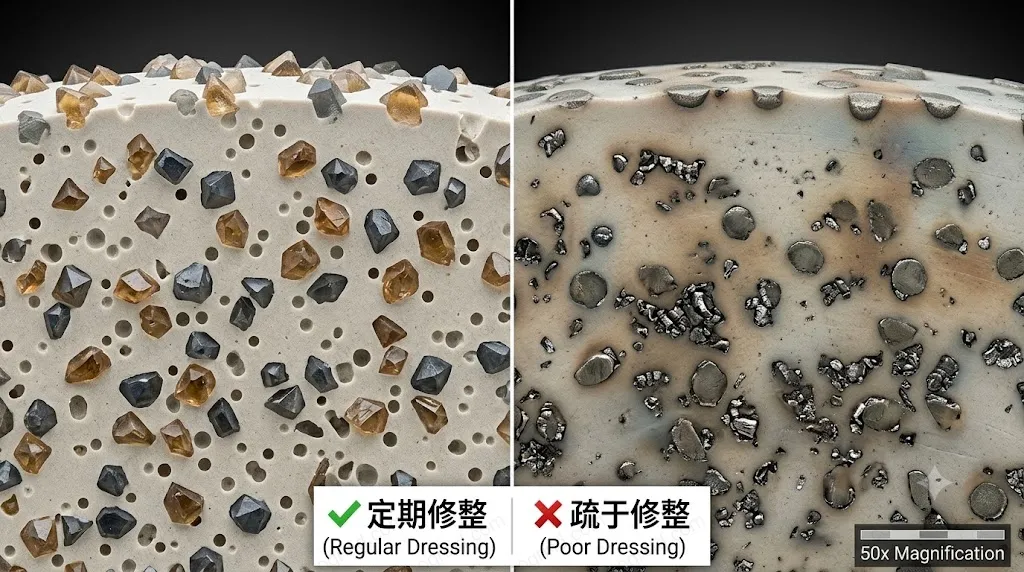
5. Dressing Schedule
Regular dressing maintains wheel performance:
- Dress frequently with light cuts: It's more efficient to dress lightly and often than to take heavy cuts infrequently.
- Monitor grinding signals: Increased power consumption, poor surface finish, or burning indicate the wheel needs dressing.
- Use sharp diamond dressers: A dull dresser damages the wheel surface and reduces its effective life.
- Document dressing cycles: Track dressing frequency to optimize schedules for your specific applications.
6. Safety Inspection
Regular safety inspections protect operators and equipment:
- Ring test: Perform ring tests periodically to detect internal cracks
- Visual inspection: Check for chips, cracks, or unusual wear patterns
- Balance verification: Rebalance wheels after dressing or if vibration increases
- Speed verification: Ensure the wheel is rated for the operating speed
7. Cost Optimization
Implementing these practices delivers measurable cost savings:
- Reduced wheel consumption: Proper maintenance can extend wheel life by 30-50%
- Lower scrap rates: Consistent wheel performance reduces part defects
- Decreased downtime: Fewer wheel changes and less unplanned maintenance
- Improved productivity: Optimal grinding parameters increase material removal rates
Conclusion
Maximizing grinding wheel life requires a systematic approach to maintenance. By following proper storage, mounting, running-in, coolant management, and dressing practices, you can significantly extend wheel life while maintaining consistent part quality. These best practices not only reduce costs but also improve safety and productivity in your grinding operations.
At SinoGrind, we manufacture high-quality grinding wheels designed for longevity. Combined with proper maintenance practices, our wheels deliver exceptional value and performance. Contact us to learn more about optimizing your grinding operations.