: +86 15874211461

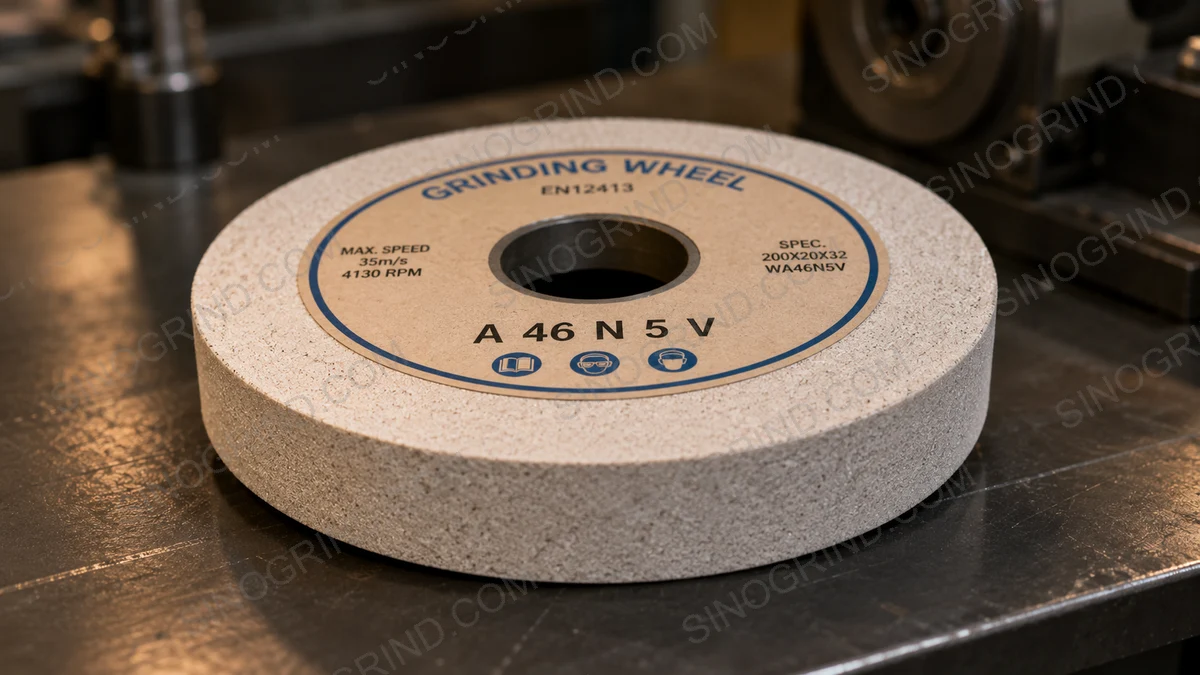
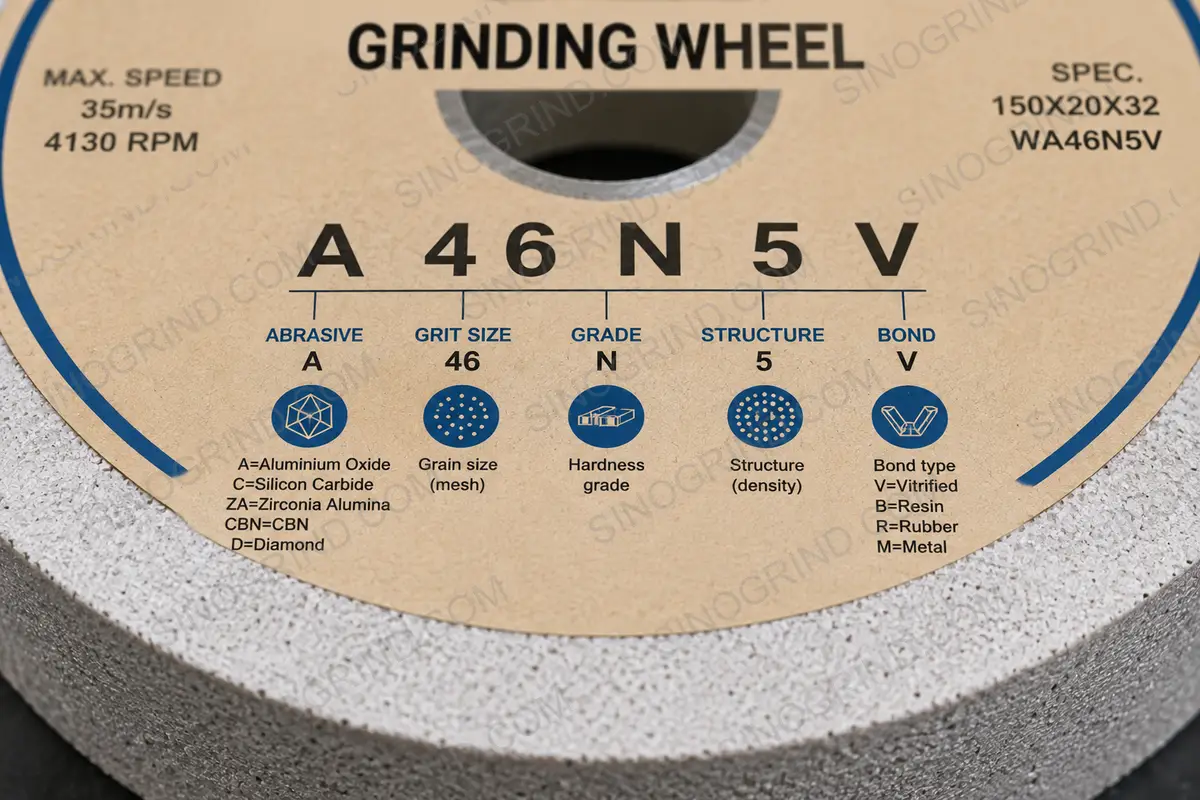
A grinding wheel specification is a coded marking on the wheel that describes its abrasive type, grit size, hardness grade, structure, and bond. Understanding the grinding wheel specification lets you choose the right wheel for your material and finish.
What Is a Grinding Wheel Specification?
Grinding wheels carry a standardized marking such as "A 46 N 5 V" or "C 60 K 7 V". Each letter and number stands for a specific property of the wheel. Reading the specification correctly is essential for safe and efficient grinding.
The Grinding Wheel Marking System Explained
The first letter indicates the abrasive type. A is aluminium oxide for steel and ferrous metals, C is silicon carbide for non-ferrous materials, WA is white aluminium oxide for hardened steel, and CBN or diamond letters mark superabrasive wheels.
Abrasive Type: A, C, and More
The grit number indicates abrasive grain size. Coarse grits (16-24) remove material fast; medium grits (36-60) suit general grinding; fine grits (80-220) give smooth finishes. The grade letter (A soft to Z hard) controls how tightly the grains are held.
Grit Size and Grade
Structure numbers (1-15) describe grain spacing - open structure for cool grinding and soft materials, dense structure for heavy pressure. The bond letter (V vitrified, B resinoid, R rubber, M metal) holds the grains and determines wheel characteristics.
Structure and Bond Types
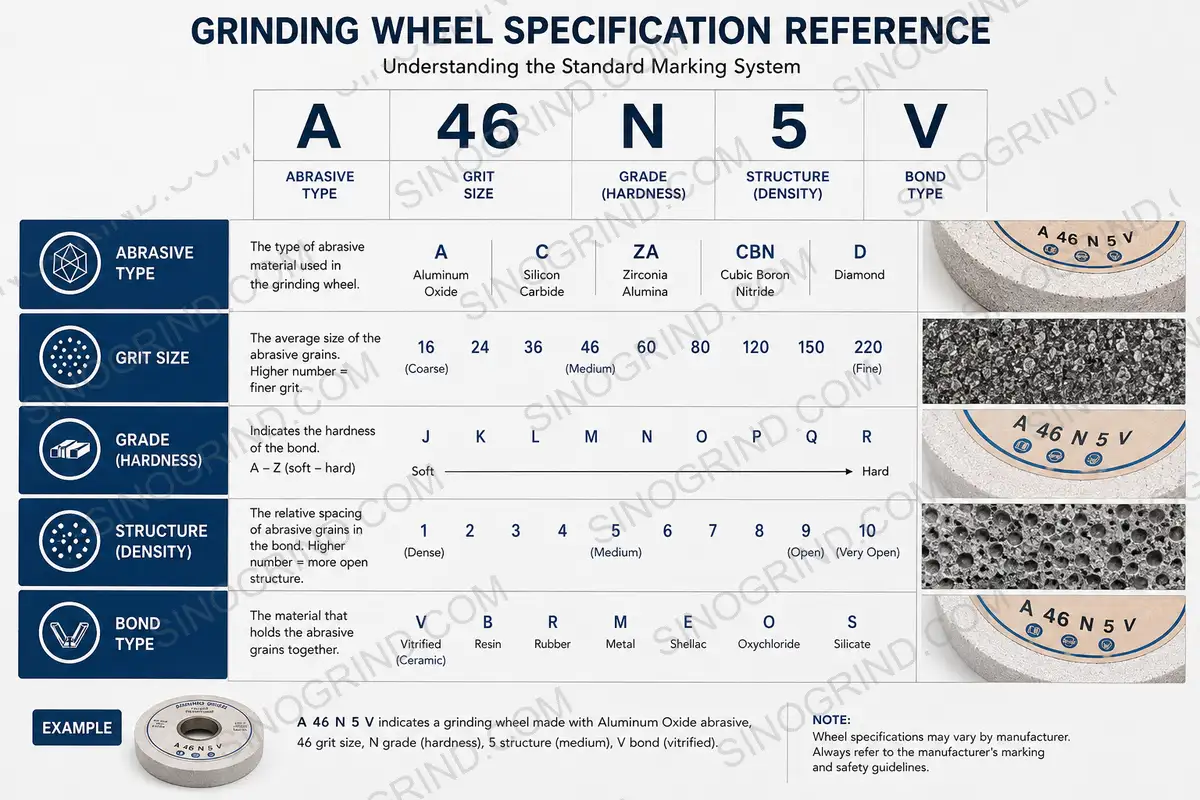
- Abrasive: A = aluminium oxide (steel), C = silicon carbide (non-ferrous), WA = white aluminium oxide (hardened steel).
- Grit: 16-24 coarse (fast removal), 36-60 medium (general), 80-220 fine (finish).
- Grade: A (soft) to Z (hard); hard materials need softer grades, soft materials need harder grades.
- Structure: 1 (dense) to 15 (open); open structure for cool cutting, dense for heavy pressure.
- Bond: V = vitrified (precision), B = resinoid (cutoff), R = rubber, M = metal (superabrasive).
How to Read Common Wheel Markings
For example, "A 46 N 5 V" is an aluminium oxide wheel, grit 46, medium-hard grade N, structure 5, vitrified bond - a typical general-purpose grinding wheel. "WA 80 J 8 V" is white aluminium oxide, fine grit, soft grade, open structure for hardened steel finishing.
Understanding Grinding Wheel Specification Codes
A grinding wheel specification code is a structured sequence that encodes every critical parameter of the wheel into a single readable string. In the standard marking system used worldwide, each position in the code represents a distinct property: the first character identifies the abrasive material (A for aluminium oxide, C for silicon carbide, WA for white aluminium oxide), followed by the grit size number (e.g., 36, 60, 80), then the hardness grade letter (A through Z, softest to hardest), the structure number (1 to 15, dense to open), and finally the bond type letter (V for vitrified, B for resinoid, R for rubber, M for metal). Some manufacturers add a sixth field for safety ratings or specific treatments. For superabrasive wheels, the format shifts slightly, using prefixes like D for diamond or B for CBN, followed by concentration codes such as C100. Learning to decode this specification code at a glance allows you to compare wheels from different suppliers quickly and ensures you order the exact wheel your grinding process demands.
When reading a grinding wheel specification on an actual wheel or in a supplier catalogue, always check whether the manufacturer follows the ISO 525 standard (common in Europe and Asia) or the ANSI B74.13 standard (common in North America). While both systems use similar positions for abrasive, grit, grade, structure, and bond, the grit size numbering can differ between FEPA and ANSI standards. For instance, FEPA grit D64 corresponds roughly to ANSI grit 60. A reliable way to avoid miscommunication is to include both the specification code and the intended application in your RFQ — for example, "A 60 J 8 V — surface grinding hardened tool steel on a Blohm machine." This removes ambiguity and helps suppliers recommend the closest matching wheel from their standard range. If you need help generating a complete specification code, try our free grinding wheel specification generator, which builds a structured RFQ-ready code from your input parameters.
Matching the Specification to Your Job
For help choosing the right grinding wheel for your application, send us your material, finish, and machine parameters. You can also explore our related guides on how to choose a grinding wheel and selecting CBN wheels for hardened steel.
Match the specification to your work: coarse grit and hard grade for soft materials and heavy removal, fine grit and soft grade for hard materials and fine finish. Consult the wheel marking chart or our engineers to select the correct wheel.
Frequently Asked Questions
Q: What does the number on a grinding wheel mean?
A: The number on a grinding wheel typically refers to the grit size, which indicates the size of the abrasive grains. Lower numbers (such as 24 or 36) mean coarser grains for aggressive material removal, while higher numbers (such as 80, 120, or finer) mean smaller grains for smoother surface finishes. The grit size is one component of the full specification code.
Q: What is the difference between hard and soft grinding wheels?
A: In grinding wheel terminology, grade refers to how strongly the bond holds the abrasive grains. A hard wheel (grades M-Z) retains grains longer and is suited for soft materials like aluminum. A soft wheel (grades A-H) releases grains more quickly, making it ideal for hard materials like hardened steel where the wheel must constantly expose fresh, sharp cutting edges.
Q: How do I read a grinding wheel specification code?
A: A standard grinding wheel specification follows the format: Abrasive Type + Grit Size + Hardness Grade + Structure Number + Bond Letter. For example, "A 60 J 8 V" means aluminium oxide abrasive, 60 grit, J hardness (medium), 8 structure (medium porosity), and vitrified bond. Superabrasive wheels use a slightly different format with D for diamond or B for CBN.
Q: What does the bond letter mean on a grinding wheel?
A: The bond letter indicates the material that holds the abrasive grains together. Common bond letters include V for vitrified (ceramic), B or R for resinoid (organic resin), R for rubber, M for metal, and E for electroplated. The bond type determines the wheel's strength, porosity, heat resistance, and suitability for different grinding applications.
Q: What is the standard format for grinding wheel specifications?
A: The international standard format follows ISO 525 (or ANSI B74.13 in North America) and uses five positions: Abrasive Type (A, C, WA, etc.), Grit Size (number), Hardness Grade (letter A-Z), Structure Number (1-15), and Bond Type Letter (V, B, M, etc.). Including both the specification code and your intended application in an RFQ helps suppliers provide the most accurate wheel recommendation.