: +86 15874211461

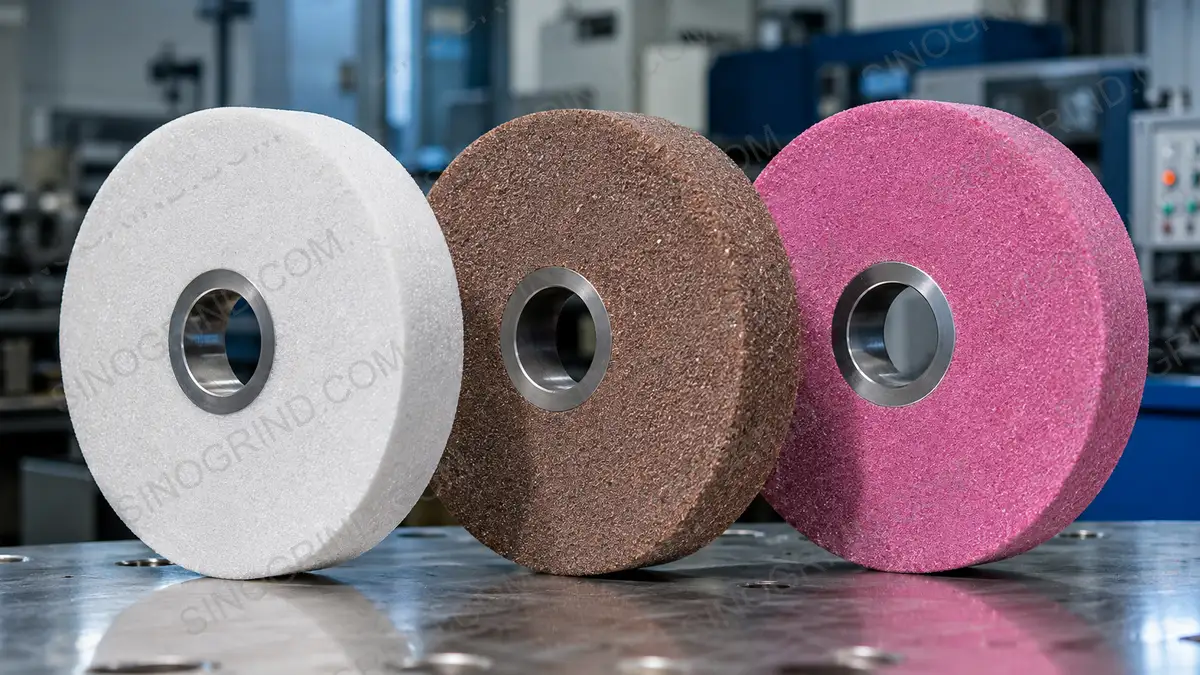
Corundum — also known as fused aluminium oxide (Al2O3) — is the workhorse abrasive for grinding steel, cast iron, and ferrous metals. A corundum grinding wheel combines sharp, tough aluminium oxide grains in a vitrified, resin, rubber, or magnesite bond. Choosing the right corundum wheel is about matching the abrasive type, bond, grit size, and hardness grade to your material and finish.
What Is a Corundum Grinding Wheel?
A corundum grinding wheel is a conventional abrasive wheel made from fused aluminium oxide grains bonded together. Unlike diamond or CBN wheels, corundum is economical and versatile, making it the most widely used abrasive in general and precision grinding. It is the standard choice for grinding steel, cast iron, tool steel, and stainless steel.
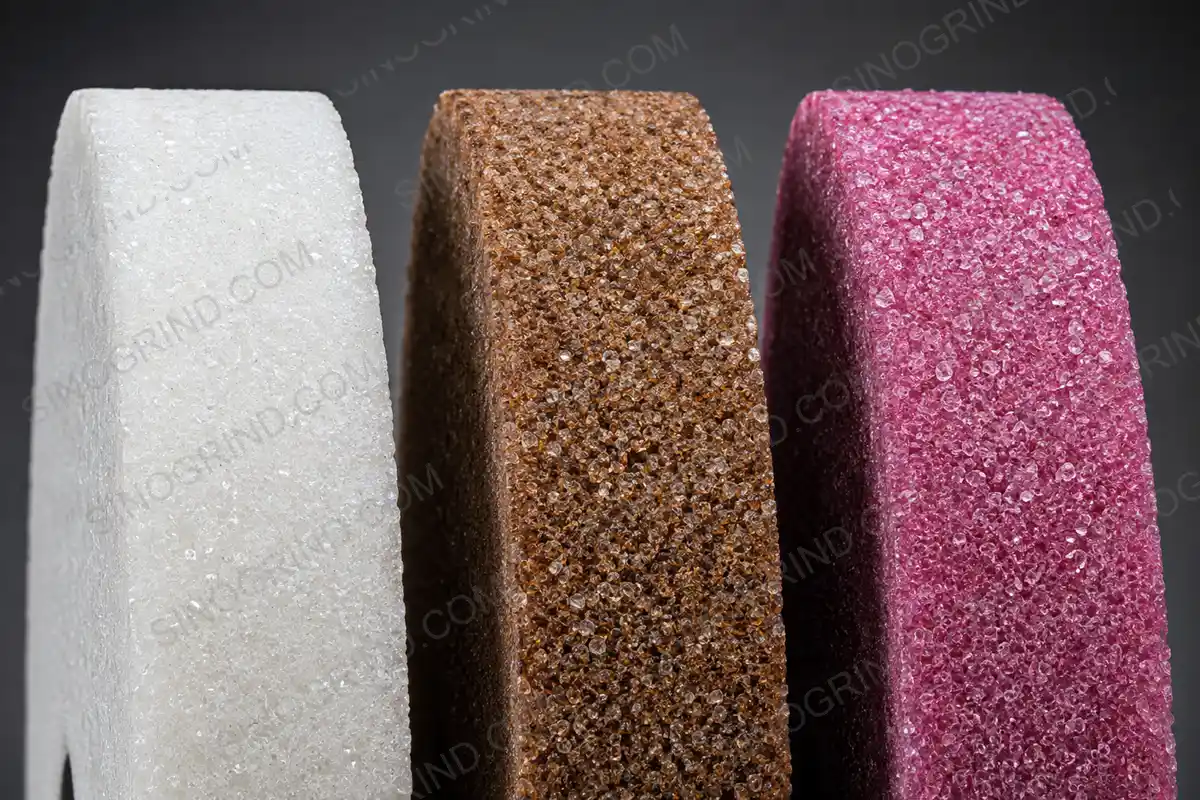
Corundum wheels are classified by the purity and treatment of the aluminium oxide grain. The three most common types are white corundum, brown corundum, and chrome corundum — each with distinct grinding characteristics.
White Corundum Grinding Wheel
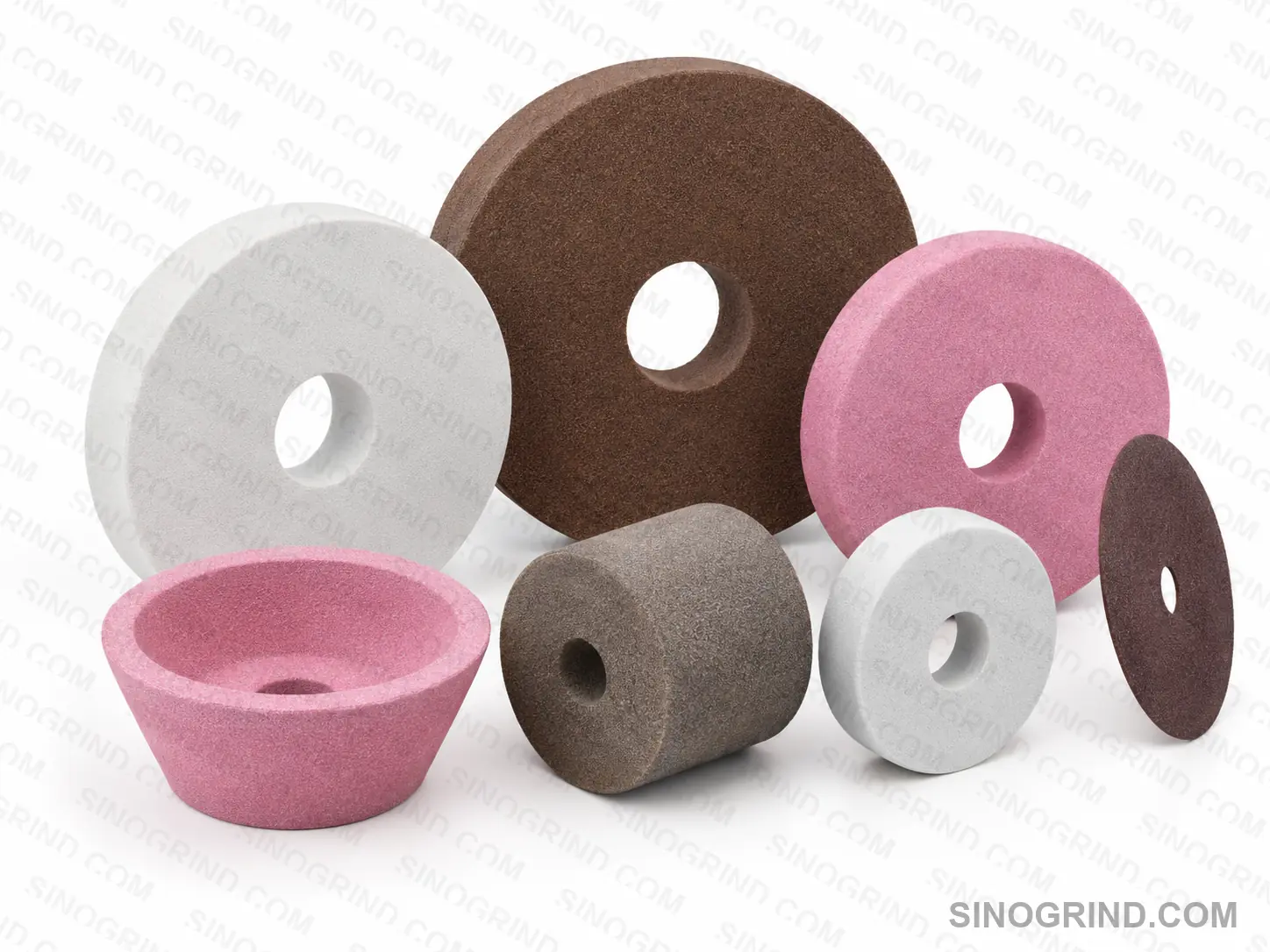
White corundum is a high-purity aluminium oxide abrasive (typically 99%+ Al2O3) that is white in color. Its sharp, friable grains fracture readily, keeping the wheel self-sharpening and cutting cool. This makes white corundum wheels ideal for finishing, hardened steel, high-speed steel, and heat-sensitive materials where burn must be avoided.
Applications include surface grinding, tool and cutter grinding, internal grinding, and precision finishing of hardened steel. White corundum wheels deliver excellent surface finish but wear faster than brown corundum under heavy load.
Brown Corundum Grinding Wheel
Brown corundum (brown fused alumina, BFA) is the most common and economical aluminium oxide abrasive. It contains a small percentage of titanium oxide, giving it a brown color and a tougher, less friable grain than white corundum. Brown corundum wheels are the first choice for general-purpose grinding of steel, cast iron, and carbon steel.
Brown corundum offers excellent toughness and long wheel life, making it ideal for rough grinding, snagging, and high-production operations on ferrous metals. It is the standard abrasive for bench grinders, pedestal grinders, and general workshop use.
Chrome Corundum Grinding Wheel
Chrome corundum (pink or ruby corundum) is aluminium oxide alloyed with chromium oxide, giving it a pink or ruby color. It combines the sharpness of white corundum with the toughness of brown corundum. Chrome corundum wheels cut cool, hold their form well, and produce good finishes, making them ideal for alloy steel, tool steel, and high-production grinding where both stock removal and finish matter.
Corundum Wheel Bond Types
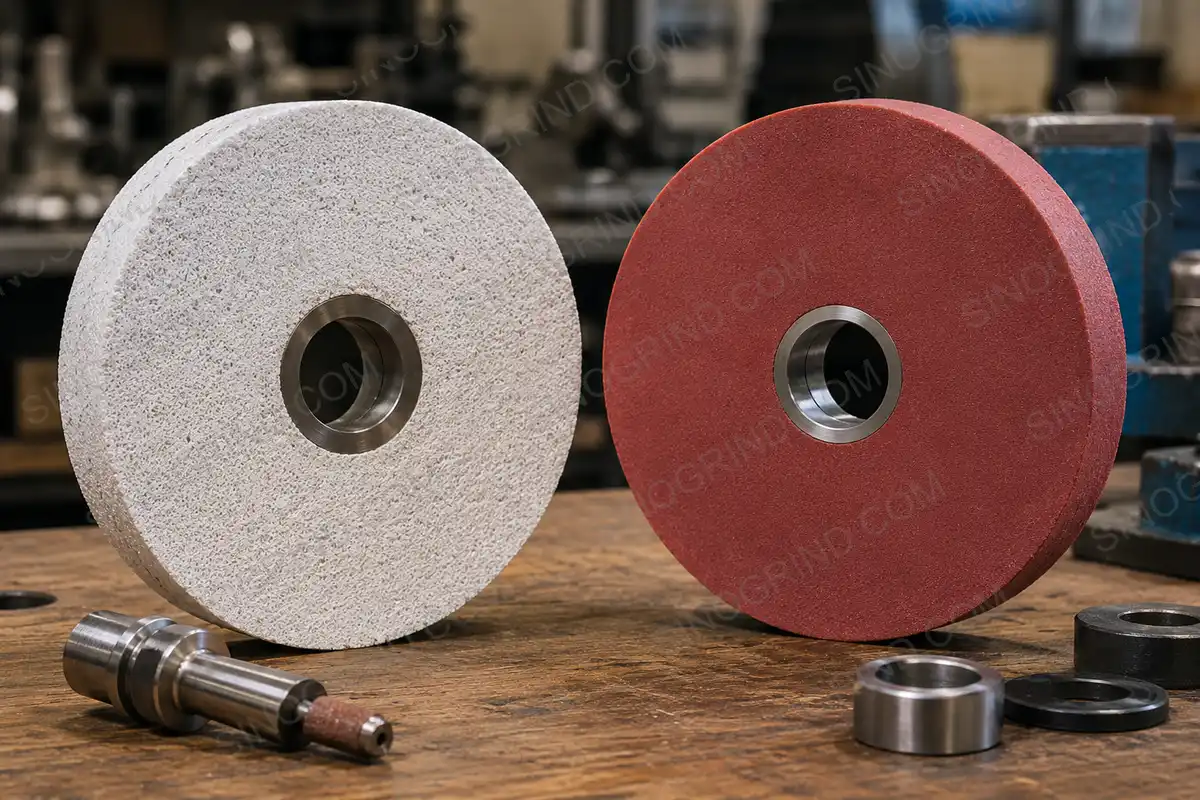
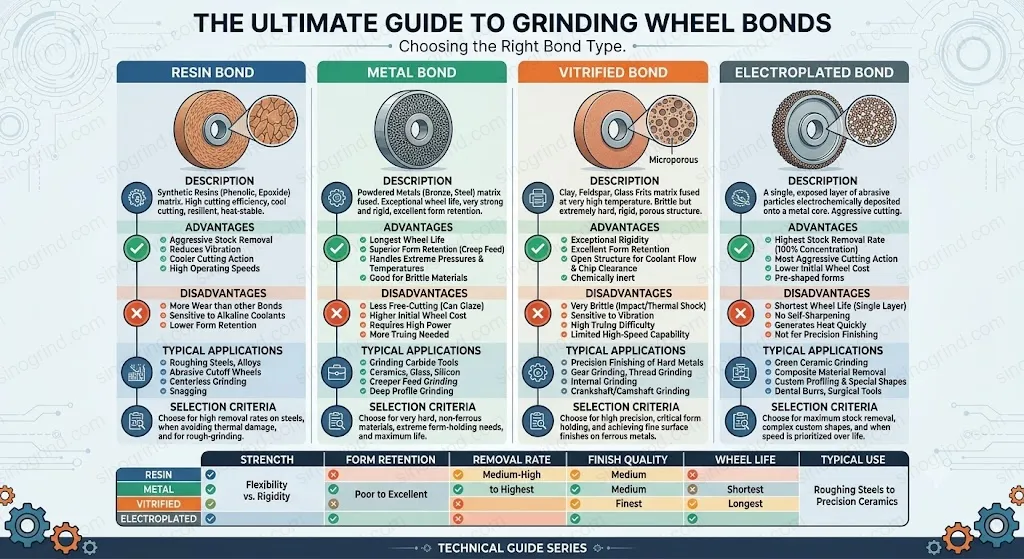
- Vitrified bond: The most common corundum bond. Porous, rigid, and coolant-friendly, suited to precision and high-production grinding. Available in a full range of hardness grades.
- Resin bond: Flexible and shock-resistant, used for cutoff wheels, snagging wheels, and portable grinding where impact is common.
- Rubber bond: Used for thin cutoff wheels and regulating wheels in centerless grinding. Offers a smooth finish and high stock removal.
- Magnesite bond: A special bond used for grinding segments and some surface grinding applications.
Corundum Grinding Wheel Specifications and Selection
Selecting the right grinding wheel requires matching several key specifications to your workpiece material, machine setup, and surface finish requirements. The standard marking system for a corundum grinding wheel specifies abrasive type, grit size, hardness grade, bond type, and wheel structure in a compact code (for example: A36L5V). Understanding each element ensures you choose the most efficient and cost-effective corundum wheel for your operation.
Grit size directly influences surface finish and material removal rate. Coarse grits (16#–36#) remove material aggressively and are suited to rough grinding and snagging. Medium grits (46#–60#) balance removal rate with surface quality and serve as the general-purpose choice for most grinding applications. Fine grits (80#–180#) produce smooth finishes and are essential for tool sharpening, finish grinding, and precision surface work. For applications demanding a mirror finish, microgrit sizes (220# and finer) are used in the final pass.
Hardness grade refers to the bond strength holding the abrasive grains — not the hardness of the abrasive itself. Softer grades (G–J) release grains more readily, making them ideal for grinding hard materials such as hardened steel and stainless steel where a sharp, free-cutting wheel prevents burning. Harder grades (K–P) retain grains longer and are better suited to soft materials like mild steel and cast iron where the wheel must resist premature wear. The general rule: hard materials require soft-grade corundum wheels, and soft materials benefit from harder grades.
Wheel structure (the spacing between grains) controls coolant flow and chip clearance. Open structures are preferred for high stock removal and deep grinding where chip evacuation is critical, while dense structures provide better surface finish and form-holding for precision applications.
How to Choose a Corundum Grinding Wheel
- Grit size: Coarse grit (16#–36#) for heavy stock removal; medium grit (46#–60#) for general grinding; fine grit (80#–180#) for finishing and precise geometry.
- Hardness grade: Soft grades (G–J) for hard materials and large contact areas; hard grades (K–P) for soft materials and small contact areas. Harder materials need softer wheels, and vice versa.
- Bond selection: Vitrified for precision and production; resin or rubber for cutoff and portable work.
- Abrasive type: Brown corundum for general steel and cast iron; white corundum for hardened steel and finishing; chrome corundum for alloy steel and high-production grinding.
Corundum vs Diamond vs CBN Grinding Wheels
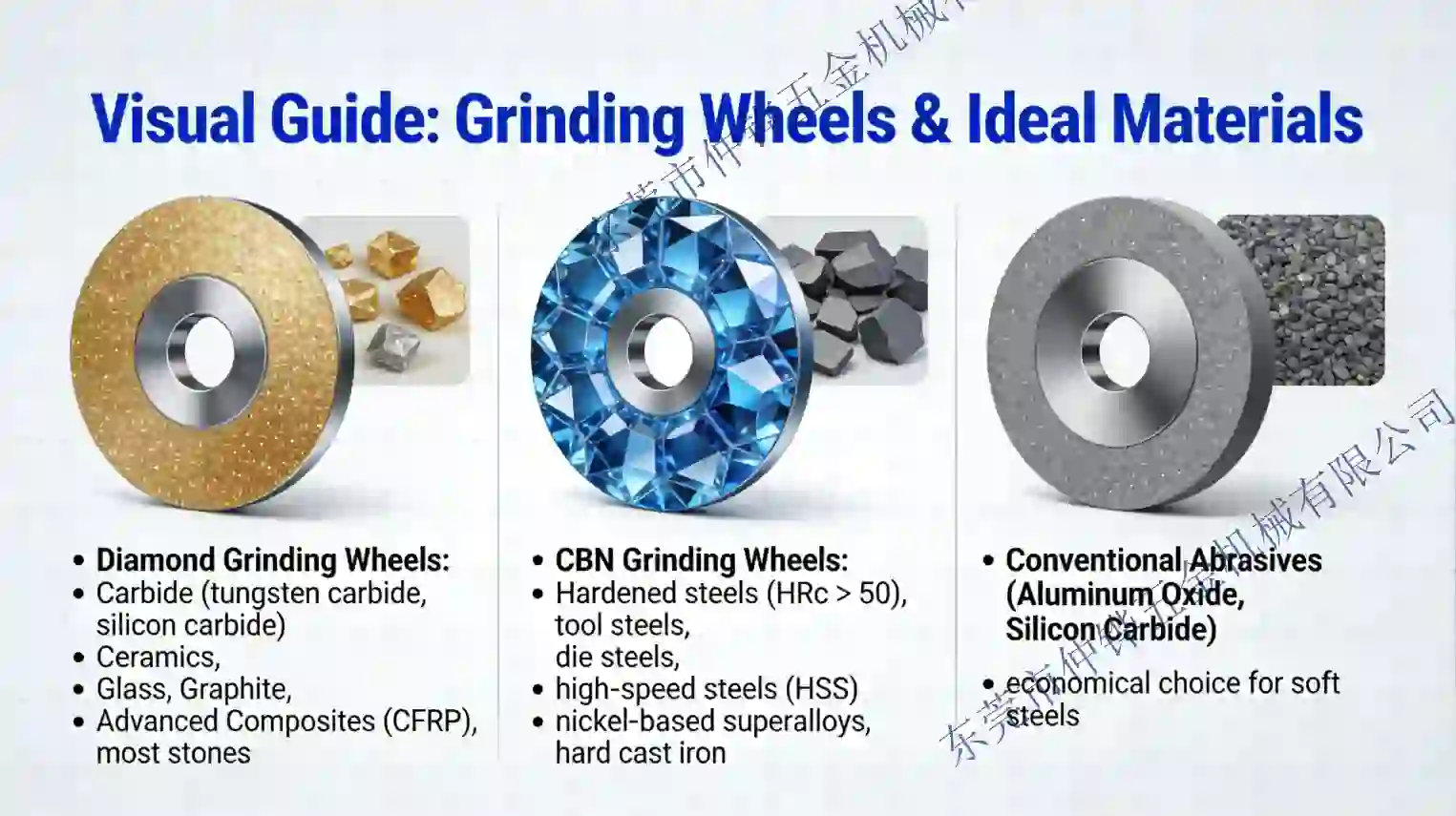
Understanding when to use a corundum grinding wheel versus diamond or CBN superabrasive wheels is essential for optimizing grinding performance and cost on ferrous materials.
Corundum (aluminium oxide) wheels are the economical conventional choice for grinding steel, cast iron, and ferrous alloys. They offer excellent versatility across a wide range of hardness levels, from mild steel to hardened tool steel. Corundum wheels are readily available in standard sizes, easy to dress, and provide a proven balance of material removal rate and surface finish for general-purpose ferrous metal grinding.
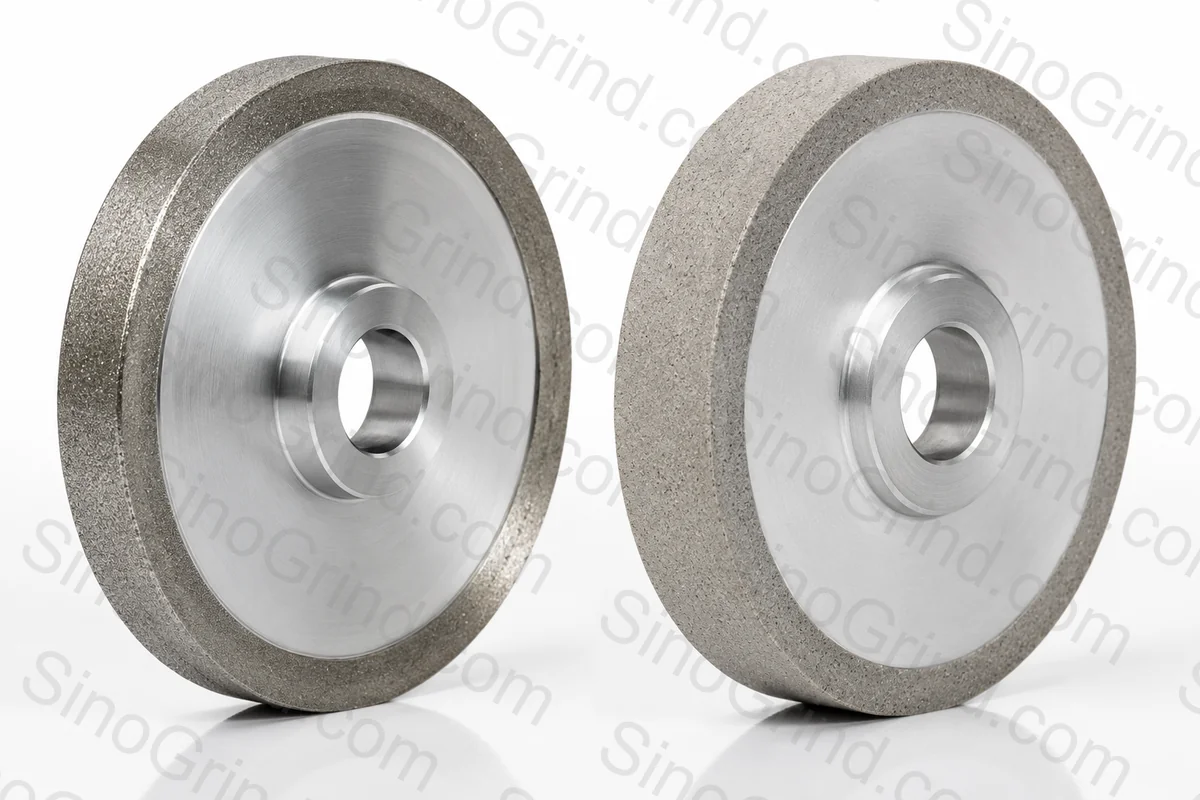
Diamond wheels are not suitable for ferrous materials — diamond reacts with iron at grinding temperatures, causing rapid wheel wear. Diamond grinding wheels are reserved for non-ferrous hard materials: carbide, ceramic, glass, and stone. Using diamond on steel is both wasteful and counterproductive.
CBN (cubic boron nitride) wheels are the superabrasive alternative for hardened ferrous materials. CBN excels at grinding hardened tool steel, bearing steel, and high-speed steel with significantly less heat generation and longer wheel life than corundum. However, CBN wheels cost substantially more and require rigid, high-precision machines. For most general steel and cast iron grinding where thermal damage is not a critical concern, a corundum grinding wheel remains the most cost-effective solution. CBN becomes the better investment in high-volume production of hardened parts where reduced dressing frequency and lower total cost per part justify the higher wheel price.
Applications of Corundum Grinding Wheels
Corundum grinding wheels are used across industry for grinding steel, cast iron, and ferrous metals. The choice of corundum type and wheel specification depends on the specific grinding operation:
Surface grinding: Flat surface grinding of steel plates, molds, and dies is one of the most common corundum wheel applications. White corundum grinding wheels in vitrified bond are preferred for finishing passes on hardened steel, where cool cutting prevents thermal damage and maintains dimensional accuracy. Brown corundum wheels handle general-purpose surface grinding of mild steel and cast iron with excellent material removal rates.
Cylindrical grinding: External cylindrical grinding of shafts, rollers, and bearings demands consistent wheel performance and precise geometry control. Chrome corundum wheels offer the best combination of form retention and surface finish for cylindrical work on alloy and tool steels. For centerless cylindrical grinding, rubber-bonded corundum regulating wheels provide smooth workpiece rotation and stable through-feed operation.
Tool and cutter sharpening: Resharpening drills, end mills, reamers, and lathe tools requires fine grit white or chrome corundum wheels that produce sharp cutting edges without altering the tool's hardness. Vitrified bond corundum wheels in 60#–120# grit deliver the precision and surface integrity needed for cutting tool maintenance.
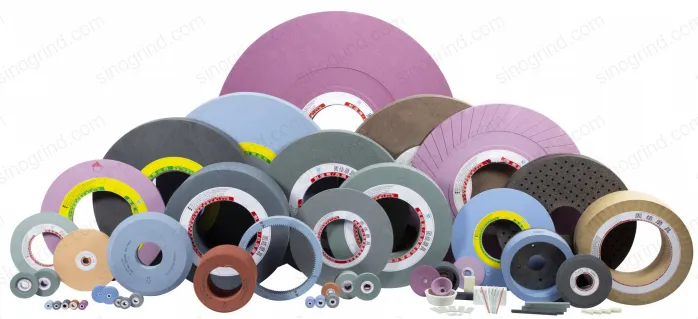
SinoGrind supplies corundum grinding wheels and grinding accessories such as segments and mounted points in sizes from 100mm to 800mm for all of these applications.
Need a corundum wheel for your application? Tell us your material, hardness, wheel size, and grinding parameters. Our engineers will recommend the right white, brown, or chrome corundum wheel for your job.
Frequently Asked Questions
Q: What is the difference between white, brown, and chrome corundum grinding wheels?
A: White corundum (WA) is used for hardened steel and precision finishing, thanks to its sharp, friable grains. Brown corundum (A) is the general-purpose choice for steel and cast iron, with good toughness. Chrome corundum (PA) offers higher hardness than brown corundum and is preferred for alloy steels and high-production grinding.
Q: Can corundum grinding wheels be used on carbide materials?
A: Corundum wheels are not recommended for tungsten carbide or ceramic materials. Diamond wheels are the right choice for these extremely hard materials. Using corundum on tungsten carbide leads to rapid wheel wear, insufficient material removal, and potential damage to the workpiece.
Q: What grit size should I choose for corundum grinding?
A: For roughing and heavy stock removal, use coarse grit (16#–36#). For general-purpose grinding, medium grit (46#–60#) offers the best balance between removal rate and surface finish. For finishing and precision work, use fine grit (80#–180#). Mirror finishes require microgrits (220# and finer).
Q: How do I choose the correct hardness grade for a corundum wheel?
A: Hard materials (hardened steel, stainless steel) require soft-grade wheels (G–J), which release worn grains quickly. Soft materials (mild steel, cast iron) need harder-grade wheels (K–P), which retain grains longer. The general rule: hard materials need soft wheels, and soft materials need hard wheels.
Q: Which bond type is best for corundum grinding wheels?
A: Vitrified bond is the most common choice for corundum wheels, offering precision, good form retention, and easy dressing. Resin bond is preferred for cutoff wheels and portable grinding. Rubber bond is used for thin cutoff wheels and regulating wheels in centerless grinding.