: +86 15874211461

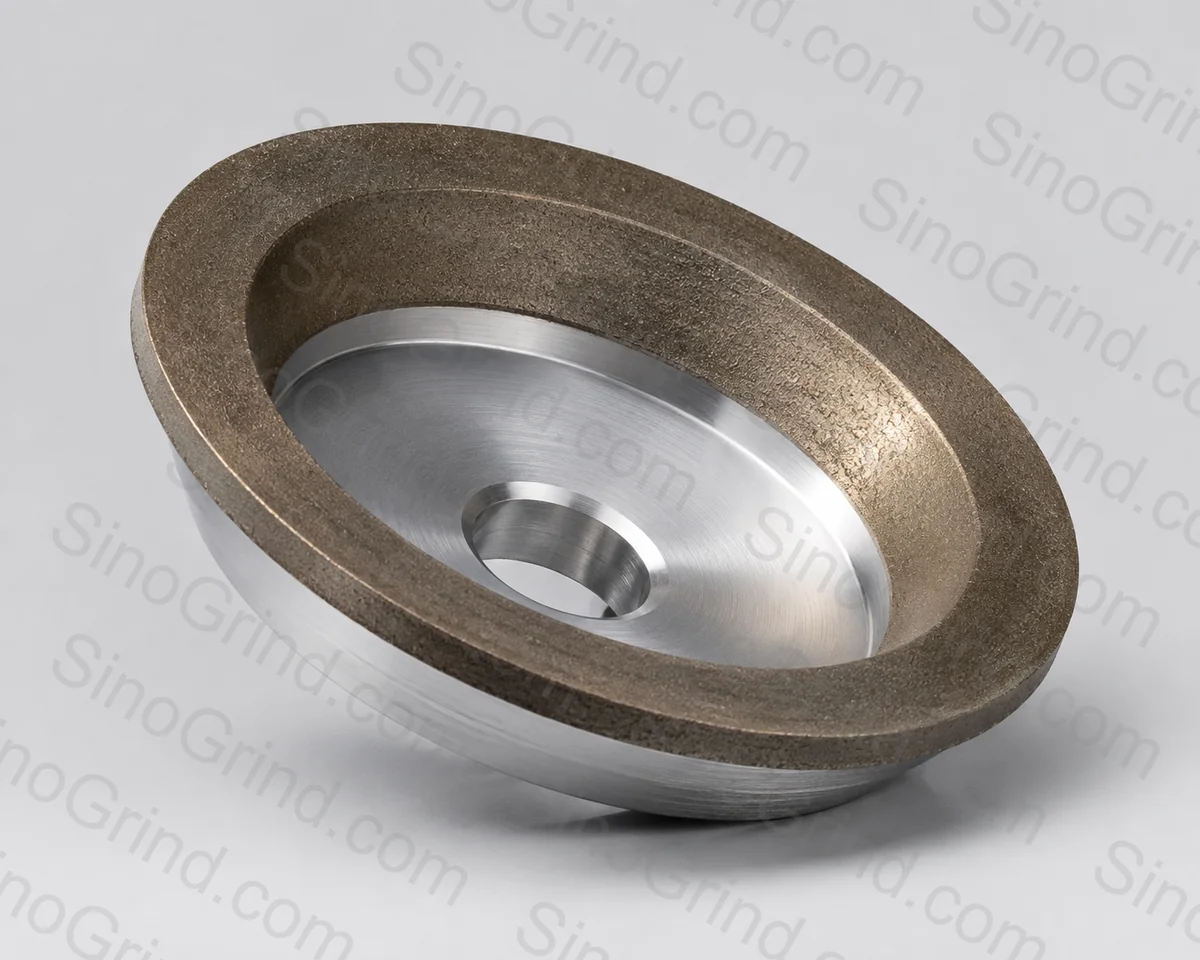
Quick answer: Diamond concentration is how much diamond is packed into the bond, expressed as a multiple of 4.4 ct/cm³ (so 100 = 4.4 ct/cm³). Higher concentration = more diamond = longer life and higher removal capacity, but a harder-cutting wheel and higher cost. Most diamond wheels run at 75–150%.
Related reading: Diamond Grit Size Selection · Metal Bond Diamond Grinding Wheel · Diamond Wheel Specification Code.
What concentration means
Concentration in a superabrasive wheel is conventionally defined as 100 = 4.4 carat of diamond per cubic centimetre of working layer (equivalent to 0.88 g/cm³; always confirm the supplier's convention). It is independent of grit size: you can have a coarse wheel at low concentration or a fine wheel at high concentration.
| Concentration | Relative diamond | Character | Typical use |
|---|---|---|---|
| 50 | Low | Freest, coolest cut, shortest life | Fine finishing, delicate edges |
| 75 | Medium-low | Good finish, moderate life | Precision finishing, ceramics |
| 100 | Standard | Balanced life and finish | General grinding (default) |
| 125 | Medium-high | Longer life, higher removal | Tool grinding, form work |
| 150 | High | Highest removal capacity | Heavy removal, PCD, hard materials |
| 175–200 | Very high | Max life and form retention | Wafer, PCD, special cases |
Concentration convention varies; confirm the 4.4 ct/cm3 basis with your supplier.
How to choose concentration
- Increase concentration for harder materials, longer life, better form retention and higher removal capacity.
- Decrease concentration for a cooler cut, better finish and lower cost on light, delicate work.
- Match the grit — high concentration with very fine grit can be hard to dress.
- Watch the machine — higher concentration needs more spindle power and coolant.
- Consider cost — diamond is the expensive ingredient; do not over-specify.
Concentration vs grit
Concentration changes how much diamond cuts; grit changes how deep each scratch is. Optimise grit first for the finish, then concentration for life and removal.
Typical concentration by application
| Application | Grit (FEPA D) | Concentration |
|---|---|---|
| Carbide tool grinding | D91–D126 | 100–125% |
| Heavy removal / roughing | D126–D181 | 125–150% |
| Fine finishing | D46–D64 | 75–100% |
| PCD / PCBN | D30–D91 | 100–150% |
| Wafer / semiconductor | D126–D400+ | 100–200% |
| Ceramics / glass | D46–D126 | 75–125% |
These are starting points; tune to your material, machine and finish target.
Sub-table 2 — by grinding process
| Process | Typical bond | Grit (FEPA D) | Concentration | Common shapes | Notes |
|---|---|---|---|---|---|
| Tool & cutter grinding (flute, gash) | Resin / Metal | D91–D181 | 100–150% | 11V9, 12V9, 1A1 | Cool cutting protects carbide edges |
| Surface / flat grinding | Resin / Vitrified | D64–D151 | 75–125% | 1A1, 6A2 | Balance finish vs. removal |
| OD cylindrical | Metal / Vitrified | D91–D181 | 100–150% | 1A1, 1F1 | Even coolant coverage |
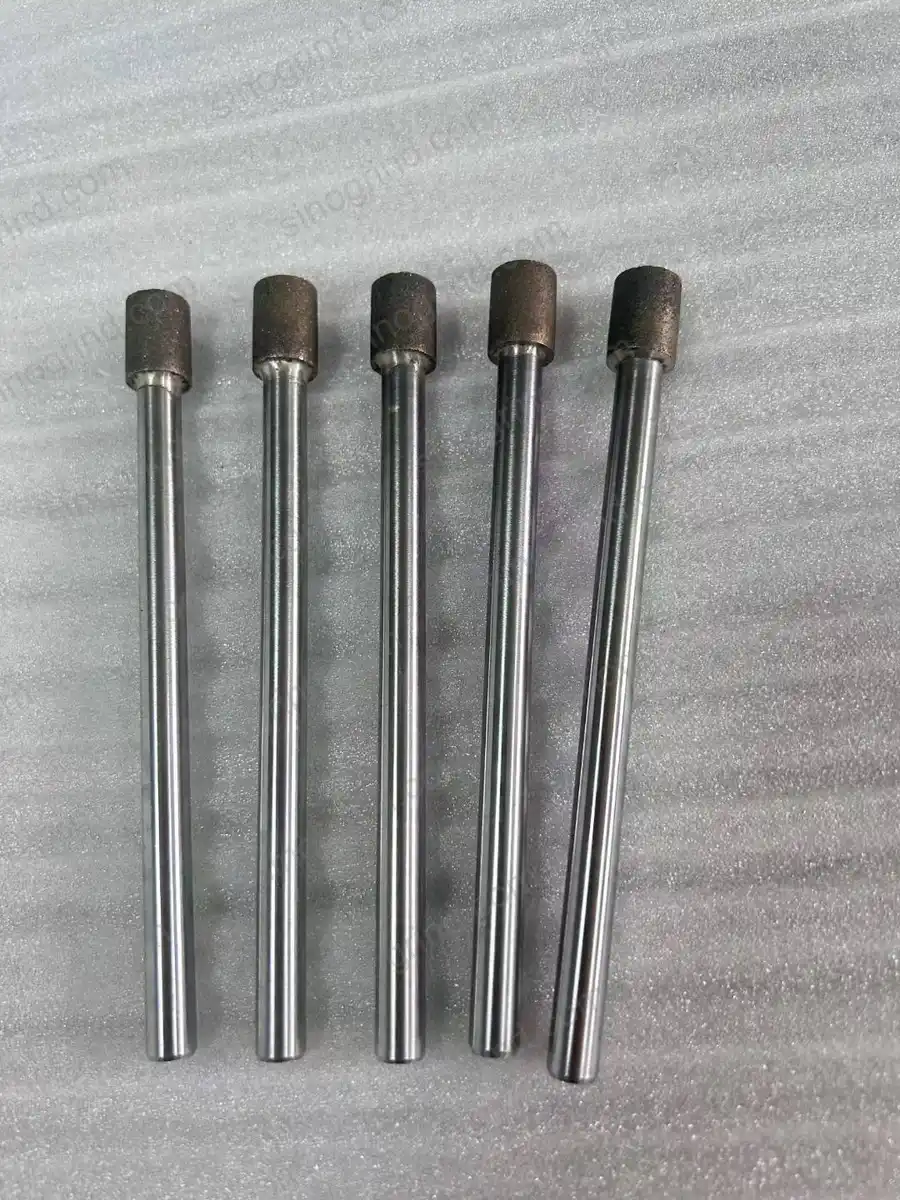
| ID / internal | Resin / Metal | D46–D126 | 75–125% | Cup, mounted points | Small wheels, high speed |
| Form / profile / creep-feed | Metal / Vitrified | D64–D151 | 100–150% | 6A2, 11V9, 12V9 | Profile retention is critical |
| Centerless | Metal / Resin | D91–D181 | 100–150% | 1A1, 6A2 | High volume, tight roundness |
| Back-grinding / wafer thinning | Electroplated / Resin | D126–D400+ | 100–200% | Cup, 1A1 | Ultra-fine finish, low damage |
| Glass edge / bevel / CNC | Metal / Resin | D64–D126 | 75–125% | 1A1, 1F1, 12A2 | Prevent edge chipping |
| Cut-off / slot / groove | Electroplated / Metal | D181–D400 | — | 1A1R, saw | Thin wheels, rigid setup |
| Dressing & truing (of other wheels) | — | D46–D181 | — | Pen, roller, block | Diamond tools, not diamond wheels |
What concentration changes in the cut
Concentration is the amount of diamond in the working layer, usually quoted as 100 = 4.4 carat/cm³. Higher concentration puts more cutting points into the same volume: the load per grain drops, the wheel holds form longer and the cut runs cooler, but the bond has less room to wear and the wheel can glaze if the machine cannot supply the power.
Lower concentration gives the bond more room to recede, so fresh grains are exposed more easily. That suits fine finishing, low-power machines and jobs where the wheel must stay free-cutting rather than hold a tight form.
Running a concentration trial
- Start from the bond. Concentration only makes sense inside a bond system; a metal bond at 75% behaves nothing like a resin bond at 75%.
- Hold grit and speed. Change concentration alone, or the result cannot be attributed.
- Measure spindle load. Higher concentration usually raises the power drawn; record it before and after.
- Measure wheel wear. Weigh or measure the wheel before and after a fixed number of parts.
- Check the finish. A concentration that holds form but burns the part is still wrong.
- Set a maintenance limit. Decide the wear or load limit that triggers a change, and write it into the process sheet.
Troubleshooting by concentration
| Symptom | Concentration signal | Action |
|---|---|---|
| Wheel holds form but burns the part | Too high for the available power and coolant | Drop one step (150 → 125 or 125 → 100) |
| Form drifts quickly | Too low for the load | Raise one step and check spindle load |
| Wheel glazes instead of wearing | High concentration in a bond that cannot wear | Reduce concentration or use a softer bond |
| Short wheel life on a free-cutting job | Too low for the abrasive volume required | Raise concentration and re-check the finish |
| Cost per part rises after a change | Higher concentration not paying back in life | Compare wear rate, not wheel price |
Concentration is a cost lever: it changes both wheel price and wheel life, so judge it per part.
What should an RFQ include?
- Concentration: the percentage, stated with the grit it applies to.
- Bond: resin, metal, vitrified or electroplated.
- Working layer: depth, because concentration and layer depth together set the diamond inventory.
- Machine: available spindle power and coolant, which cap usable concentration.
- Duty: form tolerance and stock removal per part.
- Life target: parts per wheel, so the quote can be judged on cost per part.
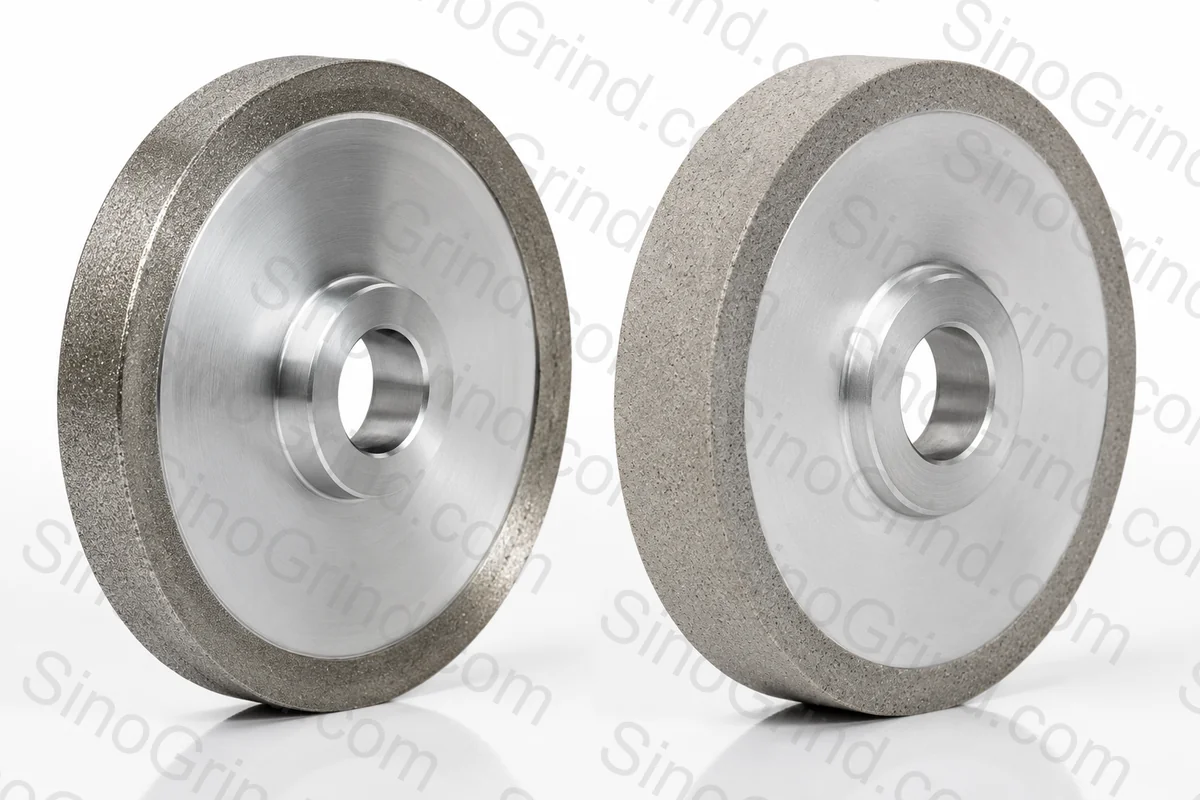
Browse the matching Diamond & CBN Grinding Wheels range for this application.
Boundary rule — when not to use diamond
Diamond is the hardest abrasive and the correct choice for hard, brittle, non-ferrous materials such as cemented carbide, ceramics, glass, silicon, sapphire, ferrite, graphite and composites. It must not be used on ferrous metals — steel, cast iron, and their alloys — because carbon in diamond reacts with iron at grinding temperatures (roughly above 700 °C / 1300 °F). This chemical affinity causes rapid, abnormal diamond wear (graphitisation) and destroys the wheel. For steel, hardened steel, cast iron and other ferrous workpieces, use CBN (cubic boron nitride) instead.