: +86 15874211461

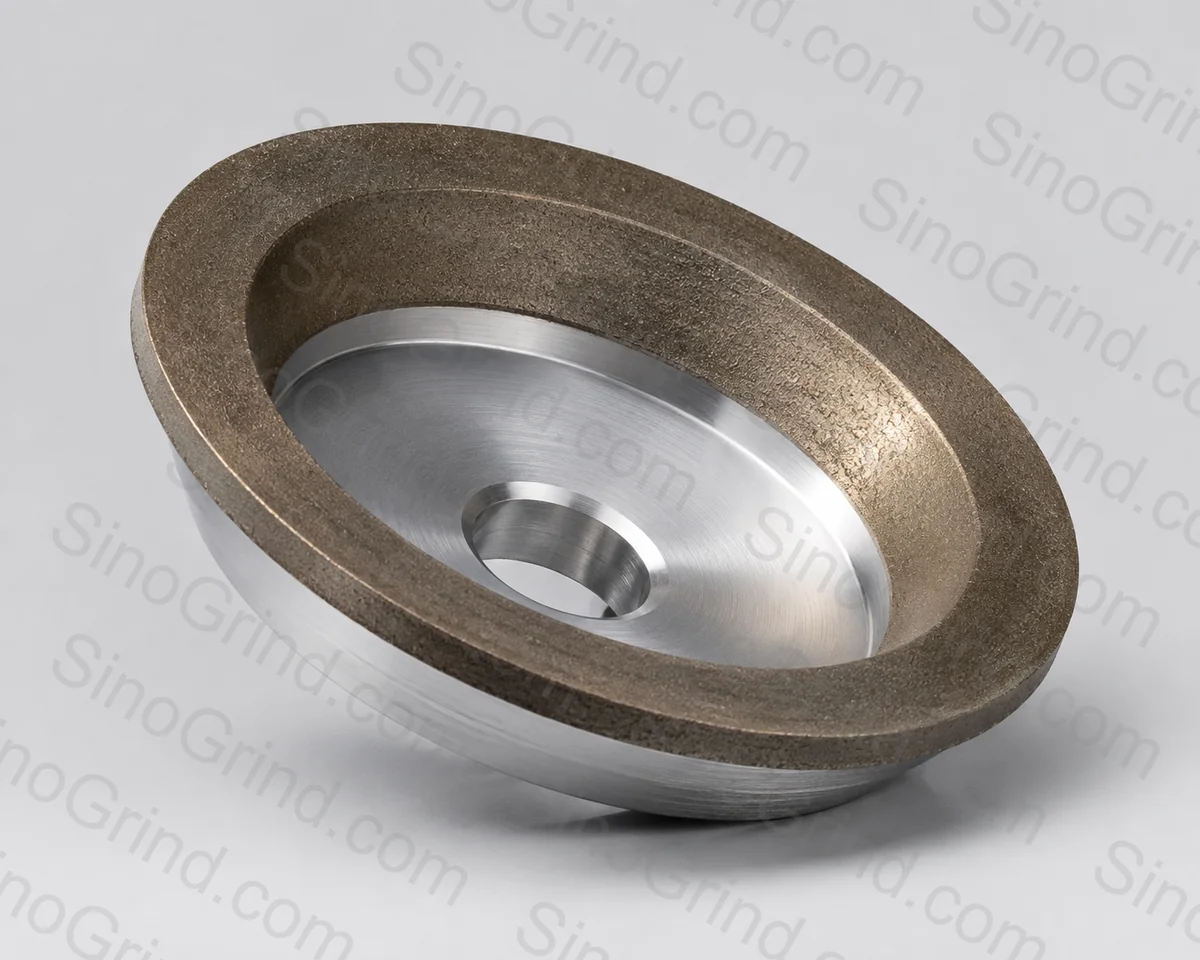
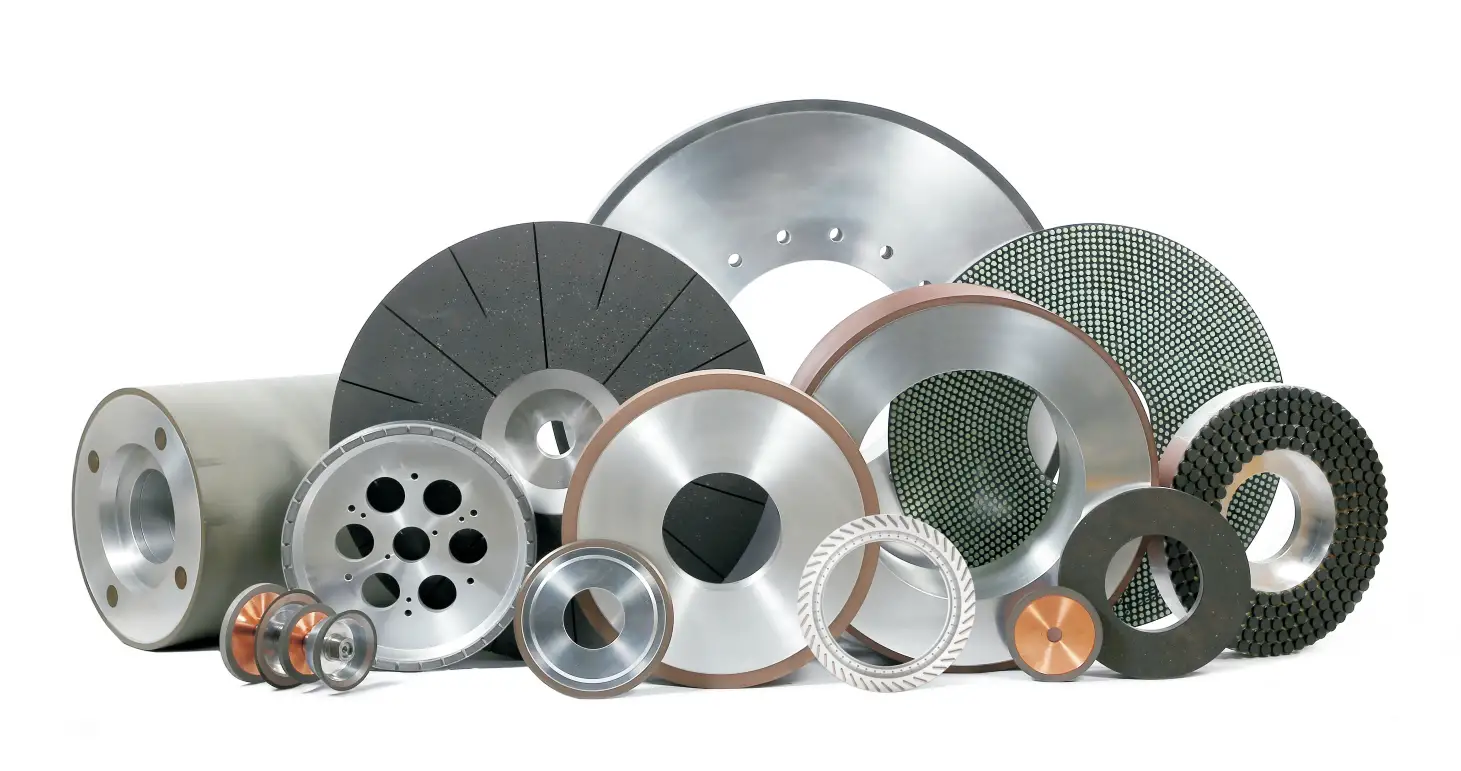
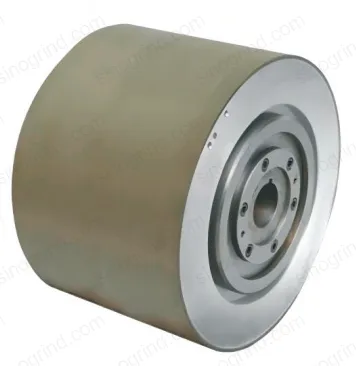
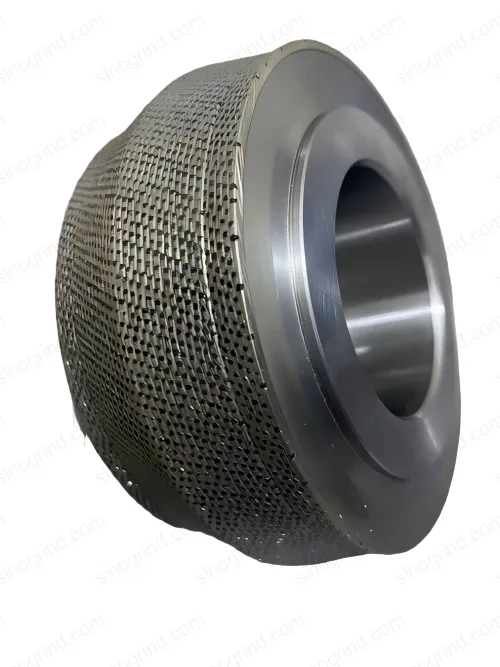
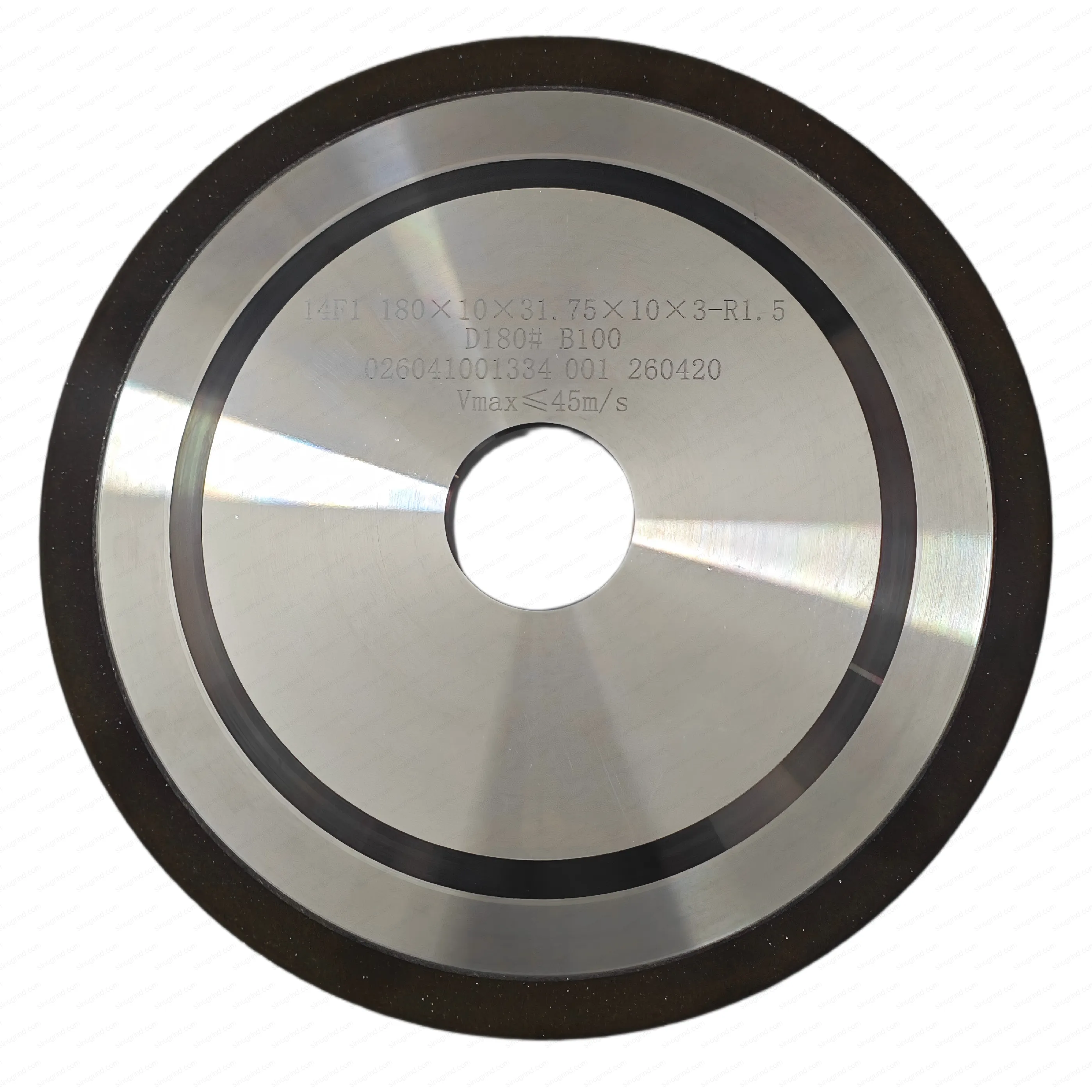
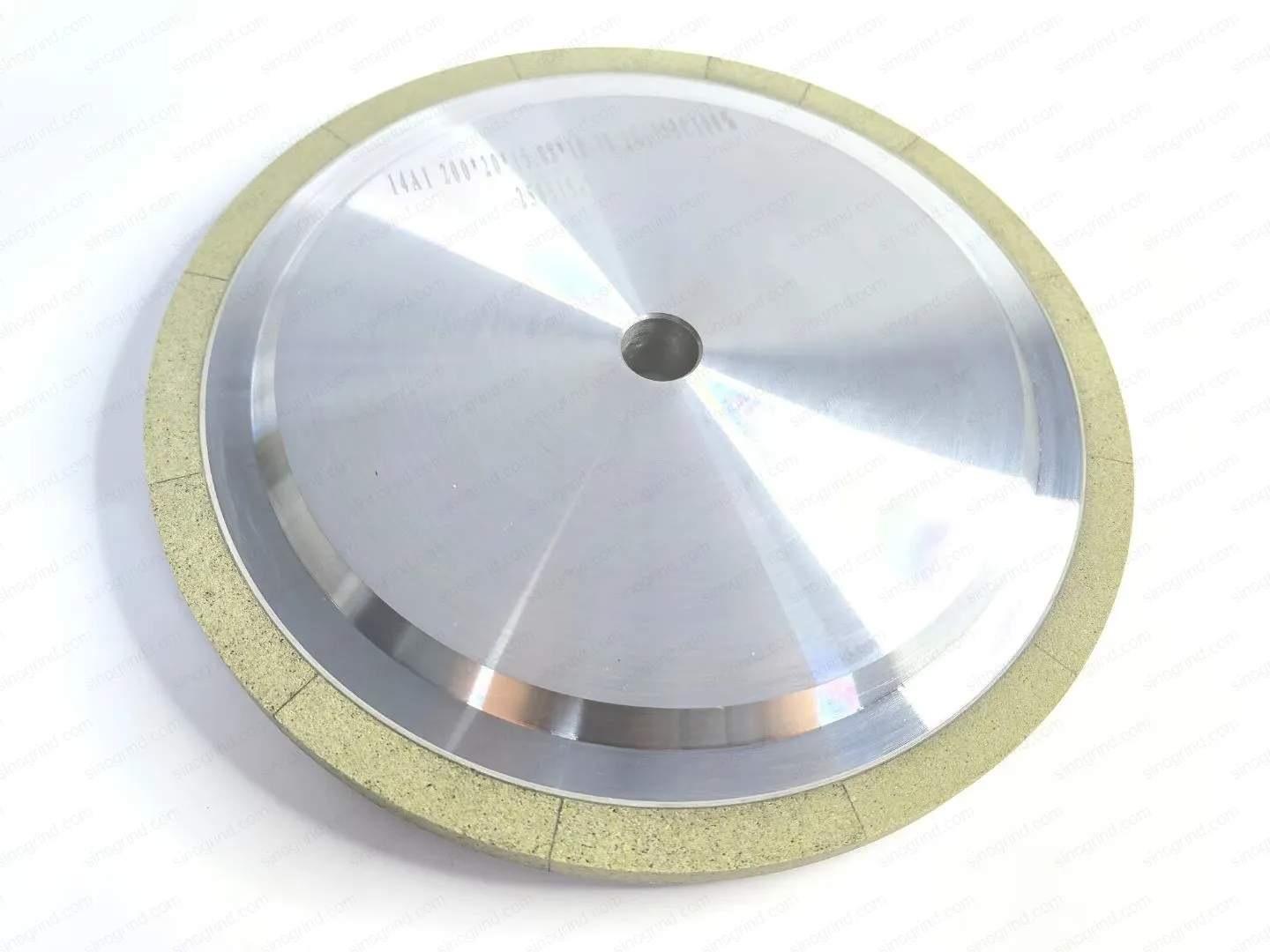
Quick answer: A metal bond diamond grinding wheel holds diamond in a sintered or bronze-based metal matrix. The hard bond grips the grit tightly, giving very high wear resistance, long life and excellent form retention — the choice for heavy stock removal, centreless grinding, form grinding and PCD edge preparation.
Related reading: Resin Bond Diamond Grinding Wheel · Vitrified Bond Diamond Grinding Wheel · Electroplated Diamond Grinding Wheel.
What a metal bond diamond wheel is
Metal bond wheels are made by mixing diamond with a metal powder (commonly bronze, cobalt, copper-tin or iron-based alloys) and sintering under pressure. The result is a hard, thermally conductive matrix that resists grain pull-out. Because the bond is hard, wheels can be used at high speeds and loads, and hold tight form and size for long production runs.
The trade-off: a hard bond can glaze rather than self-sharpen. Metal bond wheels therefore usually need periodic dressing with a diamond tool, or are supplied pre-dressed, and are often run with flood coolant or neat oil.
Why choose a metal bond
- Longest life. Very low bond wear means fewer wheel changes and a lower cost per part.
- Form retention. Holds profile and size through deep form and creep-feed grinding.
- High removal. Withstands heavy infeed and high wheel speeds.
- Thermally stable. Metal matrix conducts heat away from the cutting zone.
- Good electrical conductivity — enables electrolytic in-process dressing (ELID) and EDM dressing.
Where is it typically used?
| Application | Workpiece | Grit (FEPA D) | Concentration | Typical Ra |
|---|---|---|---|---|
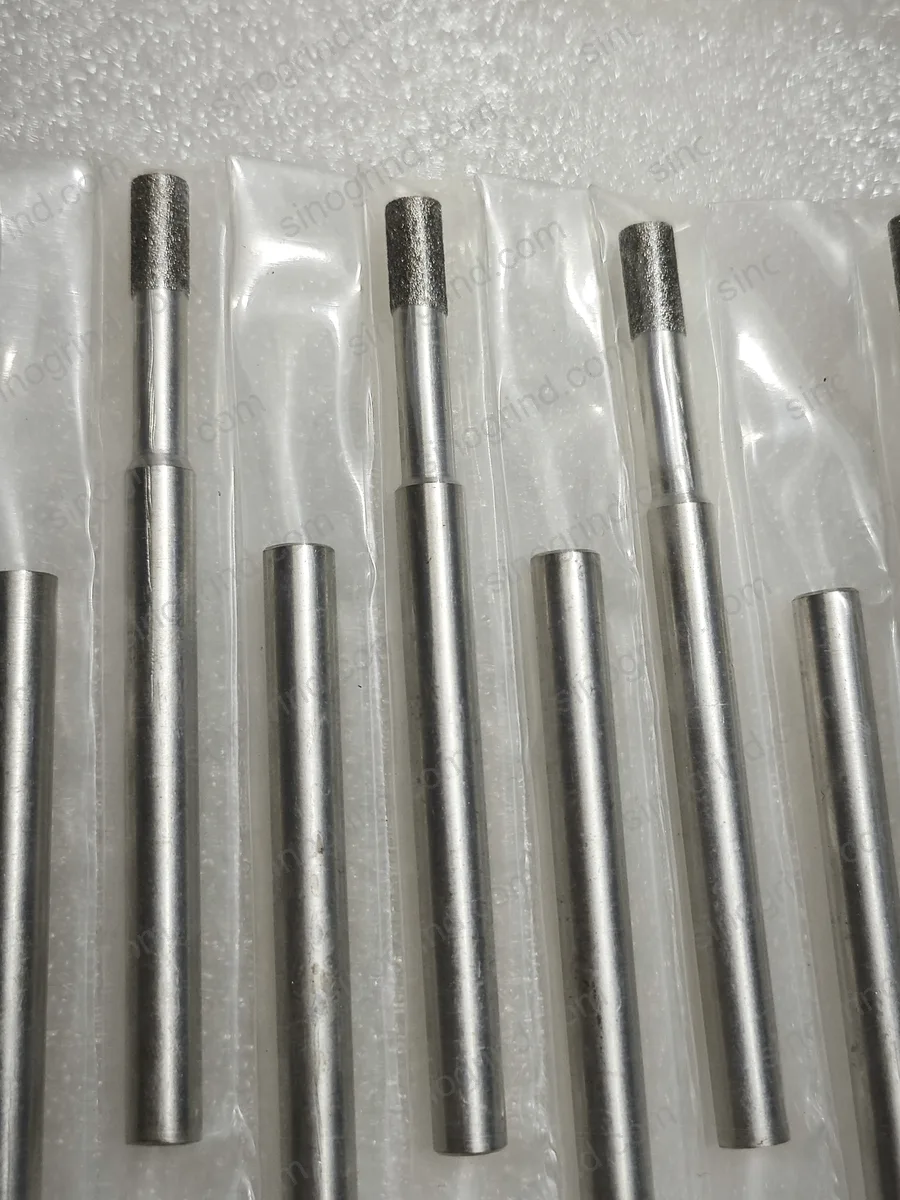
| Centreless grinding | Carbide pins, ceramic rods | D91–D181 | 100–150% | 0.2–0.6 µm |
| Deep form / creep-feed | Carbide and ceramic forms | D64–D151 | 100–150% | 0.2–0.5 µm |
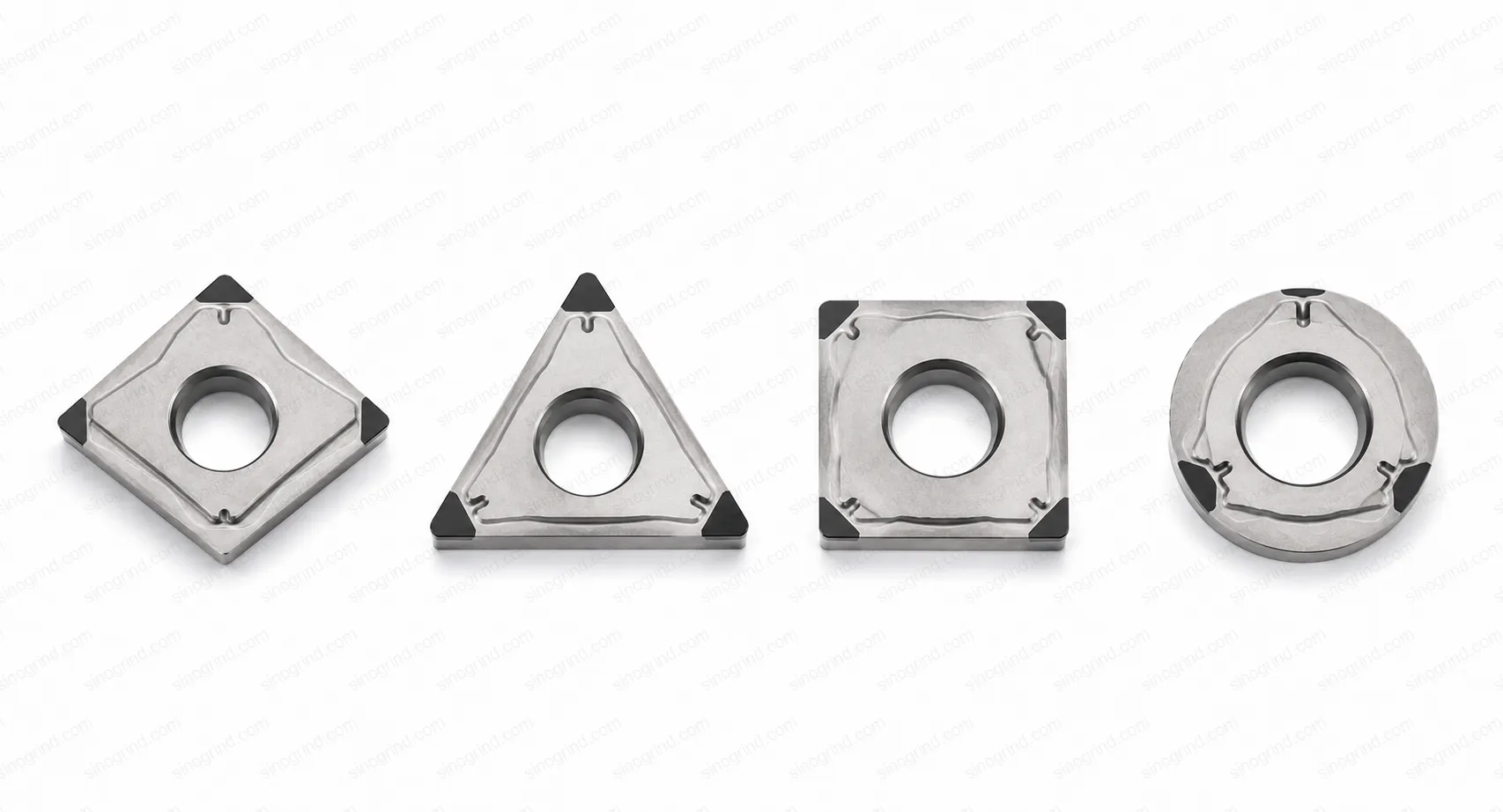
| PCD / PCBN peripheral | PCD inserts, cutters | D46–D91 | 125–150% | 0.05–0.2 µm |
| Ceramic OD / ID | Alumina, zirconia | D64–D126 | 100–125% | 0.3–0.6 µm |
| Silicon / sapphire | Wafers, substrates | D126–D301 | 100–175% | <0.05 µm (fine) |
Start here, then tune grit and concentration to your machine and finish target.
Which operating conditions are recommended?
| Parameter | Metal bond diamond | Note |
|---|---|---|
| Wheel speed | 25–45 m/s | Higher speeds improve MRR and finish |
| Depth of cut | 0.01–0.1 mm | Higher than resin |
| Coolant | Flood, neat oil preferred | Oil boosts finish and wheel life |
| Dressing | Diamond roller / block | Pre-dressed wheels available |
| ELID | Optional for ultra-fine | Requires conductive bond |
Typical ranges; ELID is used where sub-micron, low-damage surfaces are required.
ELID and advanced metal bonds
Because the metal bond conducts electricity, it can be dressed continuously on the machine by electrolytic in-process dressing (ELID). A conductive grinding fluid and a power supply dissolve bond material at a controlled rate, keeping a steady layer of protruding diamond. This is why metal bond dominates mirror-finish and low-damage work on ceramics, silicon and optical materials.
Cost note
Metal bond wheels cost more up front than resin, but their longer life usually lowers the cost per part on high-volume and heavy-load jobs.
When not to choose metal bond
- Small, low-power tool-room machines → resin or vitrified is more forgiving and cheaper.
- Frequent profile changes → resin or vitrified can be dressed and re-profiled more easily.
- No coolant capability → metal bond generally needs flood coolant.
Sub-table 3 — by bond system
| Bond | Grit hold | Best for | Finishing quality | Dressing | Typical use |
|---|---|---|---|---|---|
| Resin | Medium | Cool cutting, fine finish, carbide tools | Excellent | Easy | Tool & cutter, surface, ID |
| Metal | Very high | Heavy removal, long life, form retention | Good–very good | Hard (needs diamond dressing) | Centerless, form, PCD edge prep |
| Vitrified | Medium–high | Cool grinding, high MRR, precision | Very good–excellent | Easy (on-machine) | Surface, form, production |
| Electroplated | Single layer (mechanical) | Aggressive removal, thin/complex profiles | Moderate | Not dressable | Cut-off, wafer, form (once) |
| Hybrid (resin-metal) | High | Balanced life + finish | Very good | Medium | PCD, precision tools |
Where metal bond earns its keep
A sintered metal bond grips the diamond far more strongly than resin. That does two things: the wheel holds form under heavy load, and it keeps cutting after a resin wheel would have worn out of tolerance. The trade-off is that a metal bond does not release dull grains as readily, so it needs either a tougher abrasive grade or a deliberate conditioning step to stay open.
In practice metal bond wins on glass edging, stone, advanced ceramics, PCD/PCBN edge preparation and any job where the profile must survive thousands of parts. It is also the bond of choice for thin cut-off wheels and for precision slots where the side wall must stay parallel. It is a poor choice for light finishing passes on heat-sensitive work, where its rigidity and lower porosity generate more heat than a resin wheel.
How do I set up the job?
- Verify the wheel and the spindle. Metal-bond wheels are heavy; confirm the flange diameter, the bore fit and the maximum speed marked on the wheel before mounting.
- Mount and indicate. Seat on clean flanges, then indicate the rim and the face. A metal wheel that is out by more than 0.02 mm will show as chatter on the part.
- True with the right tool. True with a silicon-carbide stick or a diamond roll at reduced speed. Do not try to open a metal bond with a soft alumina stick — it will polish it.
- Condition the face. For sintered bronze bonds, a short SiC conditioning pass exposes diamond; for ELID bonds, start the electrolytic cycle before the first cut.
- Set the cut. 25–35 m/s, 0.01–0.05 mm depth per pass, flood coolant from the first second. Never start dry and add coolant later.
- Watch spindle load. Record the load on a good part. A steady rise over the shift means the face is loading and needs conditioning, not more infeed.
How do I fix common problems?
| Symptom | Most likely cause | What to change |
|---|---|---|
| Wheel stops cutting but keeps sparking | Dull grains held by the strong bond (no self-sharpening) | Condition with a SiC stick; raise infeed briefly to break the glaze |
| Pores blocked, part shows smears | Swarf packed into an open bond, low coolant flow | Increase flow and filtration, reduce table speed, condition the face |
| Profile drifts after a few hundred parts | Bond wear on a radius or form section | Re-true and check that grit and concentration suit the load |
| Burn or heat cracks on the workpiece | Too much energy for the coolant supply, or speed too high | Lower speed, raise flood, reduce depth per pass |
| Spindle load climbing through the shift | Progressive loading, not tool wear | Condition the wheel, check coolant concentration, inspect filtration |
Metal bond rarely fails suddenly - it signals through load and finish long before it fails.
What should an RFQ include?
- Bond family: sintered bronze, cobalt or nickel, plus ELID suitability if you use it.
- Shape and core: wheel code, steel or aluminium core, and the working-layer depth.
- Abrasive: diamond type (monocrystalline or polycrystalline), FEPA D grit and concentration.
- Machine limits: maximum speed, available spindle power and coolant pressure.
- Duty: depth of cut, table speed and the form tolerance you must hold over a batch.
- Life target: parts between dressings, so the wheel can be matched to your maintenance window.
Browse the matching Diamond & CBN Grinding Wheels range for this application.
Because metal bond is the most expensive of the four families, the business case rests on life, not price. Take the number of parts between dressings, multiply by the parts per dressing you get today, and compare the total cost including dressing downtime and scrap. On form grinding, a metal wheel that holds profile for a full shift usually pays back within one or two production runs, even at twice the wheel price.
Non-ferrous only
Diamond is for non-ferrous and non-metallic work. For steel and cast iron use a CBN wheel in the same bond family — diamond dissolves into hot steel and stops cutting.
Boundary rule — when not to use diamond
Diamond is the hardest abrasive and the correct choice for hard, brittle, non-ferrous materials such as cemented carbide, ceramics, glass, silicon, sapphire, ferrite, graphite and composites. It must not be used on ferrous metals — steel, cast iron, and their alloys — because carbon in diamond reacts with iron at grinding temperatures (roughly above 700 °C / 1300 °F). This chemical affinity causes rapid, abnormal diamond wear (graphitisation) and destroys the wheel. For steel, hardened steel, cast iron and other ferrous workpieces, use CBN (cubic boron nitride) instead.