: +86 15874211461

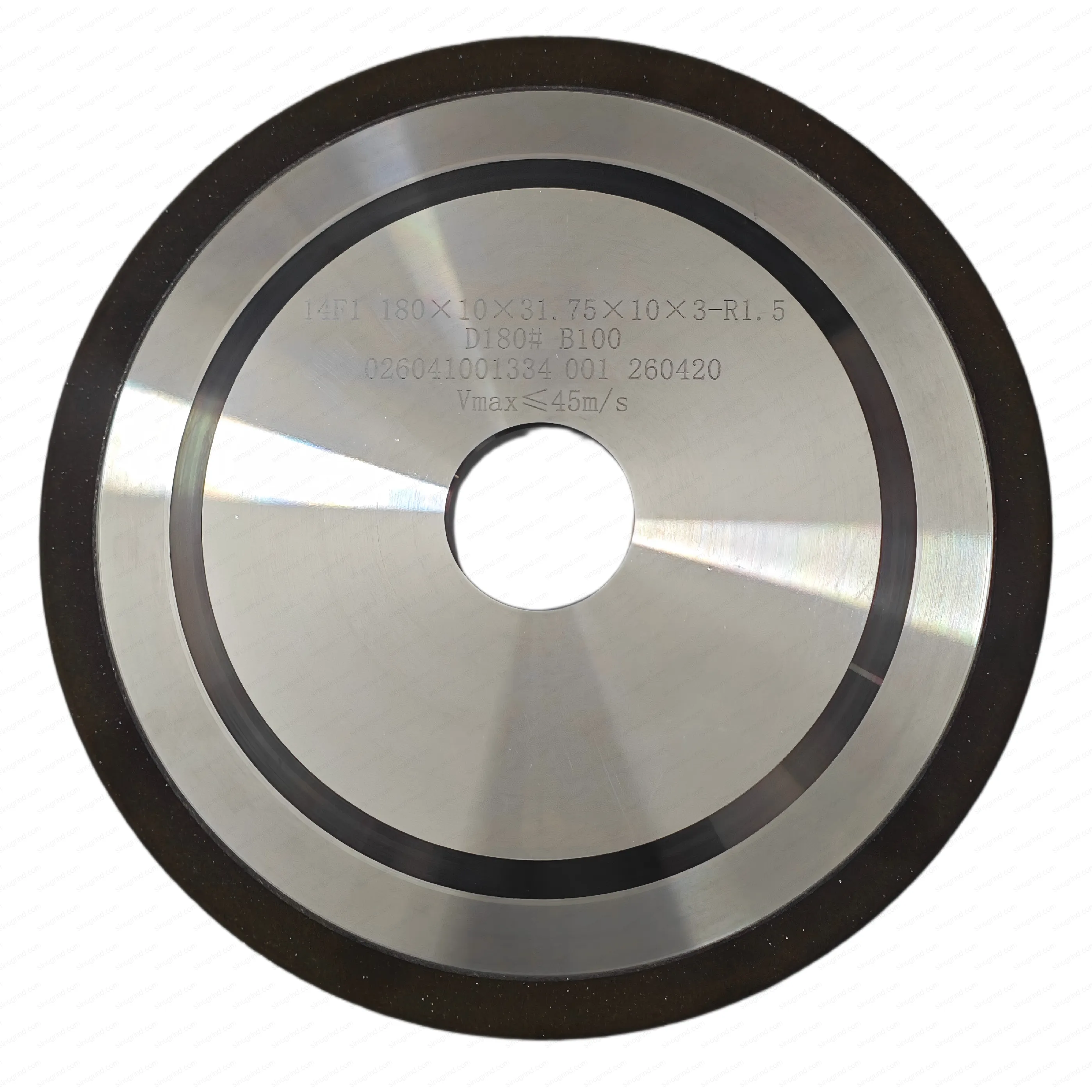
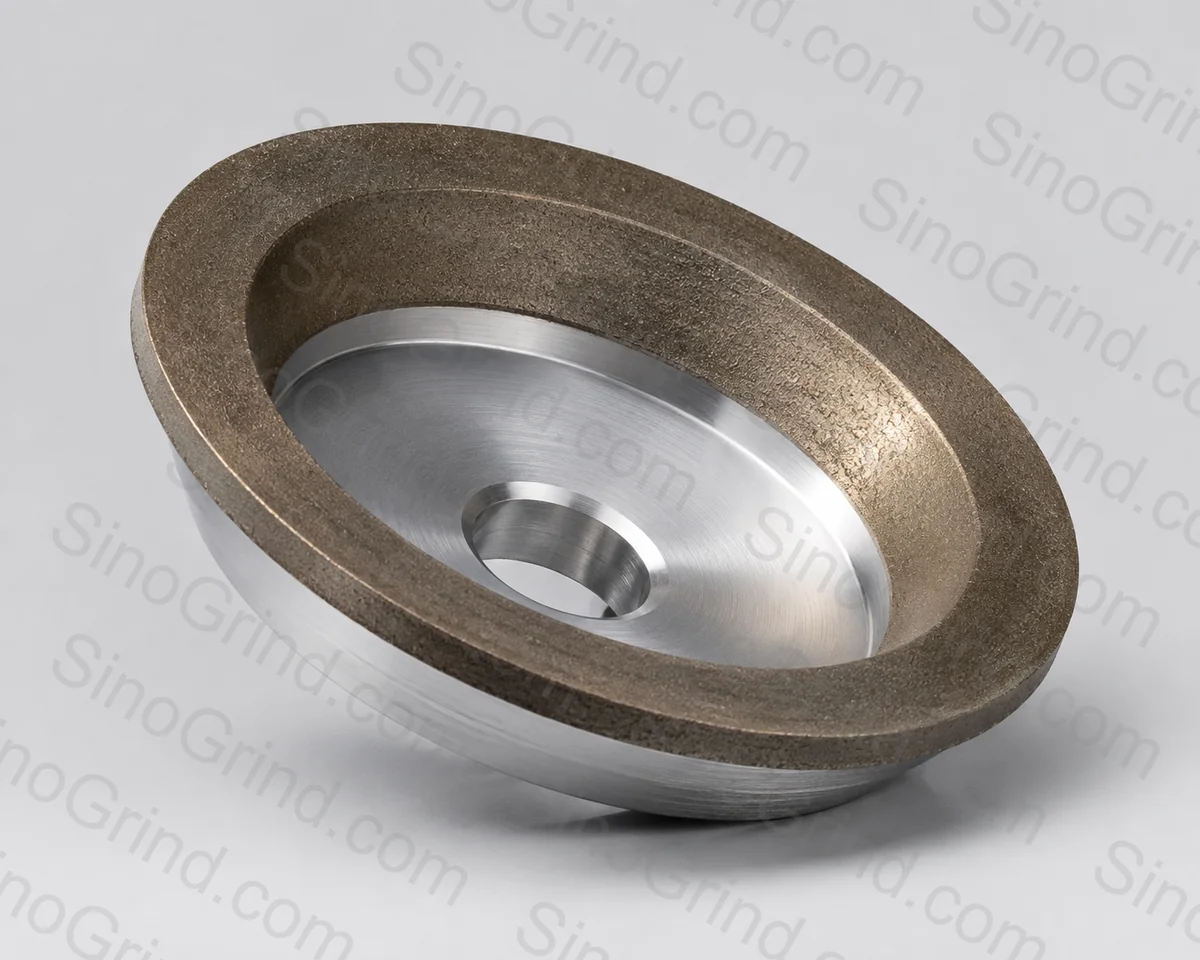
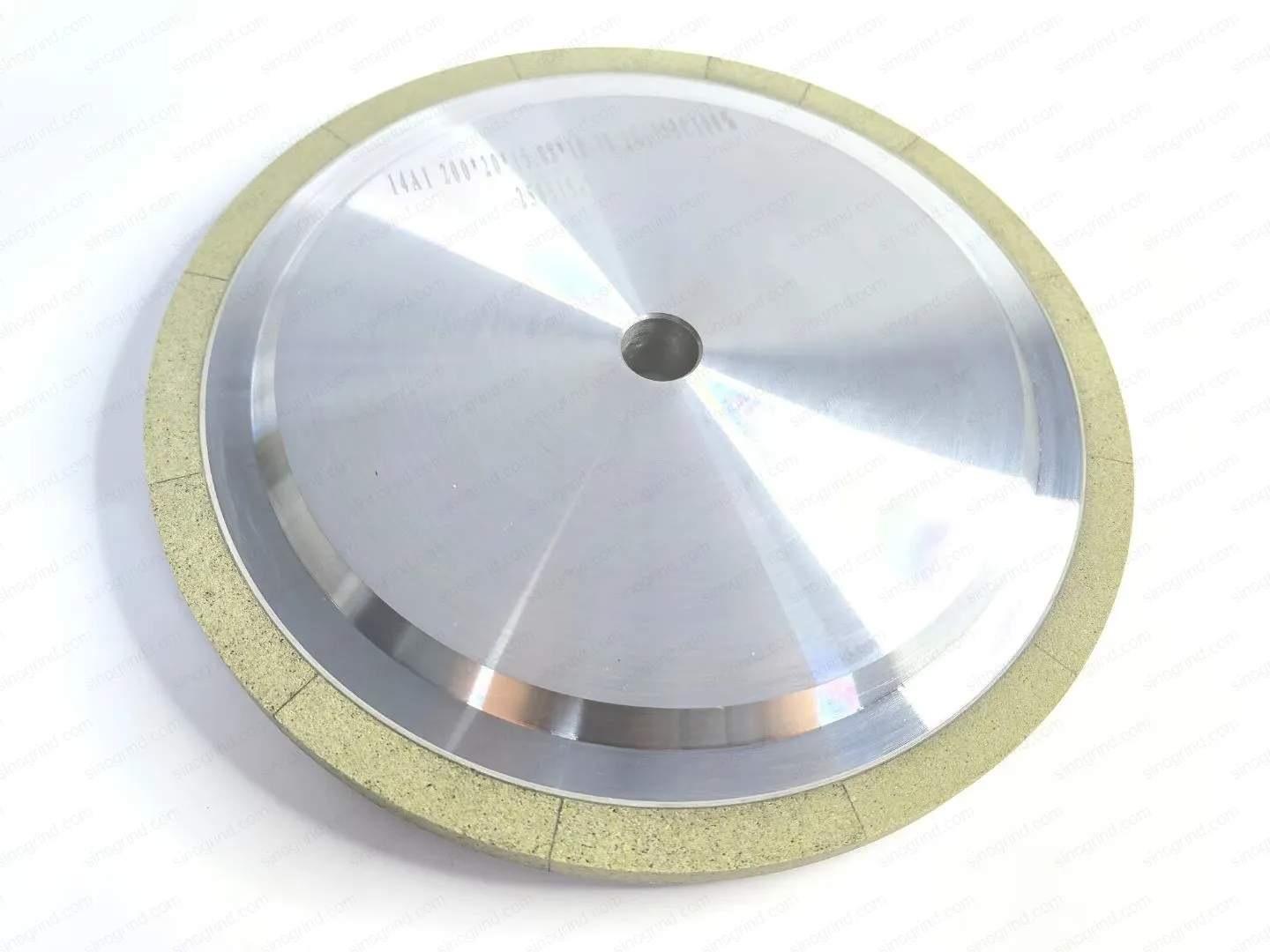
Quick answer: A resin bond diamond grinding wheel uses a synthetic phenolic resin to hold diamond grit. It is the most popular bond for grinding cemented carbide cutting tools because it cuts cool, produces an excellent finish (typically Ra 0.1–0.4 µm) and can be dressed and trued easily on the machine.
Related reading: Metal Bond Diamond Grinding Wheel · Vitrified Bond Diamond Grinding Wheel · Electroplated Diamond Grinding Wheel.
What a resin bond diamond wheel is
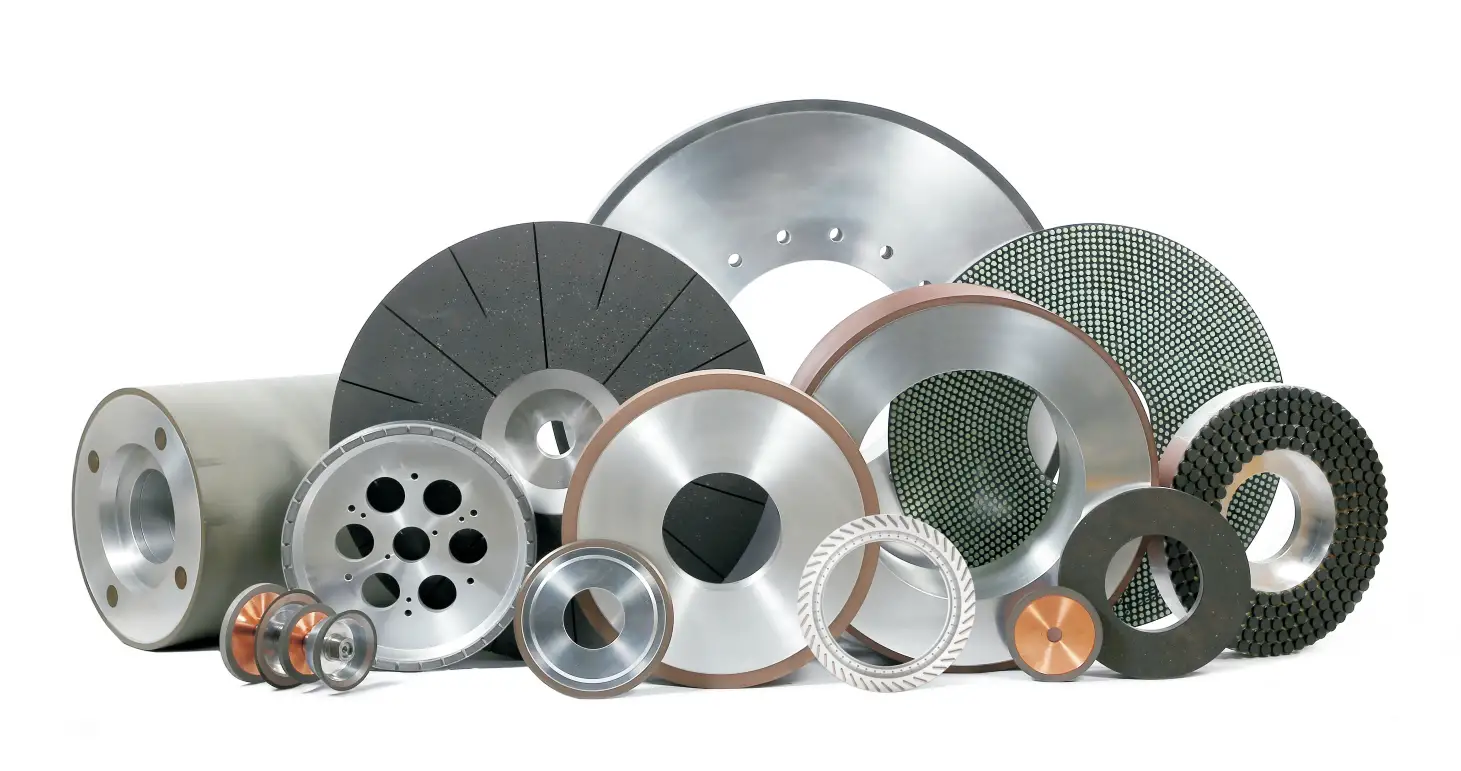
In a resin bond wheel, diamond crystals are mixed with a thermosetting resin powder (usually phenol-formaldehyde with fillers such as copper, zinc or aluminium oxide) and cured under heat and pressure. The resin matrix is comparatively soft, so dull diamond grains are released at a steady rate. That self-sharpening action keeps the wheel cutting freely and is the reason resin bond dominates fine-finishing and tool-room work.
Compared with metal and vitrified bonds, resin gives the lowest grinding forces and coolest cut, at the cost of slightly lower form retention and shorter life on high-load operations.
Why choose a resin bond
- Cool cutting. Low bond hardness limits heat build-up, protecting carbide edges and heat-sensitive coatings.
- Fine, consistent finish. Regular grain release avoids the burn and loading seen with harder bonds.
- Easy dressing. Trued and dressed with a conventional abrasive stick or diamond tool, on or off the machine.
- Wet or dry. Works with flood coolant or dry in tool rooms with light infeed.
- Lowest initial cost of the diamond bond family and the widest availability of shapes.
Where is it typically used?
| Application | Workpiece | Grit (FEPA D) | Concentration | Typical Ra |
|---|---|---|---|---|
| Flute & gash grinding | Carbide end mills, drills | D91–D151 | 100–150% | 0.2–0.4 µm |
| Peripheral / OD tool grinding | Carbide reamers, routers | D91–D126 | 100–125% | 0.1–0.3 µm |
| Surface & slot grinding | Carbide dies, wear parts | D64–D126 | 75–125% | 0.2–0.5 µm |
| Ceramic & glass finishing | Alumina, zirconia, glass | D46–D91 | 75–100% | 0.1–0.3 µm |
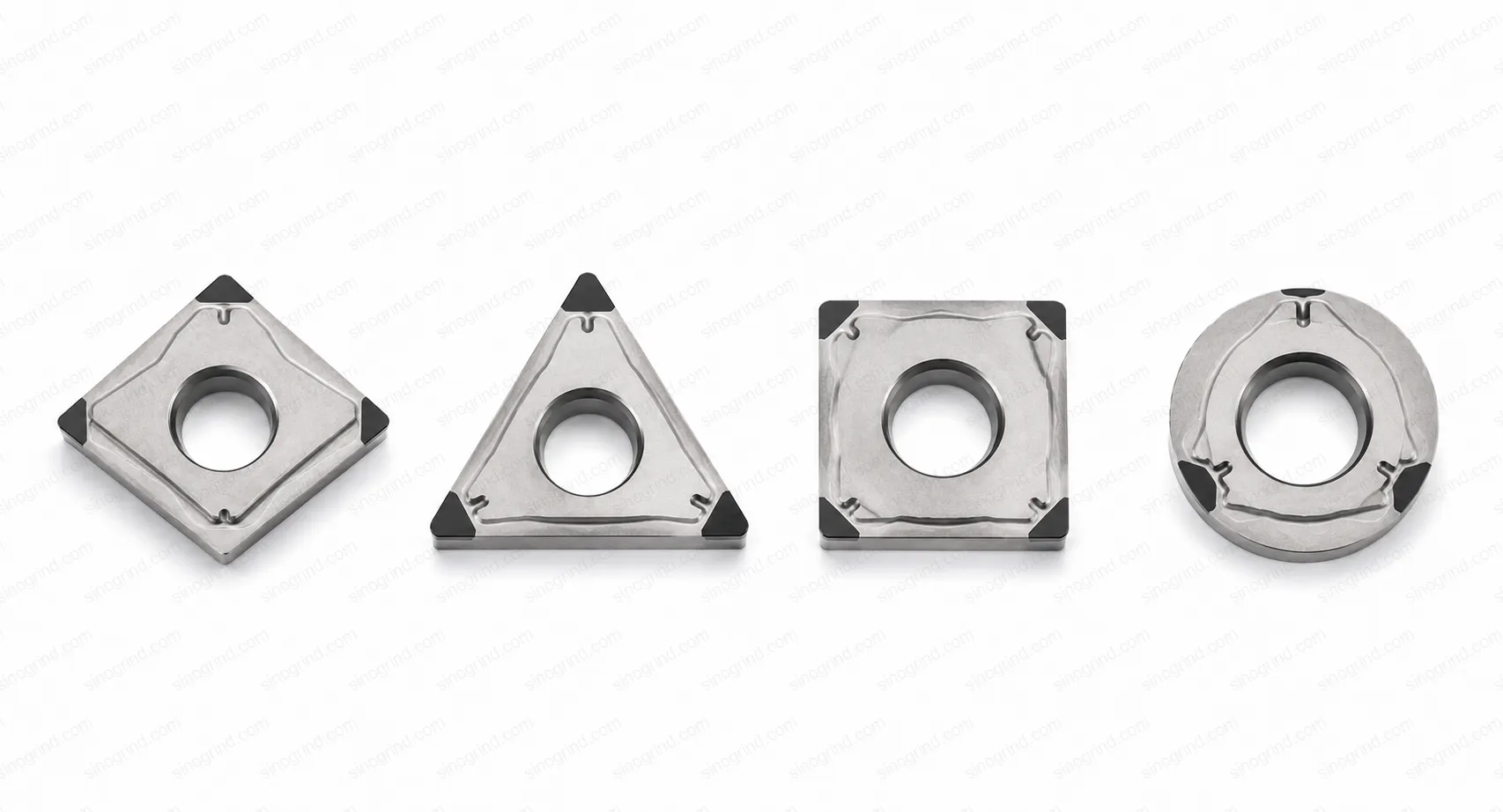
| PCD / PCBN edge preparation | PCD cutting inserts | D30–D64 | 100–125% | 0.05–0.2 µm |
Representative starting points; confirm by a short grinding trial on your machine.
Choosing grit, concentration and shape
Grit controls finish and stock removal, concentration controls how much diamond is in the working layer, and shape matches the geometry you must generate. As a working rule: coarser grit + higher concentration = faster removal and longer life; finer grit + lower concentration = better finish and cooler cut.
| Goal | Grit (FEPA D) | Concentration | Comment |
|---|---|---|---|
| Heavy stock removal | D126–D181 | 125–150% | Accept a slightly rougher finish |
| Balanced tool grinding | D91–D126 | 100–125% | Default for most carbide tools |
| Fine finish / edge prep | D46–D64 | 75–100% | Protect the cutting edge |
| Mirror / lapping finish | D15–D30 | 50–75% | Often used on vitrified instead |
Which operating conditions are recommended?
| Parameter | Resin bond diamond | Note |
|---|---|---|
| Wheel speed | 20–35 m/s (typical) | Higher speeds suit fine grit |
| Depth of cut | 0.005–0.05 mm | Light, multiple passes |
| Table speed | 8–20 m/min | Match to coolant delivery |
| Coolant | Flood water-based, 4–8% | Or neat oil for best finish |
| Dressing | Alumina stick / diamond tool | Re-true when finish drifts |
Values are typical industry ranges, not promises; optimise on your machine.
Dressing and truing
- True the wheel use a diamond dressing tool or brake truer to restore concentricity and profile before production.
- Dress the face feed a soft alumina abrasive stick across the face at reduced speed to open the bond and expose fresh diamond.
- Re-check measure the first-part finish; if it drifts, reduce dressing depth and check coolant concentration.
Resin wheel tip
Never force a resin bond wheel. If the wheel stops cutting, it is usually glazed — dress it rather than raising the infeed, which only generates heat.
Limitations and when to choose another bond
- High-load creep-feed or deep form grinding → choose metal or vitrified bond for better form retention.
- Very long unattended production runs → metal bond lasts longer between dressings.
- Ultra-fine (< D15) or optical work → vitrified or fine metal bond holds a sharper edge.
- Thin cut-off or one-off complex profiles → electroplated is more economical.
Sub-table 3 — by bond system
| Bond | Grit hold | Best for | Finishing quality | Dressing | Typical use |
|---|---|---|---|---|---|
| Resin | Medium | Cool cutting, fine finish, carbide tools | Excellent | Easy | Tool & cutter, surface, ID |
| Metal | Very high | Heavy removal, long life, form retention | Good–very good | Hard (needs diamond dressing) | Centerless, form, PCD edge prep |
| Vitrified | Medium–high | Cool grinding, high MRR, precision | Very good–excellent | Easy (on-machine) | Surface, form, production |
| Electroplated | Single layer (mechanical) | Aggressive removal, thin/complex profiles | Moderate | Not dressable | Cut-off, wafer, form (once) |
| Hybrid (resin-metal) | High | Balanced life + finish | Very good | Medium | PCD, precision tools |
What the resin bond actually does in the cut
A resin wheel does not simply rub the carbide away. Each diamond grain acts as a tiny cutting edge; as it dulls, the resin behind it wears back and the grain is released, exposing the next layer. This controlled bond wear is what keeps the wheel free-cutting. If the bond is too hard for the job the grains stay in place after they dull, the face polishes over (glazing) and the wheel starts rubbing instead of cutting.
Because resin is a poor heat conductor, most of the heat leaves with the chips and the coolant rather than soaking into the workpiece. That is why the same wheel can hold a carbide edge at Ra 0.2 µm on one machine and burn it on another: the difference is usually coolant delivery and wheel speed, not the wheel itself. Keep the flood aimed at the contact arc, keep the tank clean, and resin bond will out-finish any other bond on carbide.
How do I set up the job?
- Inspect and fit. Check the wheel for chipped edges and a clean bore. Fit on a clean spindle with flat, burr-free flanges and a paper gasket; tighten evenly to the supplier's torque.
- True before first use. True with a diamond dresser or brake truer at 60–70% of working speed, 0.01–0.02 mm per pass, until the face runs concentric.
- Open the face. Dress with a soft alumina stick across the full width at a low infeed to remove the truing glaze and expose fresh diamond.
- Set the cut. Start at 25–30 m/s, 0.005–0.02 mm depth per pass and 8–15 m/min table speed; increase only while the finish stays stable.
- Stabilise the coolant. Flood at 5–8% concentration, 1 bar or more at the nozzle, filtered to about 20 µm. Aim the stream at the contact point, not the wheel centre.
- Record the first part. Save speed, infeed, coolant pressure and the measured Ra. Every later drift is then diagnosed against a known baseline instead of guesswork.
How do I fix common problems?
| Symptom | Most likely cause | What to change |
|---|---|---|
| Face looks polished, sparks are tiny, finish improves but size stops moving | Glazing — bond too hard or infeed too light | Dress with an alumina stick; raise depth of cut slightly; check coolant |
| Grey smears and scratches on the part | Loading — swarf trapped in the bond, weak or dirty coolant | Raise concentration to 7–8%, clean the tank, reduce table speed |
| Micro-chipping along the carbide edge | Grit too coarse, concentration too high, or wheel run-out | Move to D64–D91 at 100%, re-true, check flange seating |
| Blue or straw discolouration on the part | Heat — low coolant flow or speed too high for the bond | Cut speed by 20%, increase flood, reduce infeed per pass |
| Taper or size drift over a batch | Wheel no longer true, or bond wearing unevenly | Re-true, re-dress, then re-establish the size offset |
Resin wheels fail by wearing, not by breaking - most symptoms are solved at the dressing station.
What should an RFQ include?
- Shape: the standard code (1A1, 11V9, 12V9, 6A2…) plus a sketch if the profile is not standard.
- Dimensions: outside diameter × thickness × bore, with the tolerance that matters to your spindle.
- Abrasive: diamond grit in FEPA D and concentration (75, 100, 125, 150).
- Bond details: phenolic resin with copper or zinc filler, and the working-layer depth.
- Operation: maximum spindle speed, wet or dry, and the Ra you must hold.
- Volume: parts per month and expected wheel life, so the quote can be costed per part.
Browse the matching Diamond & CBN Grinding Wheels range for this application.
Price per wheel is the wrong number to compare. Cost per part is wheel price divided by the number of good parts it makes, plus the downtime for each dress. A resin wheel that costs less but needs dressing every 200 parts can easily cost more per part than a metal wheel that runs three times as long. Send the part drawing and your current wheel marking and we will quote both options against the same batch size.
Rule of thumb
If a resin wheel stops cutting, dress it first. Raising the infeed on a glazed wheel only adds heat, and heat is what destroys both the carbide edge and the bond.
Boundary rule — when not to use diamond
Diamond is the hardest abrasive and the correct choice for hard, brittle, non-ferrous materials such as cemented carbide, ceramics, glass, silicon, sapphire, ferrite, graphite and composites. It must not be used on ferrous metals — steel, cast iron, and their alloys — because carbon in diamond reacts with iron at grinding temperatures (roughly above 700 °C / 1300 °F). This chemical affinity causes rapid, abnormal diamond wear (graphitisation) and destroys the wheel. For steel, hardened steel, cast iron and other ferrous workpieces, use CBN (cubic boron nitride) instead.