: +86 15874211461

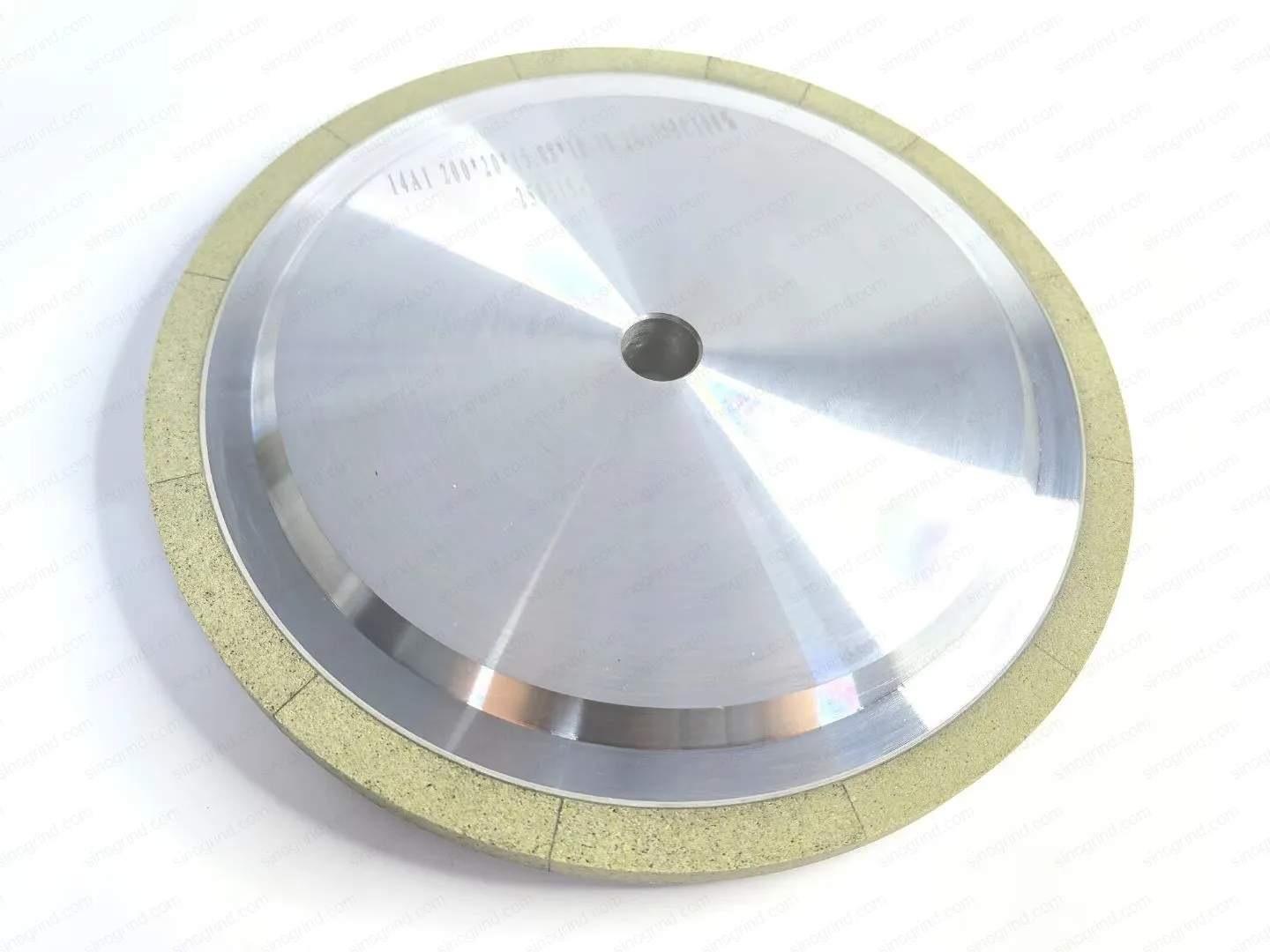
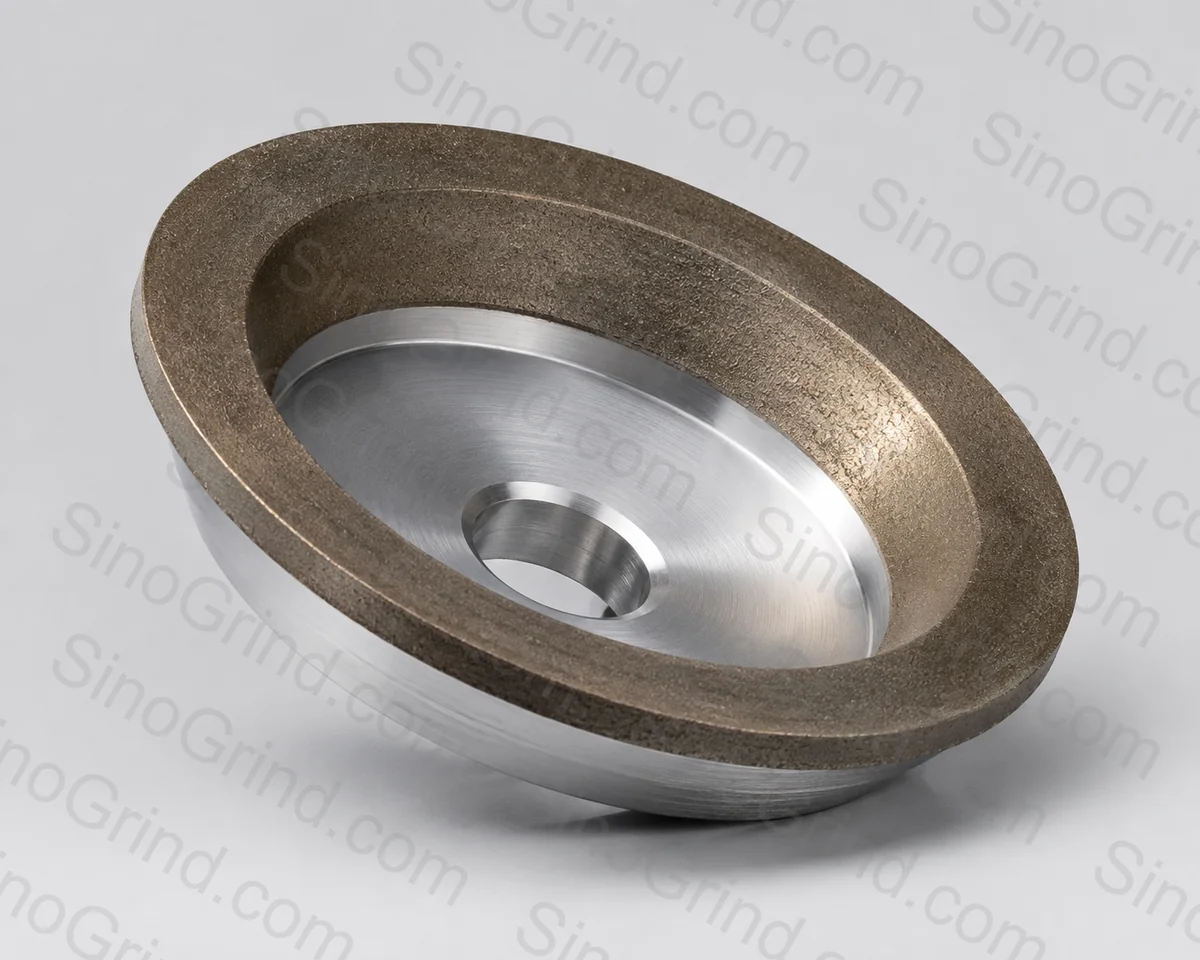
Quick answer: A vitrified bond diamond grinding wheel uses a glass/ceramic bond fired in a kiln. It combines a porous, free-cutting structure with good strength, giving excellent finish, high material removal rate and the ability to be dressed and trued on the machine — increasingly used for precision production grinding of ceramics, PCD and superabrasive composites.
Related reading: Resin Bond Diamond Grinding Wheel · Metal Bond Diamond Grinding Wheel · Electroplated Diamond Grinding Wheel.
What a vitrified bond diamond wheel is
Vitrified (ceramic) bond wheels are made by mixing diamond with a glass-frit bond and firing at high temperature. The bond forms a rigid but porous bridge between the grains. Porosity allows coolant to reach the cutting zone and gives chips somewhere to go, which is why vitrified wheels cut cool and freely while keeping a strong, stable profile.
Historically vitrified bond was used more with conventional abrasives, but advances in low-temperature frit systems and controlled firing now make vitrified diamond wheels a mainstream precision choice.
Why choose a vitrified bond
- Free, cool cutting. Open structure reduces burn and thermal damage.
- High material removal rate with good dimensional stability.
- On-machine dressing. Can be trued and dressed in situ, unlike electroplated.
- Excellent finish. Finer, more consistent surfaces than harder bonds in many jobs.
- Rigid & heat-resistant. Stable at high speed and high temperature.
Where is it typically used?
| Application | Workpiece | Grit (FEPA D) | Concentration | Typical Ra |
|---|---|---|---|---|
| Precision surface grinding | Ceramics, PCD, cermets | D64–D151 | 75–125% | 0.15–0.5 µm |
| Form grinding | Carbide and ceramic forms | D64–D126 | 100–150% | 0.2–0.5 µm |
| Production OD grinding | Ceramic shafts, PCD tools | D91–D151 | 100–150% | 0.2–0.6 µm |
| Fine finishing | Optics, ceramics | D15–D46 | 50–100% | 0.05–0.2 µm |
Vitrified diamond is the fastest-growing bond for precision and form work.
Which operating conditions are recommended?
| Parameter | Vitrified bond diamond | Note |
|---|---|---|
| Wheel speed | 25–40 m/s | Porosity helps coolant reach the zone |
| Depth of cut | 0.005–0.05 mm | Balance MRR against wheel wear |
| Coolant | Flood water-based | High flow to flush the open structure |
| Dressing | Diamond tool, on-machine | Easy to re-profile |
| Porosity | Tunable | Higher porosity = cooler cut |
Vitrified wheels are usually custom-fired; specify profile, grit and porosity together.
Dressing and re-profiling
Unlike metal or electroplated wheels, a vitrified wheel can be re-profiled repeatedly with a diamond dressing tool. This makes it economical for form grinding where the profile wears, and for production runs that need several wheel re-cuts before replacement.
Vitrified vs metal
Choose vitrified for cool cutting, high MRR and re-profileable form work; choose metal for maximum life and the tightest sustained form tolerance.
When not to choose vitrified bond
- Very thin cut-off or one-off complex profiles → electroplated is cheaper and simpler.
- Maximum life at maximum load with no dressing → metal bond may last longer per cut.
- Job shops without controlled dressing skill → resin is more forgiving to set up.
Sub-table 3 — by bond system
| Bond | Grit hold | Best for | Finishing quality | Dressing | Typical use |
|---|---|---|---|---|---|
| Resin | Medium | Cool cutting, fine finish, carbide tools | Excellent | Easy | Tool & cutter, surface, ID |
| Metal | Very high | Heavy removal, long life, form retention | Good–very good | Hard (needs diamond dressing) | Centerless, form, PCD edge prep |
| Vitrified | Medium–high | Cool grinding, high MRR, precision | Very good–excellent | Easy (on-machine) | Surface, form, production |
| Electroplated | Single layer (mechanical) | Aggressive removal, thin/complex profiles | Moderate | Not dressable | Cut-off, wafer, form (once) |
| Hybrid (resin-metal) | High | Balanced life + finish | Very good | Medium | PCD, precision tools |
Porous bond, cool cut, sharp profile
Vitrified bond is glass-like: hard, rigid and porous. The pores carry coolant into the cut and give chips somewhere to go, which is why a vitrified diamond wheel cuts cooler than a dense metal bond at the same removal rate. The glass bridges also wear in a controlled way, so the wheel can be dressed and re-profiled many times rather than replaced.
The same rigidity makes vitrified wheels less forgiving of abuse. They tolerate heat and wear well but not impact, side load or a bad mount. Treat a vitrified wheel as a precision tool: ring-test it, mount it true, dress it properly, and it will hold a form that resin cannot match over a long run.
How do I set up the job?
- Ring test. Tap the wheel lightly with a non-metallic object. A clear ring is good; a dull thud means a crack and the wheel must not be used.
- Mount true. Clean flanges, correct blotter, even torque. Indicate the rim after mounting — vitrified wheels cannot be forced straight by the nut.
- True with a diamond roll. True at working speed with a sharp diamond roll, 0.005–0.01 mm per pass, with flood coolant on the roll.
- Dress to open. Finish with a light dressing pass to expose diamond without rounding the profile.
- Set the cut. 30–35 m/s, 0.005–0.03 mm depth, coolant aimed at the contact arc; keep the wheel guarded at all times.
- Log the dress. Record diameter after each dress so the size offset and remaining life are known before the next batch.
How do I fix common problems?
| Symptom | Most likely cause | What to change |
|---|---|---|
| Chipped corners on the part | Wheel edge breaking down or grit too coarse | Chamfer the wheel edge, move one grit finer, reduce infeed |
| Burn marks at the exit side | Pores clogged, coolant not reaching the arc | Dress to open the bond, re-aim the nozzle, raise flow |
| Profile drifts on a radius | Insufficient bond hardness for the load, or worn diamond roll | Re-true, then check the roll and the dressing depth |
| Wheel wobbles or sings | Mount not clean, flange damaged, or wheel out of balance | Re-mount, inspect flanges, balance the assembly |
| Wheel cracks or breaks | Impact, side load or overspeed — stop using the wheel | Replace the wheel; check guard, speed limit and handling |
Vitrified wheels fail by chipping and cracking, so inspection before mounting matters more than any parameter.
What should an RFQ include?
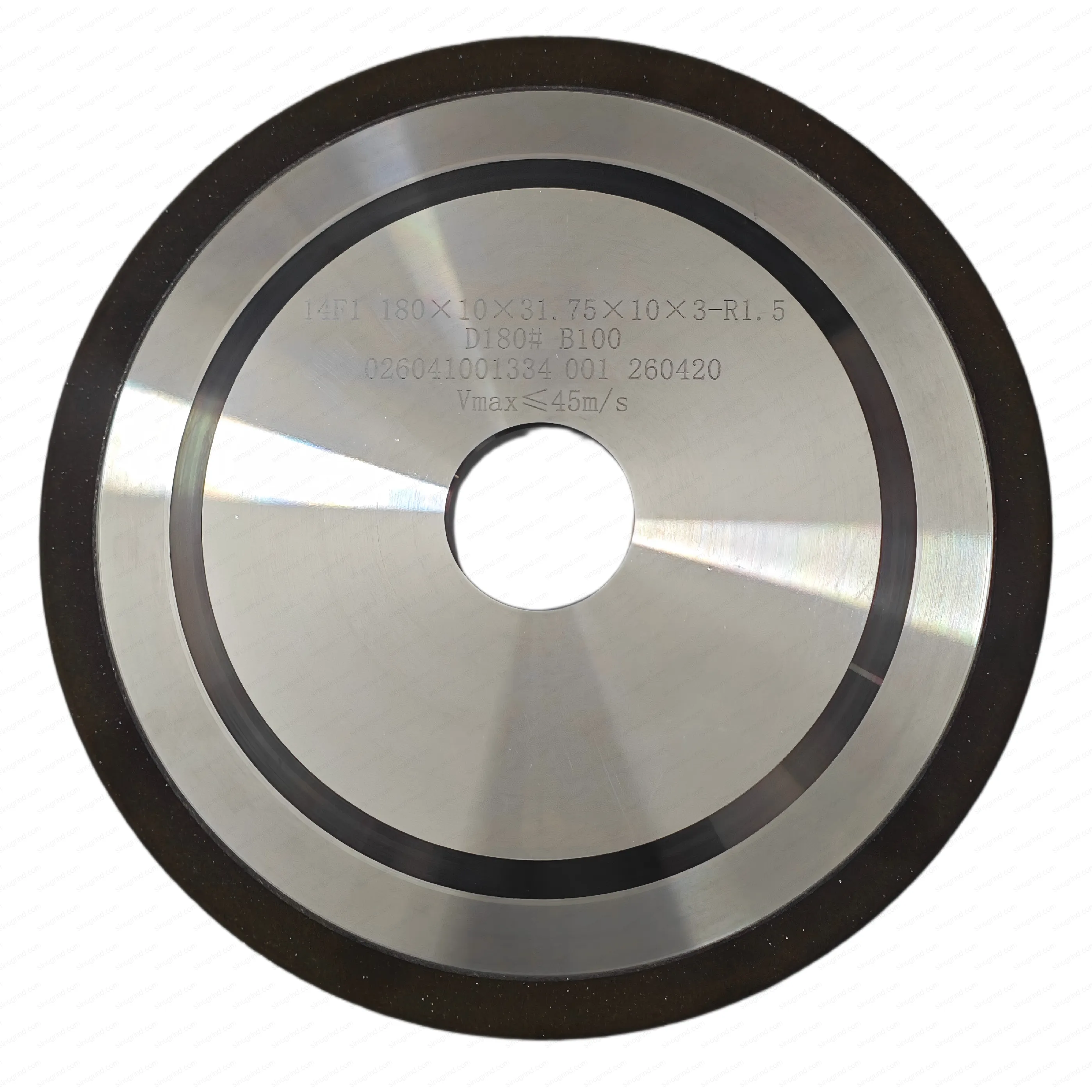
- Specification: shape code, diameter, thickness, bore and working-layer depth.
- Bond grade: vitrified bond hardness and porosity, matched to your removal rate.
- Abrasive: diamond grit and concentration; note if the wheel must be re-profilable.
- Speed: maximum operating speed and the spindle speed you actually run.
- Coolant: water-based or oil, pressure and filtration level.
- Life: profile tolerance and the number of dresses the wheel must survive.
Browse the matching Diamond & CBN Grinding Wheels range for this application.
A vitrified wheel usually costs more than a resin wheel of the same size, but it can be dressed back into service several times. Divide the price by the total number of parts across all its dresses rather than by the first run, and the gap narrows sharply. On profile work the real saving is scrap: a worn profile produces out-of-tolerance parts long before the wheel is used up.
Boundary rule — when not to use diamond
Diamond is the hardest abrasive and the correct choice for hard, brittle, non-ferrous materials such as cemented carbide, ceramics, glass, silicon, sapphire, ferrite, graphite and composites. It must not be used on ferrous metals — steel, cast iron, and their alloys — because carbon in diamond reacts with iron at grinding temperatures (roughly above 700 °C / 1300 °F). This chemical affinity causes rapid, abnormal diamond wear (graphitisation) and destroys the wheel. For steel, hardened steel, cast iron and other ferrous workpieces, use CBN (cubic boron nitride) instead.