: +86 15874211461

Diamond & CBN Grinding Wheels
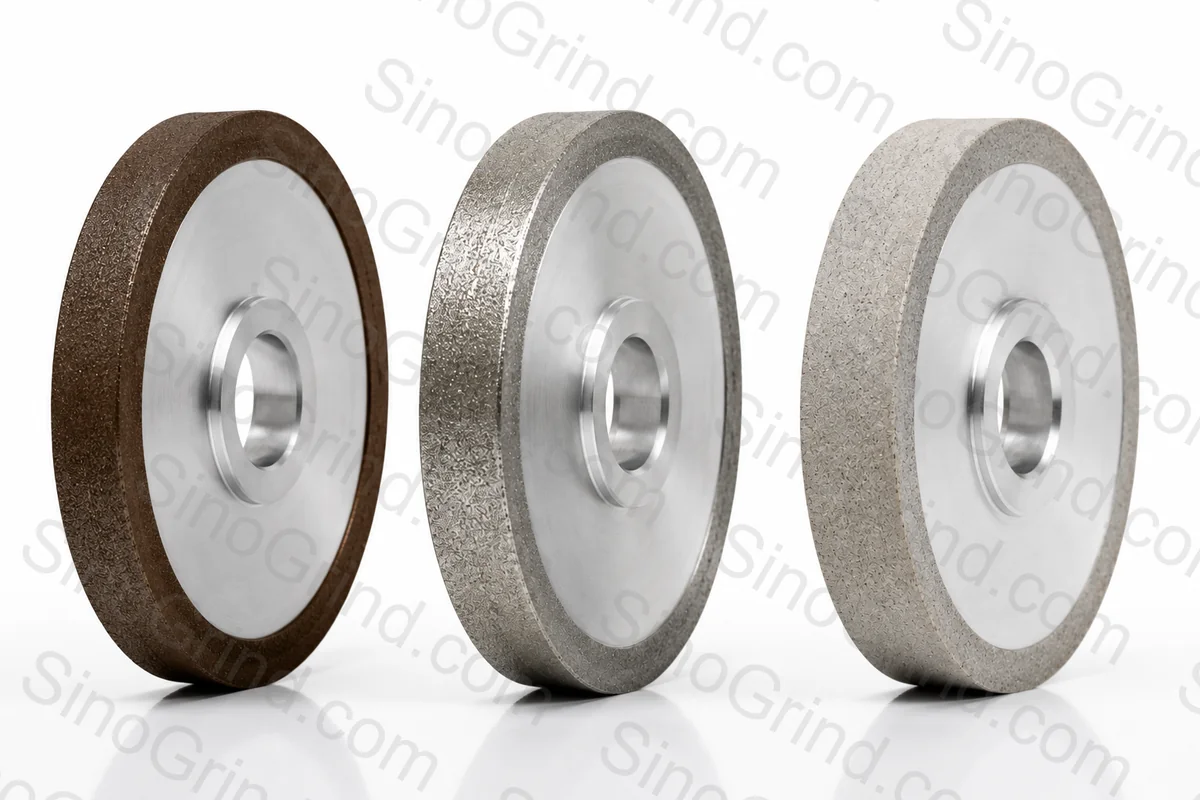
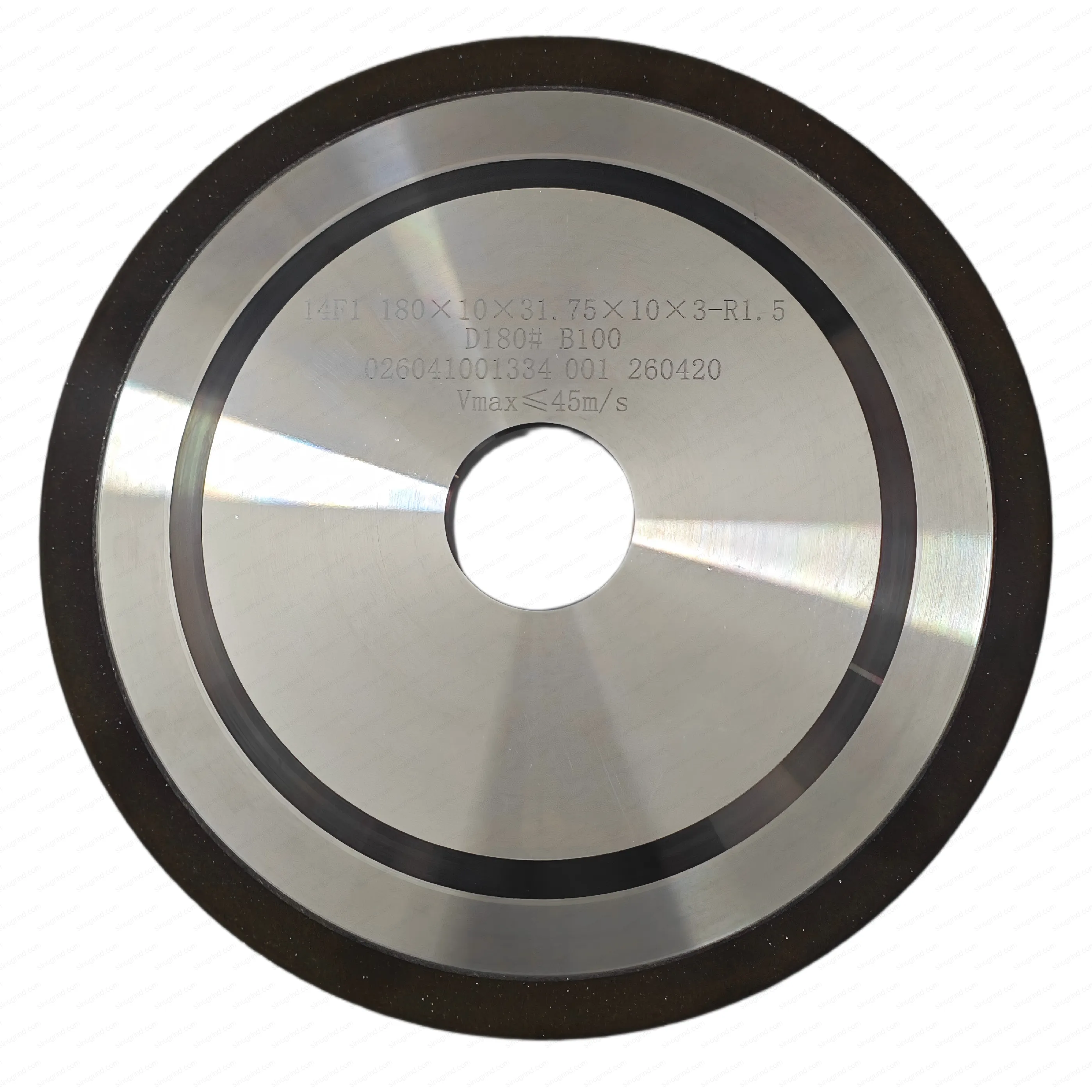
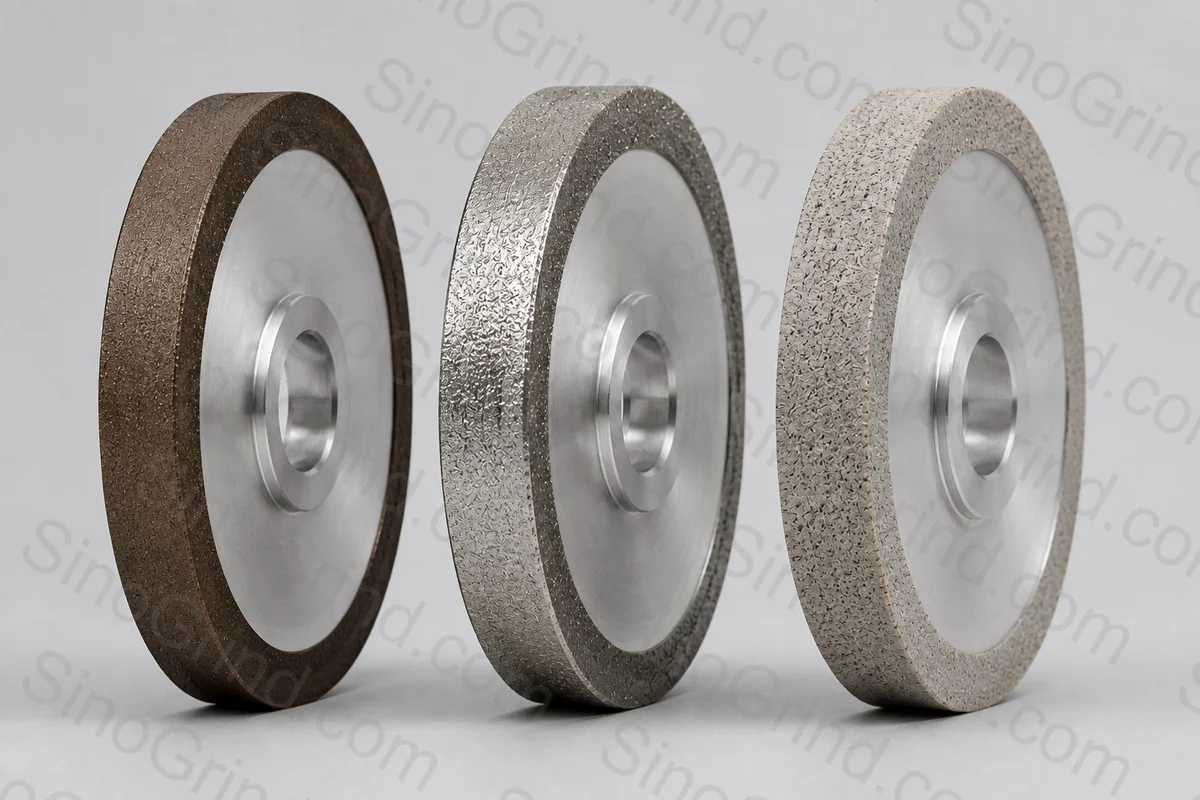
SinoGrind manufactures precision diamond grinding wheels and CBN grinding wheels in resin, metal, vitrified, and electroplated bonds.
View ProductPick your workpiece material and grinding operation to get a recommended abrasive, bond, grit, concentration, shape and coolant — with a boundary warning for ferrous materials.
Boundary rule — when not to use diamond
Diamond is the hardest abrasive and the correct choice for hard, brittle, non-ferrous materials such as cemented carbide, ceramics, glass, silicon, sapphire, ferrite, graphite and composites. It must not be used on ferrous metals — steel, cast iron, and their alloys — because carbon in diamond reacts with iron at grinding temperatures (roughly above 700 °C / 1300 °F). This chemical affinity causes rapid, abnormal diamond wear (graphitisation) and destroys the wheel. For steel, hardened steel, cast iron and other ferrous workpieces, use CBN (cubic boron nitride) instead.
Use this matrix to sanity-check the recommendation, or to specify wheels across several materials and processes. It is the same logic the tool applies.
| Material | Typical operation | Recommended bond | Grit (FEPA D) | Concentration | Typical Ra |
|---|---|---|---|---|---|
| Cemented carbide (WC-Co) | Cutter & tool grinding | Resin / Metal | D91–D181 | 100–150% | 0.1–0.4 µm |
| PCD / PCBN | Edge prep, peripheral | Metal / Vitrified | D46–D91 | 125–150% | 0.05–0.2 µm |
| Advanced ceramics (Al₂O₃, ZrO₂, Si₃N₄) | Surface / form | Vitrified / Resin | D64–D151 | 75–125% | 0.2–0.6 µm |
| Optical / flat glass, quartz | Edge, bevel, CNC | Metal / Resin | D64–D126 | 75–125% | 0.05–0.3 µm |
| Semiconductor (Si, SiC, sapphire) | Back-grind, dicing | Electroplated / Resin | D126–D400+ | 100–200% | <0.02 µm (fine) |
| Ferrite / soft magnetic | Surface / form | Resin / Metal | D91–D181 | 100–150% | 0.2–0.8 µm |
| Graphite / carbon | Form / cut-off | Electroplated / Metal | D181–D301 | 75–125% | — |
| CFRP / composites | Cut, slot | Electroplated | D252–D400 | — | — |
| Thermal-spray coatings | Grind, polish | Resin / Metal | D126–D252 | 75–100% | 0.1–0.4 µm |
| Stone / engineered quartz | Edge, calibrate | Metal / Electroplated | D181–D400 | — | — |
| Zirconia (dental / medical) | Finish, polish | Resin / Vitrified | D46–D126 | 75–100% | 0.1–0.3 µm |
| Steel / cast iron (ferrous) | — | Not diamond — use CBN | — | — | — |
Representative values for planning; confirm final grit, concentration and bond with a grinding trial on your machine.
| Decision | Rule |
|---|---|
| Abrasive | Ferrous (steel, cast iron) → CBN; hard non-ferrous → diamond |
| Bond | Long life / form → metal; cool finish → resin; precision → vitrified; thin → electroplated |
| Grit | Coarser for removal, finer for finish (FEPA D) |
| Concentration | Higher for hard materials and life, lower for delicate finishing |
| Shape | Chosen from the feature: 1A1 flat/OD, 11V9 flute, 6A2 dish, 1A1R cut-off |
Always confirm the final specification with a short grinding trial on your machine.
Need a custom specification? Send your drawing or current wheel marking and we will quote a diamond wheel to fit your material, machine and finish target — OEM, custom and private label supported.
Start with the workpiece material. If it is ferrous (steel, cast iron) use CBN, not diamond. For hard non-ferrous materials choose diamond, then pick the bond by life and finish needs, grit by finish, and concentration by removal and life.
Diamond is the hardest abrasive and suits hard non-ferrous materials. CBN suits ferrous materials because it is chemically stable against iron, which destroys diamond at grinding temperature.
Resin for cool cutting and fine finish, metal for long life and form retention, vitrified for precision and re-profiling, and electroplated for thin or complex profiles.
Coarser grit (e.g. D151) for removal, finer grit (e.g. D64 or D46) for finish. Most general diamond grinding starts at D91-D126.
100% is the standard default. Increase to 125-150% for harder materials, form retention and high volume; decrease for delicate fine finishing.
Yes. It runs in your browser and gives an indicative specification. Always confirm with a short grinding trial and the wheel maker.
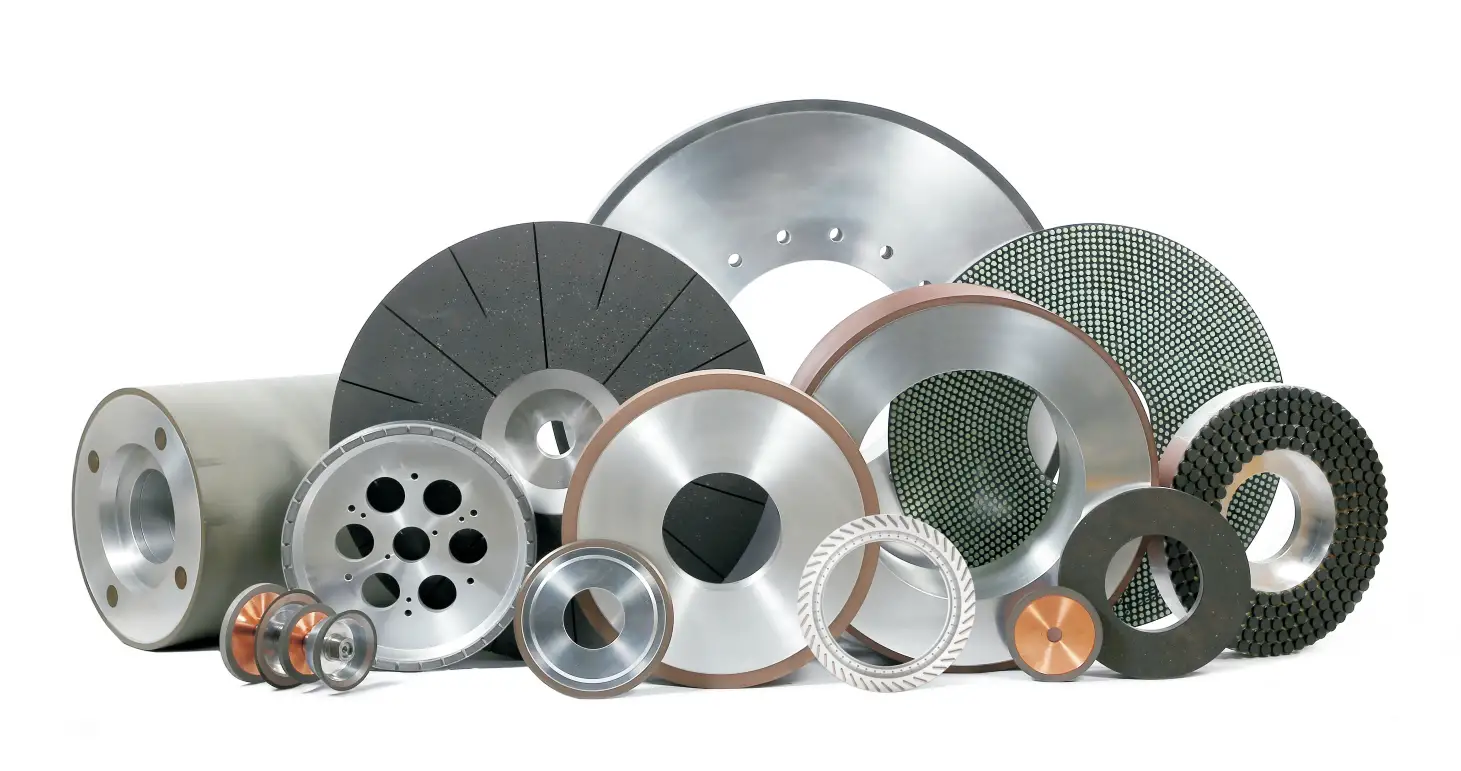
SinoGrind manufactures precision diamond grinding wheels and CBN grinding wheels in resin, metal, vitrified, and electroplated bonds.
View Product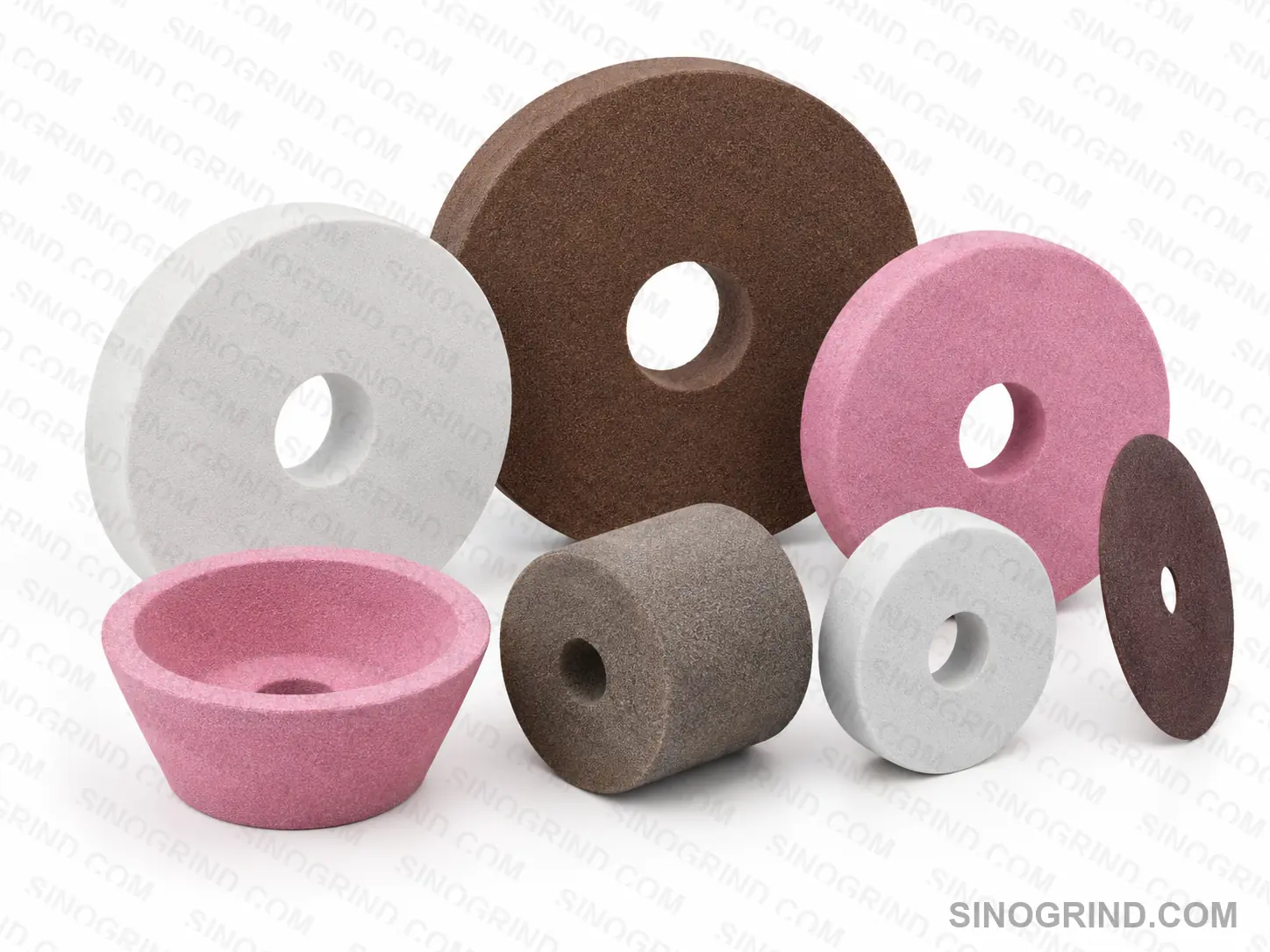
White, brown, and pink aluminum oxide wheels with vitrified and resin bonds. Ideal for steel, cast iron, tool steel, and stainless steel. Grit sizes 16# to 1000#.
View Product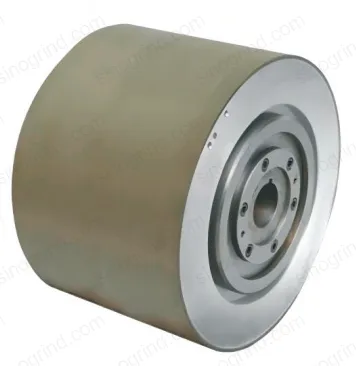
High-performance centerless grinding wheels and regulating wheels for precision cylindrical grinding.
View Product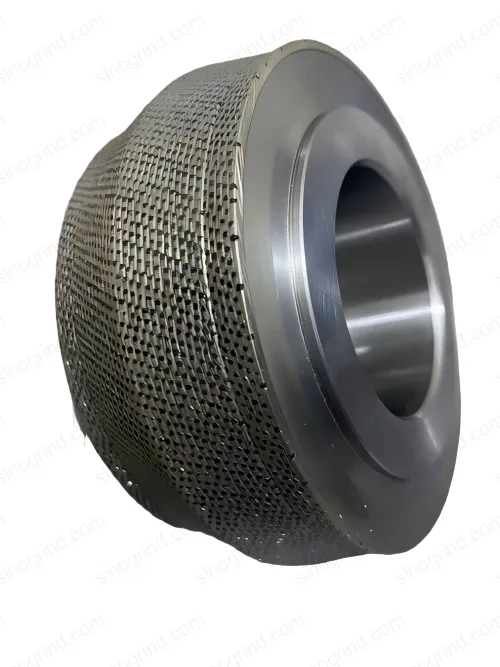
Precision diamond dressing tools — rollers, pens, and cutters for truing and dressing grinding wheels.
View Product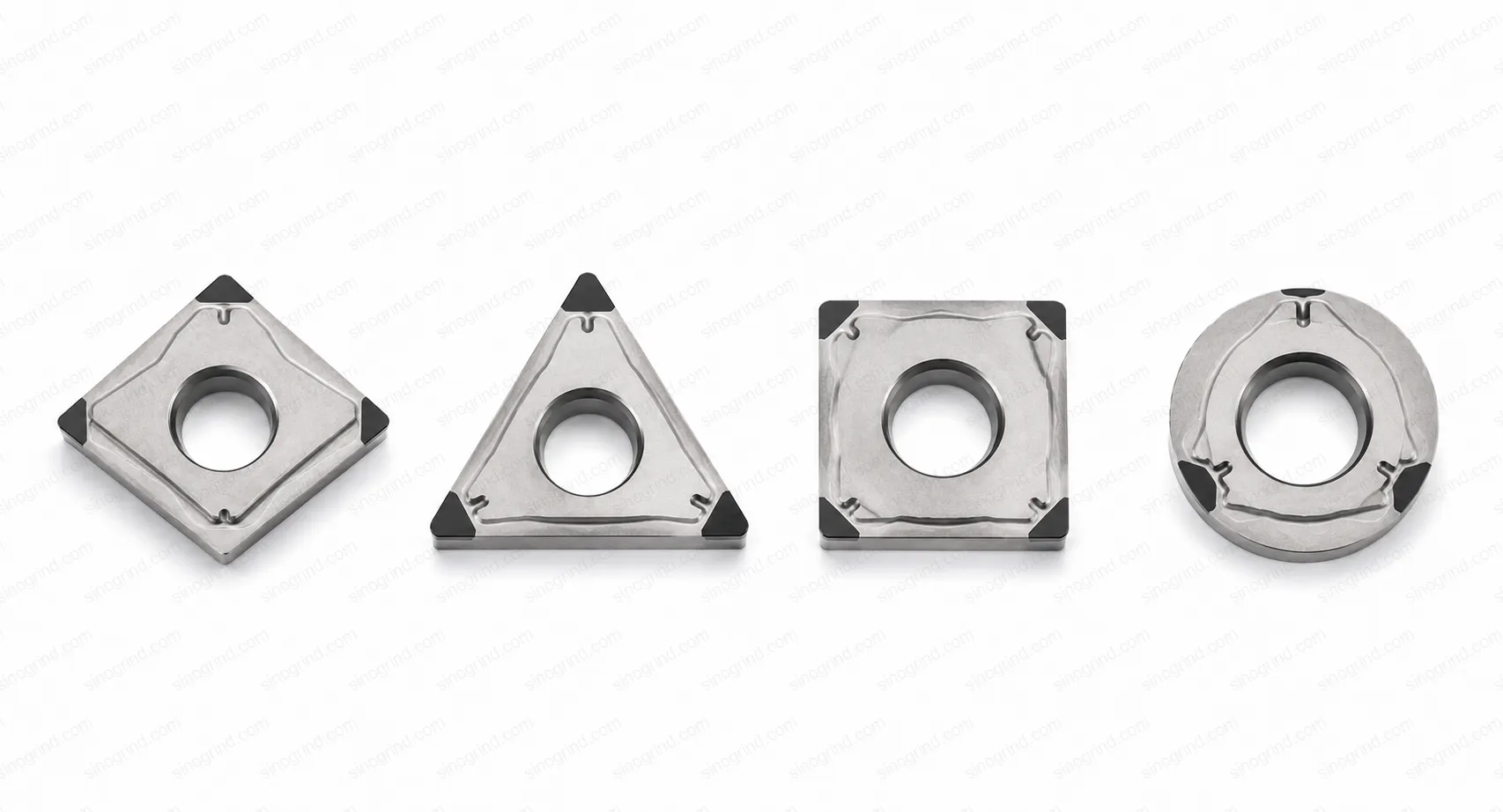
High-performance CBN and PCBN cutting tools for hardened steel, cast iron, and aerospace alloys.
View Product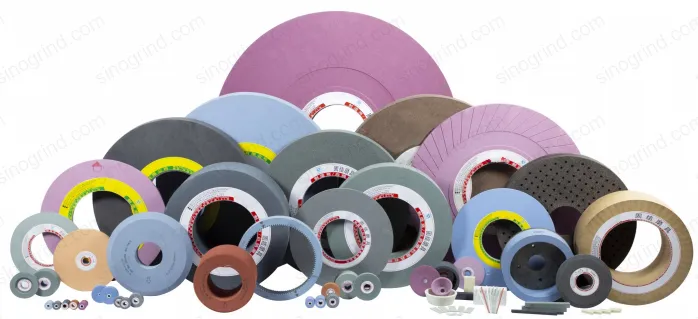
Corundum grinding wheels in ceramic, resin, metal, and rubber bonds for steel, cast iron, and ferrous metal grinding.
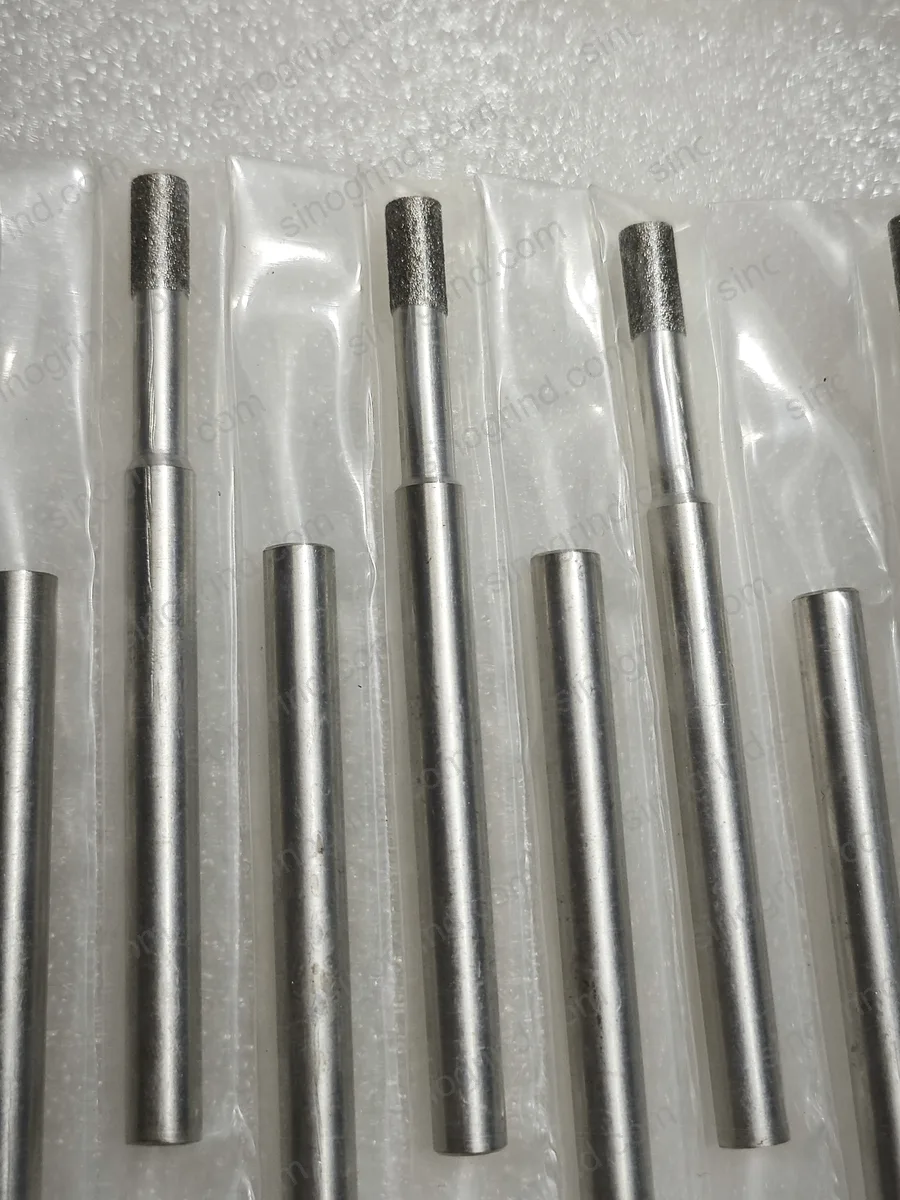
View ProductElectroplated mounted rods and mandrels for internal and intricate work.
View productUse diamond for hard non-ferrous materials such as carbide, ceramics, glass, silicon and composites, and CBN for ferrous materials such as.
Read moreResin bond diamond grinding wheels use a phenolic resin bond that cuts cool and finishes finely; they are the default for carbide.
Read moreDiamond wheel shape codes describe cross-section and determine the feature the wheel can grind: 1A1 for flat/OD, 11V9 and 12V9 for flutes.
Read moreOver 20 years of grinding expertise. Diamond, CBN, and conventional abrasive solutions for precision manufacturing worldwide.