: +86 15874211461

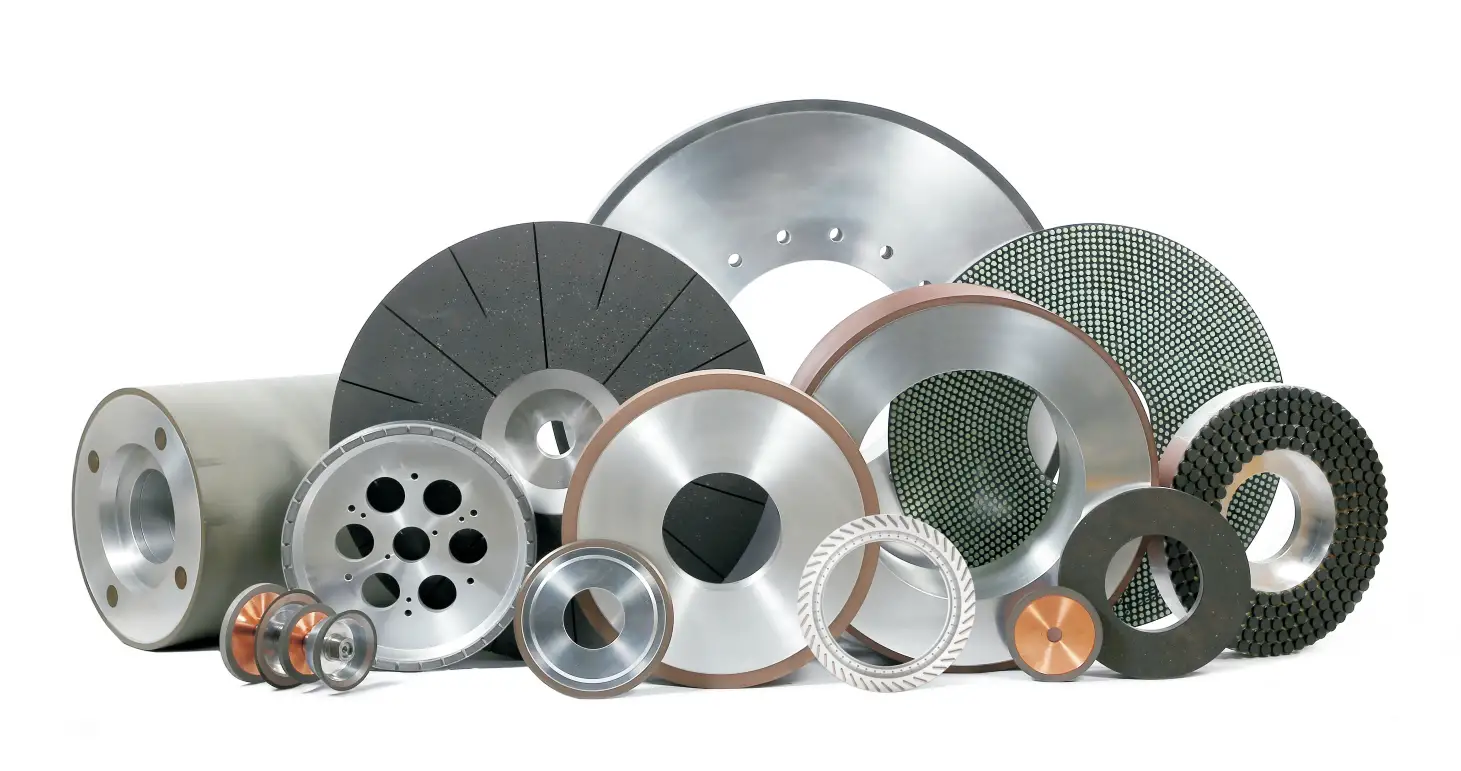
Quick answer: The shape code (e.g. 1A1, 11V9, 6A2, 12V9) describes the wheel's cross-section. It determines which feature the wheel can grind — periphery, flute, dish or profile. Choose the shape from the geometry you must generate, then set grit, bond and concentration to suit the material.
Related reading: Diamond Wheel Specification Code · Diamond Wheel for Carbide Grinding · Diamond Grit Size Selection.
How to read a diamond wheel shape code
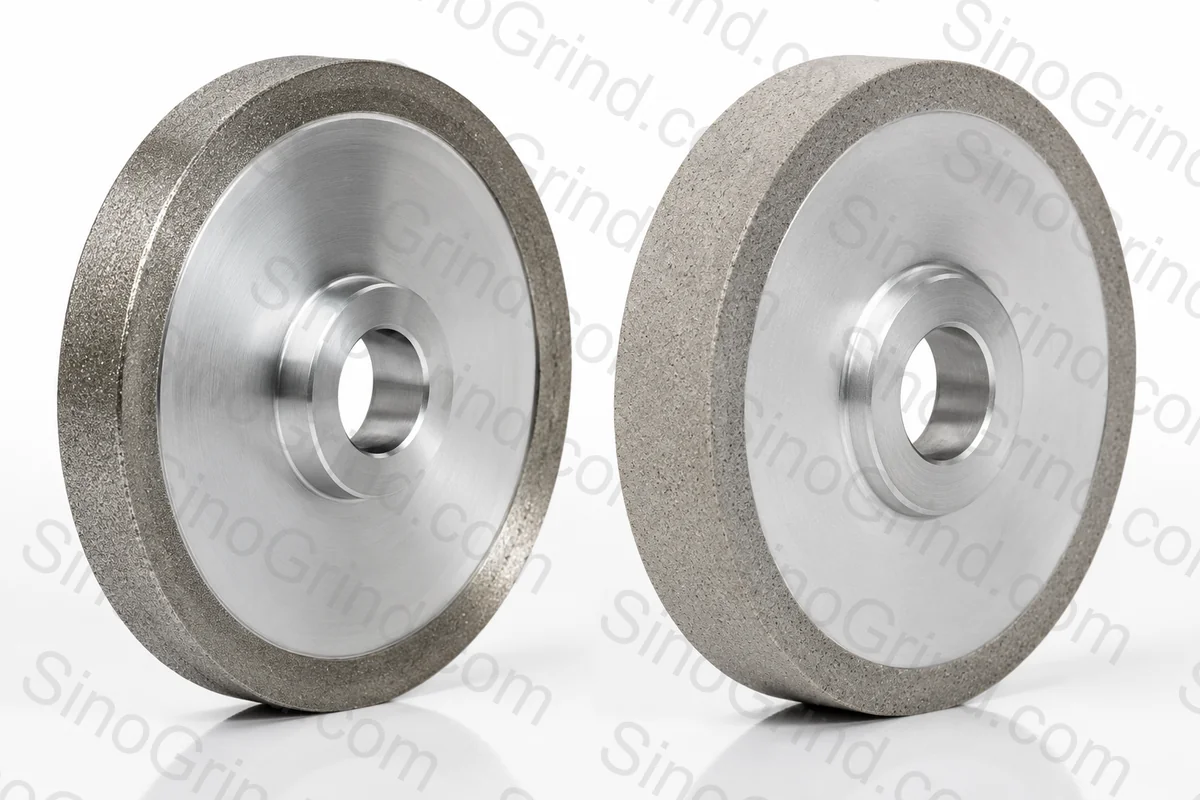
The code is a short profile description: a number for the basic form, a letter for the face/rim type, and often a combination of numbers. For example, 1A1 is a straight wheel with a flat rim, 11V9 is a tapered cup (flaring cup) and 6A2 is a straight cup with a recessed face. The code says nothing about grit or bond — those are specified separately (see the specification code guide).
Common diamond wheel shapes and what they grind
Peripheral and surface grinding of flat faces and cylindrical parts. The most versatile general-purpose diamond wheel.
Cut-off, slotting and grooving. Thin rim, rigid machine required.
Flute and gash grinding of carbide end mills and drills. A tool-room staple.
Fine flute and relief grinding, and small-tool work.
Dish, radius and tool & cutter grinding; clearance for the workpiece.
Specialised profile, relief and form grinding of tools.
| Shape | Geometry | Typical use | Bond often used |
|---|---|---|---|
| 1A1 | Straight, flat rim | Surface, OD, flat grinding | Resin / Metal / Vitrified |
| 1A1R | Straight, thin | Cut-off, slot, groove | Resin / Electroplated |
| 11V9 | Tapered cup | Flute & gash grinding | Resin |
| 12V9 | Tapered cup, thin | Fine flute / relief | Resin |
| 6A2 | Straight cup, recessed | Dish, radius, tool grinding | Resin / Metal |
| 6A9 | Cup, dish | Tool & cutter grinding | Resin / Metal |
| 12A2 | Profile | Relief & profile | Resin / Metal |
| 14A1 | Profile, angled | Relief & form | Resin / Metal |
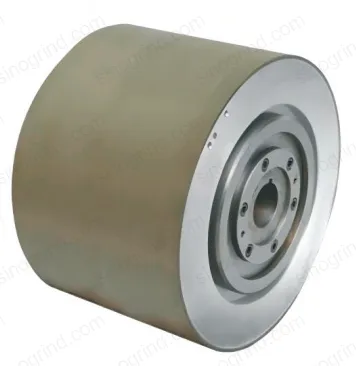
| Cup / cylinder | Cup or cylindrical | Internal, ID, face grinding | Metal / Resin |
Shape is chosen by feature; grit/bond/concentration by material and finish.
Choosing the shape from the feature
- Flat face or OD → 1A1 (straight, flat rim).
- Flute or gash → 11V9 or 12V9 (tapered cup).
- Dish, radius, corner → 6A2 / 6A9 (straight cup, recessed).
- Cut-off or slot → 1A1R thin rim or a thin blade.
- Internal bore / ID → small cup or mounted points.
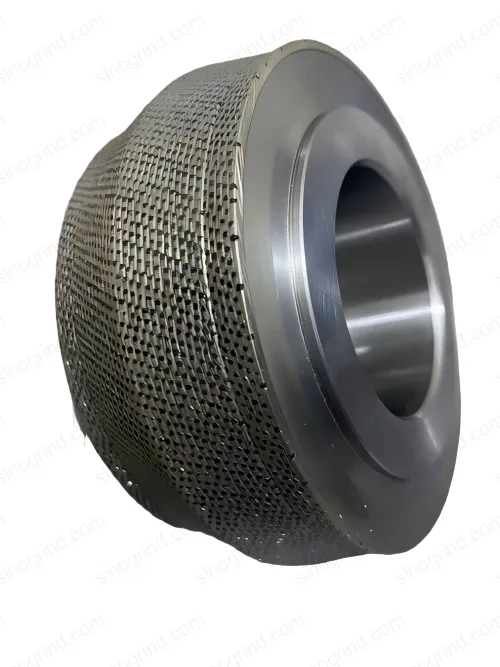
- Complex form → profile wheels (12A2 / 14A1) or electroplated forms.
Dimension notation
Wheel dimensions are usually written as D × T × H × W (outer diameter × thickness × bore × rim/abrasive width). Always quote all four when requesting a wheel.
Sub-table 2 — by grinding process
| Process | Typical bond | Grit (FEPA D) | Concentration | Common shapes | Notes |
|---|---|---|---|---|---|
| Tool & cutter grinding (flute, gash) | Resin / Metal | D91–D181 | 100–150% | 11V9, 12V9, 1A1 | Cool cutting protects carbide edges |
| Surface / flat grinding | Resin / Vitrified | D64–D151 | 75–125% | 1A1, 6A2 | Balance finish vs. removal |
| OD cylindrical | Metal / Vitrified | D91–D181 | 100–150% | 1A1, 1F1 | Even coolant coverage |
| ID / internal | Resin / Metal | D46–D126 | 75–125% | Cup, mounted points | Small wheels, high speed |
| Form / profile / creep-feed | Metal / Vitrified | D64–D151 | 100–150% | 6A2, 11V9, 12V9 | Profile retention is critical |
| Centerless | Metal / Resin | D91–D181 | 100–150% | 1A1, 6A2 | High volume, tight roundness |
| Back-grinding / wafer thinning | Electroplated / Resin | D126–D400+ | 100–200% | Cup, 1A1 | Ultra-fine finish, low damage |
| Glass edge / bevel / CNC | Metal / Resin | D64–D126 | 75–125% | 1A1, 1F1, 12A2 | Prevent edge chipping |
| Cut-off / slot / groove | Electroplated / Metal | D181–D400 | — | 1A1R, saw | Thin wheels, rigid setup |
| Dressing & truing (of other wheels) | — | D46–D181 | — | Pen, roller, block | Diamond tools, not diamond wheels |
Mounting and balance change with the shape
A dish wheel and a cup wheel put the load in different places. A 11V9 dish wheel cuts on the rim and the side of a thin annulus, so any run-out shows up immediately as a chipped edge. A 1A1 straight wheel carries the load across the full face and is far more tolerant of a slightly imperfect mount, but it cannot reach a flute or a shoulder.
The shape also decides how the wheel is dressed and how much material the body can lose before it is scrap. Deep dish and cup wheels have a limited working-layer depth; once the layer is gone the body is exposed and the wheel must be replaced, no matter how much diameter is left.
How do I set up the job?
- Check the shape against the drawing. Confirm the code, the profile angle and the working-layer depth, not just the outside diameter.
- Check the mounting face. Dish and cup wheels seat on a recess; a burr or a chip on that face tilts the wheel and produces a tapered cut.
- Indicate the cutting face. Indicate the rim, not the body. The rim is what generates the form.
- Balance the assembly. Balance after mounting, especially on large cup wheels and high-speed spindles.
- Dress to the profile. True with the correct tool for the bond, then confirm the angle or radius with a profile gauge.
- Record the working-layer depth. Note the remaining layer so replacement is planned rather than discovered mid-batch.
Troubleshooting: shape-related problems
| Symptom | Most likely cause | What to change |
|---|---|---|
| Taper on a shoulder ground with a dish wheel | Wheel tilted on its recess, or rim not trued square | Clean the mounting face, re-indicate the rim, re-true |
| Wheel cannot reach the flute root | Wrong shape or too large a diameter | Move to a smaller dish or a cup shape with the right corner radius |
| Scoring on the side of a slot | Side of a worn wheel rubbing | Check the working-layer depth and the wheel width |
| Chatter with a large cup wheel | Assembly out of balance or spindle too flexible | Balance the wheel, reduce speed, check the spindle |
| Profile angle drifts | Dressing tool worn or dressed off-axis | Re-dress with a sharp tool and verify with a gauge |
Most shape problems are mounting or dressing problems, not wheel geometry problems.
RFQ checklist for a custom shape
- Code and drawing: the standard code plus a dimensioned section view.
- Critical dimensions: outside diameter, thickness, bore, rim width and the angle or radius.
- Working layer: depth of diamond layer and the minimum usable thickness.
- Bond and abrasive: bond system, grit and concentration.
- Interface: bore tolerance, flange diameter and keyway if used.
- Machine: maximum speed and the spindle interface.
Browse the matching Diamond & CBN Grinding Wheels range for this application.
A sketch beats a code
A standard code tells the supplier the family, not the exact profile. For form wheels, send a section drawing with the critical angle, radius and tolerance marked.
Boundary rule — when not to use diamond
Diamond is the hardest abrasive and the correct choice for hard, brittle, non-ferrous materials such as cemented carbide, ceramics, glass, silicon, sapphire, ferrite, graphite and composites. It must not be used on ferrous metals — steel, cast iron, and their alloys — because carbon in diamond reacts with iron at grinding temperatures (roughly above 700 °C / 1300 °F). This chemical affinity causes rapid, abnormal diamond wear (graphitisation) and destroys the wheel. For steel, hardened steel, cast iron and other ferrous workpieces, use CBN (cubic boron nitride) instead.