: +86 15874211461

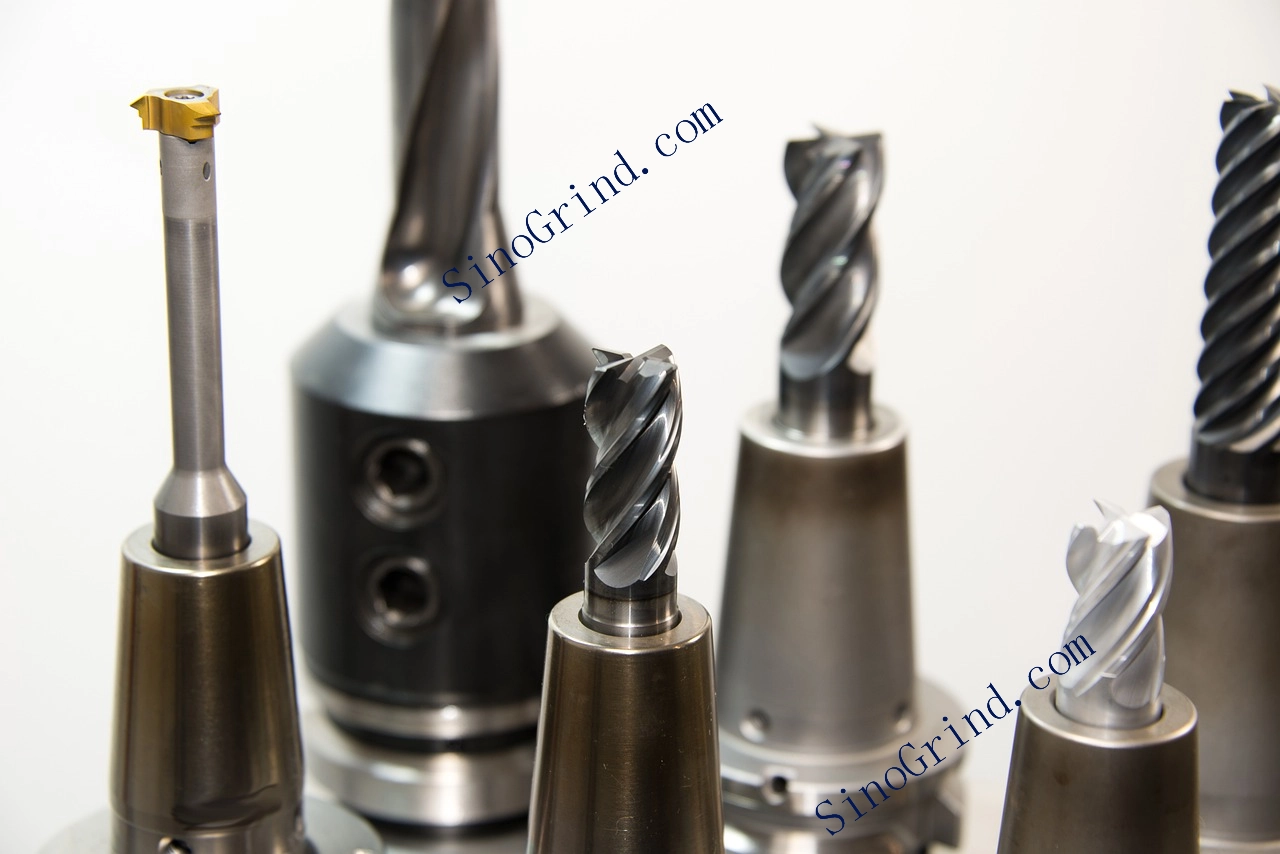
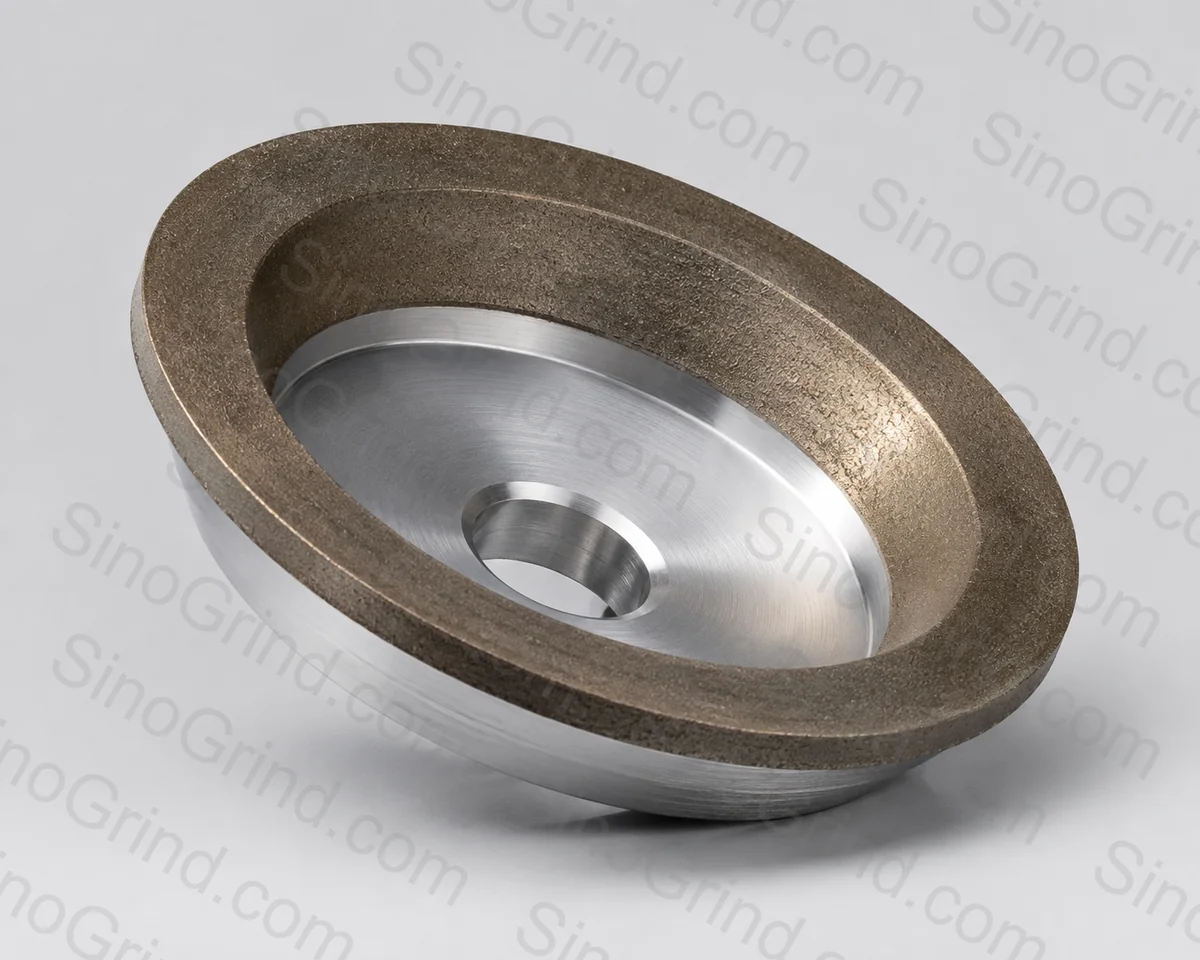
Quick answer: For cemented carbide, diamond is the correct abrasive. Start with a resin bond, D91–D151 grit at 100–125% concentration for cutting-tool grinding; move to metal bond for heavy removal, form grinding and high-volume production.
Related reading: Resin Bond Diamond Grinding Wheel · Metal Bond Diamond Grinding Wheel · Diamond Wheel Shapes Guide (1A1, 11V9, 6A2, 12V9).
Why diamond is used on carbide
Cemented carbide is extremely hard (roughly HRA 89–93 / ~1600 HV) and would destroy a conventional aluminium-oxide or silicon-carbide wheel. Diamond is harder still and keeps a sharp edge, so it removes carbide efficiently while holding the tool geometry. Carbide is also non-ferrous, so there is no chemical reaction with diamond — the failure mode that rules diamond out on steel does not apply here.
Which bond for carbide
| Bond | Best for | Finish | Life |
|---|---|---|---|
| Resin | Flute, gash, peripheral tool grinding | Excellent | Medium |
| Metal | Form, creep-feed, high-volume inserts | Good | Very long |
| Vitrified | Precision surface and form | Excellent | Good |
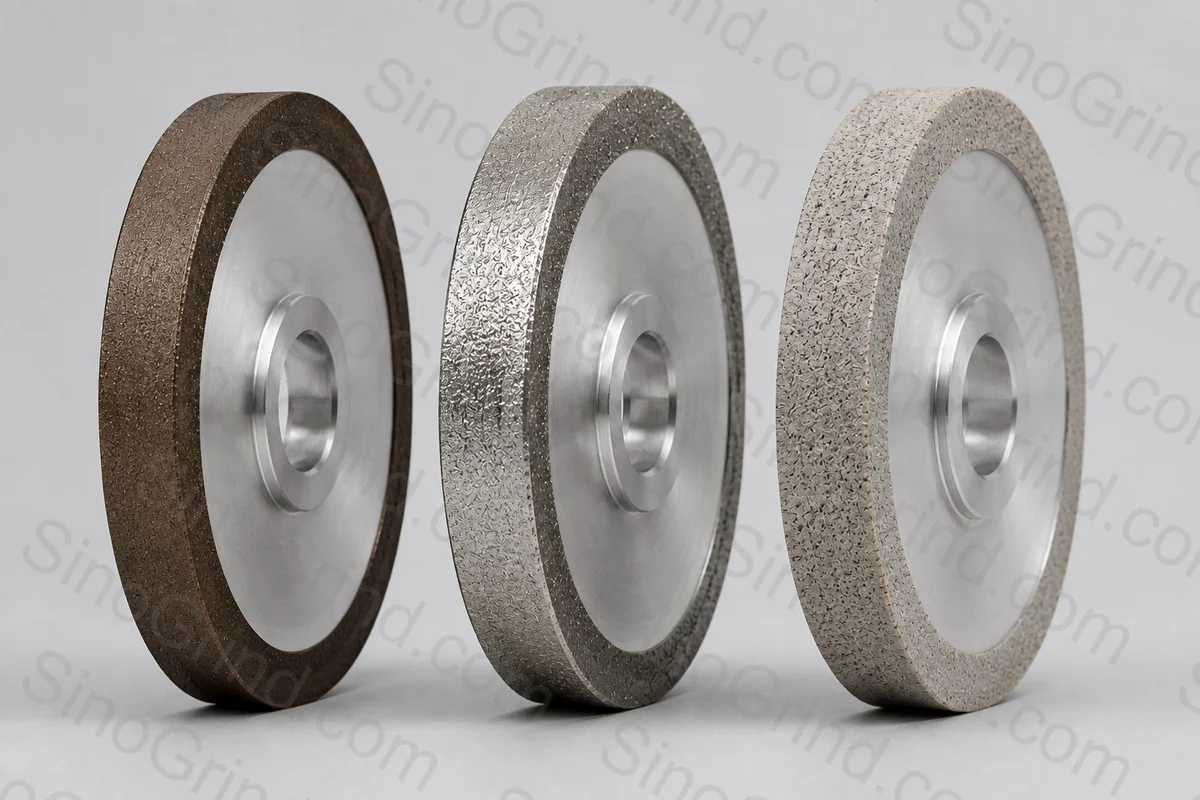
| Electroplated | Thin profiles, cut-off | Moderate | Single layer |
Most carbide tool grinding is done dry or with a fine mist/oil; for heavy removal use flood coolant. Below is the specification most shops start from.
Shapes for carbide tools
- 11V9 / 12V9 — flute and gash grinding of end mills and drills.
- 1A1 — peripheral (OD) grinding of flutes and cylindrical tools.
- 6A2 / 6A9 — grinding the dish and radii, and tool & cutter work.
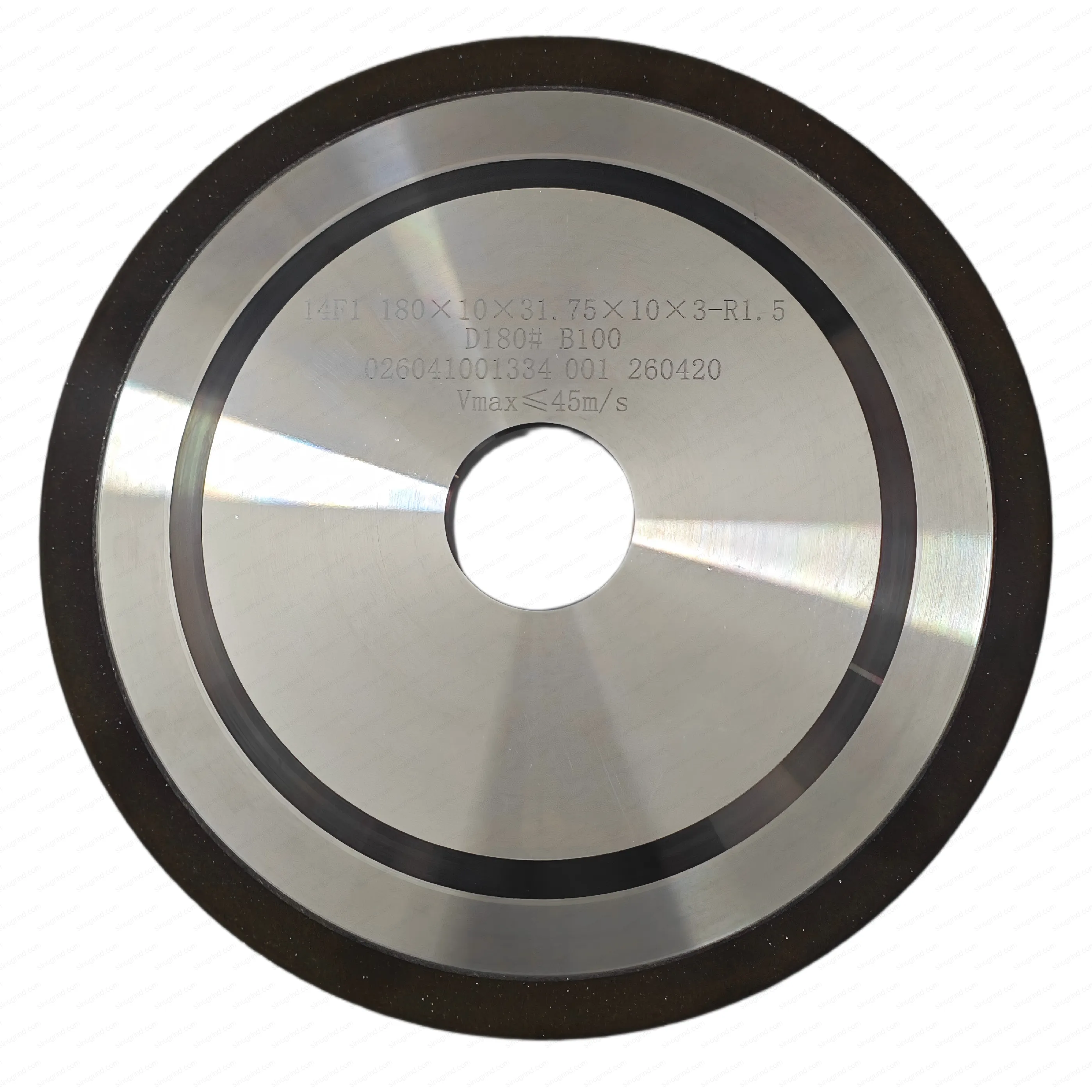
- 12A2 / 14A1 — specialised profile and relief grinding.
Avoiding edge chipping and cracking
- Keep the cut cool — carbide is brittle and heat-sensitive at the edge.
- Use the finest grit that still removes stock efficiently for the last passes.
- Do not dwell; reduce dwell and increase table speed to avoid burn marks.
- Balance the wheel and use sharp, well-dressed grit to prevent micro-chipping.
Which specification should I choose?
| Parameter | Typical value |
|---|---|
| Bond | Resin (tool grinding) or metal (form/high volume) |
| Grit (FEPA D) | D91–D151 general; D46–D64 finish |
| Concentration | 100–125% general; 125–150% for removal |
| Shape | 11V9, 12V9, 1A1, 6A2 depending on feature |
| Wheel speed | 20–35 m/s (resin), 25–45 m/s (metal) |
| Coolant | Dry/mist for light work; flood or oil for heavy |
Confirm by trial; carbide grades vary in hardness and cobalt content.
What happens when diamond meets tungsten carbide
Cemented carbide is tungsten-carbide grains sintered in a cobalt binder. Diamond is harder than the WC grains, so it cuts them cleanly; the cobalt, which is softer and tougher, smears and is carried away with the chip. The balance between the two is what makes carbide grinding delicate: too much heat and the cobalt is attacked, the WC grains lose support and the edge crumbles.
That is why carbide is almost always ground wet and why the wheel must stay open. A resin bond at D91–D126 and 100–125% concentration removes stock without burying the edge in heat. Push the infeed and the same wheel will burn the edge long before it wears out.
How do I set up the job?
- Match the wheel to the tool. Flute and gash grinding use a 11V9 or 12V9 dish wheel; peripheral work uses 1A1; complex profiles use a dedicated form wheel.
- Mount and indicate. Indicate the wheel rim to 0.005 mm or better. Run-out is the single biggest cause of chipped carbide edges.
- True and dress. True with a diamond tool, then open the face with an alumina stick so fresh diamond stands proud of the resin.
- Set wet parameters. 20–25 m/s, 0.005–0.03 mm per pass, flood coolant at 5–8% aimed at the contact arc.
- Grind the first tool short. Leave 0.05 mm and inspect the edge under magnification before finishing, so a wrong setting costs one tool, not a batch.
- Hold the edge. Measure edge chipping and radius; adjust grit or concentration only after the mount and coolant are known good.
How do I fix common problems?
| Symptom | Most likely cause | What to change |
|---|---|---|
| Micro-chipping on the cutting edge | Wheel run-out, grit too coarse, or too much infeed | Re-indicate the wheel, move to D64–D91, halve the depth |
| Dark or pitted patches on the carbide | Cobalt leaching from overheating | Increase coolant flow, reduce speed, check concentration |
| Fine cracks along the edge | Thermal shock from interrupted coolant or dry passes | Keep the flood constant, avoid air blasts on a hot tool |
| Wheel loads and stops cutting | Resin glazing, dirty coolant | Dress with an alumina stick, clean the tank, raise flow |
| Size drifts through the batch | Wheel wear or thermal growth | Re-dress, let the machine stabilise, re-set the offset |
On carbide, edge quality is the measurement that matters - not just the finished diameter.
What should an RFQ include?
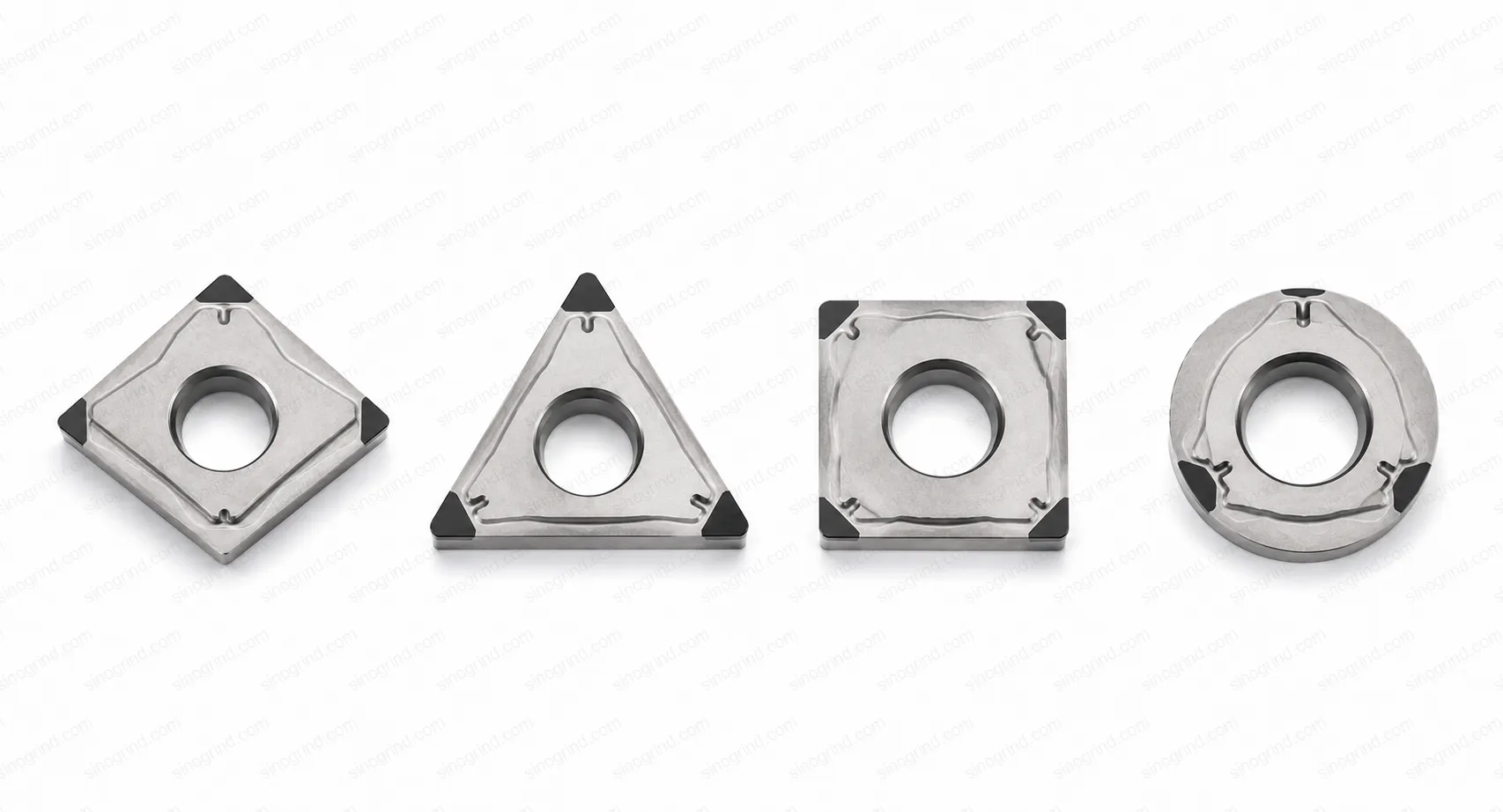
- Tool type: end mill, drill, reamer or insert, and the feature to be ground.
- Carbide grade: submicron grades tolerate finer grit; coarse grades need more clearance.
- Wheel: shape, diameter, grit (FEPA D), concentration and bond.
- Machine: spindle speed range, coolant type and pressure, and whether the wheel is dressed on or off the machine.
- Quality target: edge chipping limit and surface finish.
- Volume: tools per week, which decides whether a longer-life metal bond is worth the price.
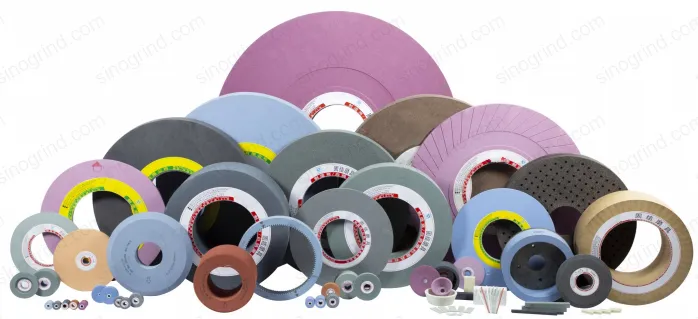
Browse the matching Diamond & CBN Grinding Wheels range for this application.
On a tool grinder the wheel is usually a small part of the cost and the carbide tool is most of it. A wheel that gives 15% more tools per dress is almost always worth a higher price, because every scrapped tool carries the cost of the blank, the grinding time and the inspection.
Sub-table 1 — by material family
| Material | Typical operation | Recommended bond | Grit (FEPA D) | Concentration | Typical Ra |
|---|---|---|---|---|---|
| Cemented carbide (WC-Co) | Cutter & tool grinding | Resin / Metal | D91–D181 | 100–150% | 0.1–0.4 µm |
| PCD / PCBN | Edge prep, peripheral | Metal / Vitrified | D46–D91 | 125–150% | 0.05–0.2 µm |
| Advanced ceramics (Al₂O₃, ZrO₂, Si₃N₄) | Surface / form | Vitrified / Resin | D64–D151 | 75–125% | 0.2–0.6 µm |
| Optical / flat glass, quartz | Edge, bevel, CNC | Metal / Resin | D64–D126 | 75–125% | 0.05–0.3 µm |
| Semiconductor (Si, SiC, sapphire) | Back-grind, dicing | Electroplated / Resin | D126–D400+ | 100–200% | <0.02 µm (fine) |
| Ferrite / soft magnetic | Surface / form | Resin / Metal | D91–D181 | 100–150% | 0.2–0.8 µm |
| Graphite / carbon | Form / cut-off | Electroplated / Metal | D181–D301 | 75–125% | — |
| CFRP / composites | Cut, slot | Electroplated | D252–D400 | — | — |
| Thermal-spray coatings | Grind, polish | Resin / Metal | D126–D252 | 75–100% | 0.1–0.4 µm |
| Stone / engineered quartz | Edge, calibrate | Metal / Electroplated | D181–D400 | — | — |
| Zirconia (dental / medical) | Finish, polish | Resin / Vitrified | D46–D126 | 75–100% | 0.1–0.3 µm |
| Steel / cast iron (ferrous) | — | Not diamond — use CBN | — | — | — |
Representative values for planning; confirm final grit, concentration and bond with a grinding trial on your machine.
Boundary rule — when not to use diamond
Diamond is the hardest abrasive and the correct choice for hard, brittle, non-ferrous materials such as cemented carbide, ceramics, glass, silicon, sapphire, ferrite, graphite and composites. It must not be used on ferrous metals — steel, cast iron, and their alloys — because carbon in diamond reacts with iron at grinding temperatures (roughly above 700 °C / 1300 °F). This chemical affinity causes rapid, abnormal diamond wear (graphitisation) and destroys the wheel. For steel, hardened steel, cast iron and other ferrous workpieces, use CBN (cubic boron nitride) instead.