: +86 15874211461

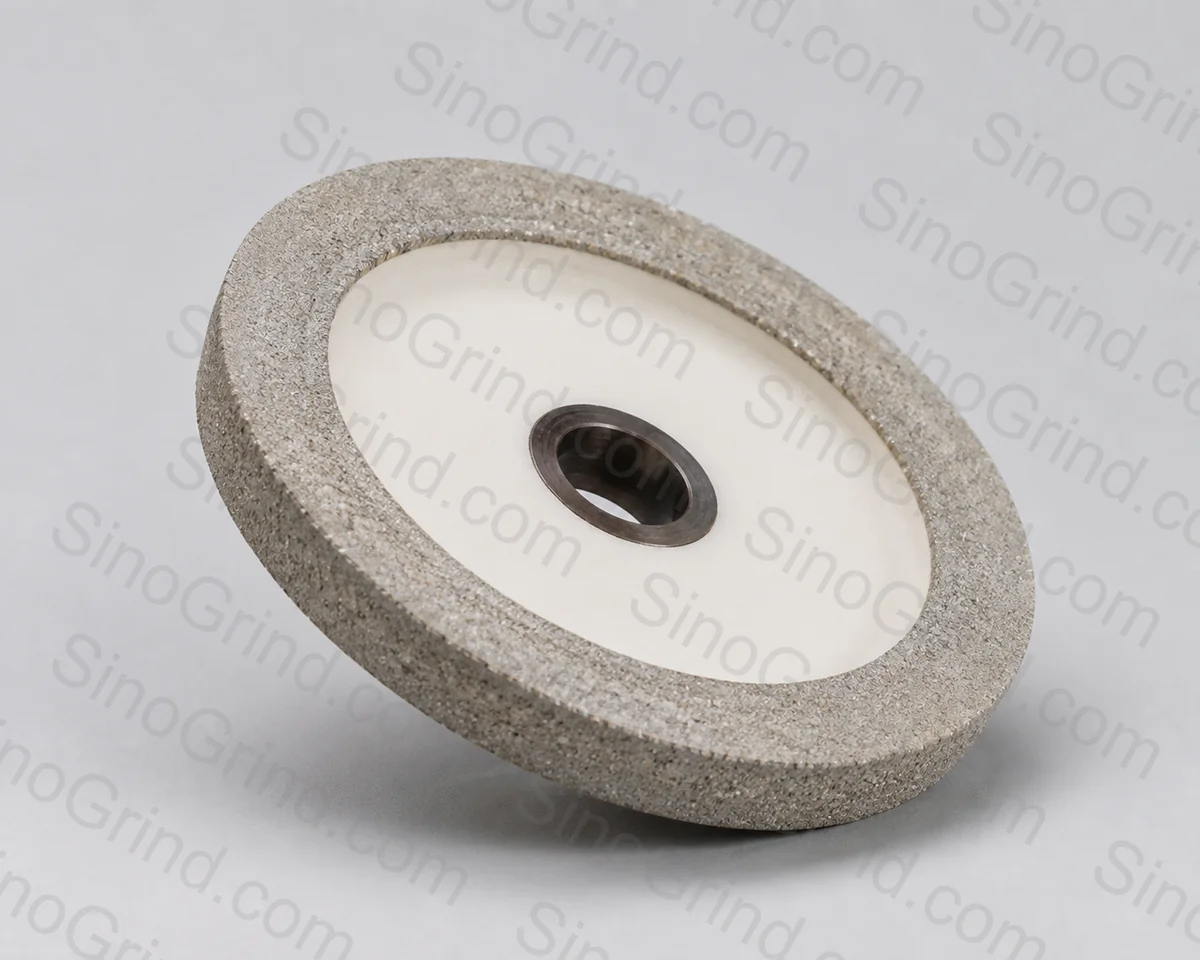
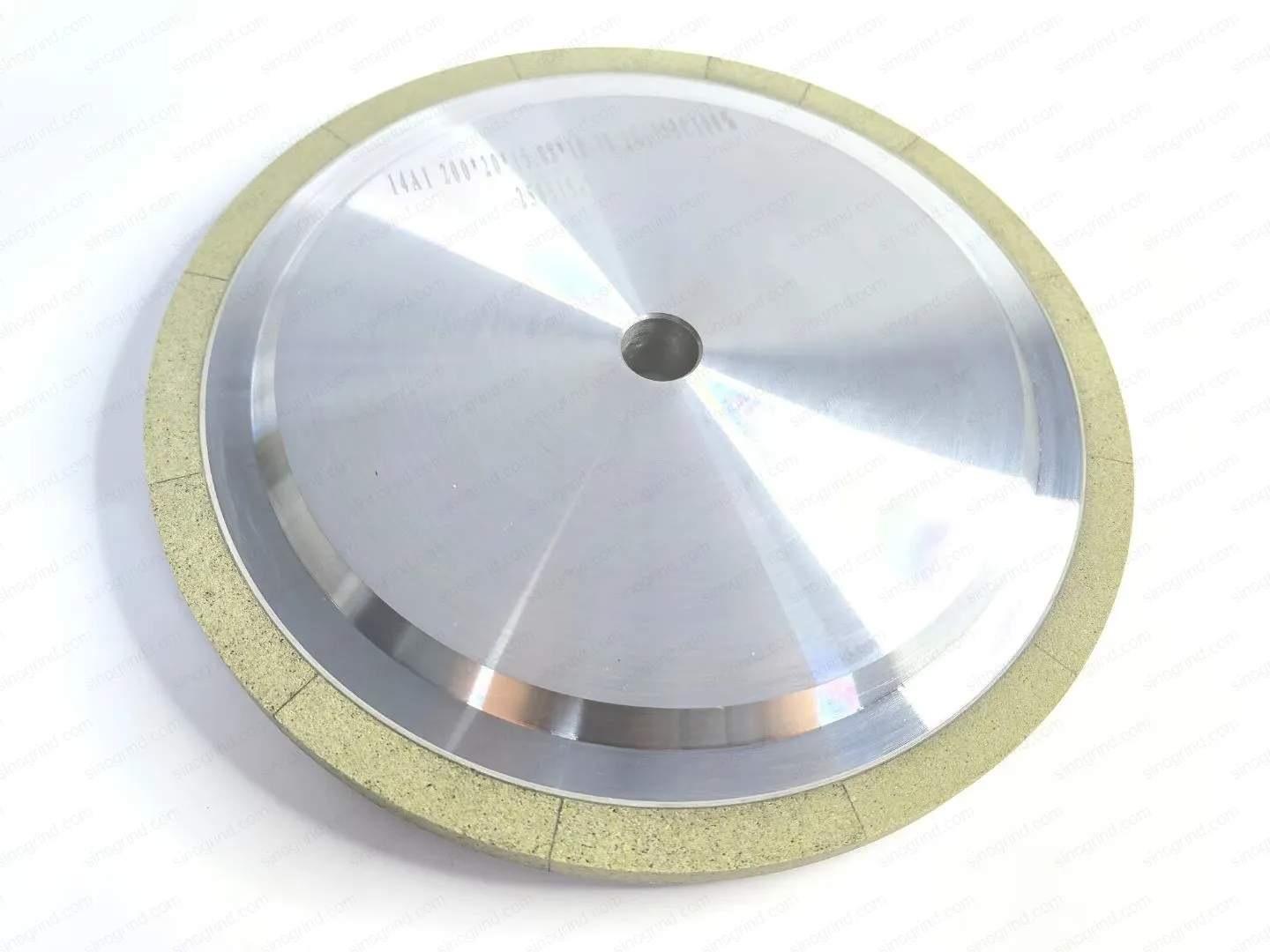
Quick answer: Grind advanced ceramics with a diamond wheel, usually vitrified or resin bond, at D46–D151 grit and 75–125% concentration. Use flood coolant and light infeed — ceramics chip and crack rather than deform.
Related reading: Vitrified Bond Diamond Grinding Wheel · Diamond Wheel for Dental Zirconia · Diamond Wheel for Optics, Quartz & Sapphire.
Why ceramics need diamond and a gentle process
Advanced ceramics are hard and extremely brittle. They have almost no capacity to deform, so any excessive force or heat causes edge chipping, micro-cracking or fracture. Diamond wheels are used because they stay sharp and cut with low force — but the process must be gentle, cool and well supported.
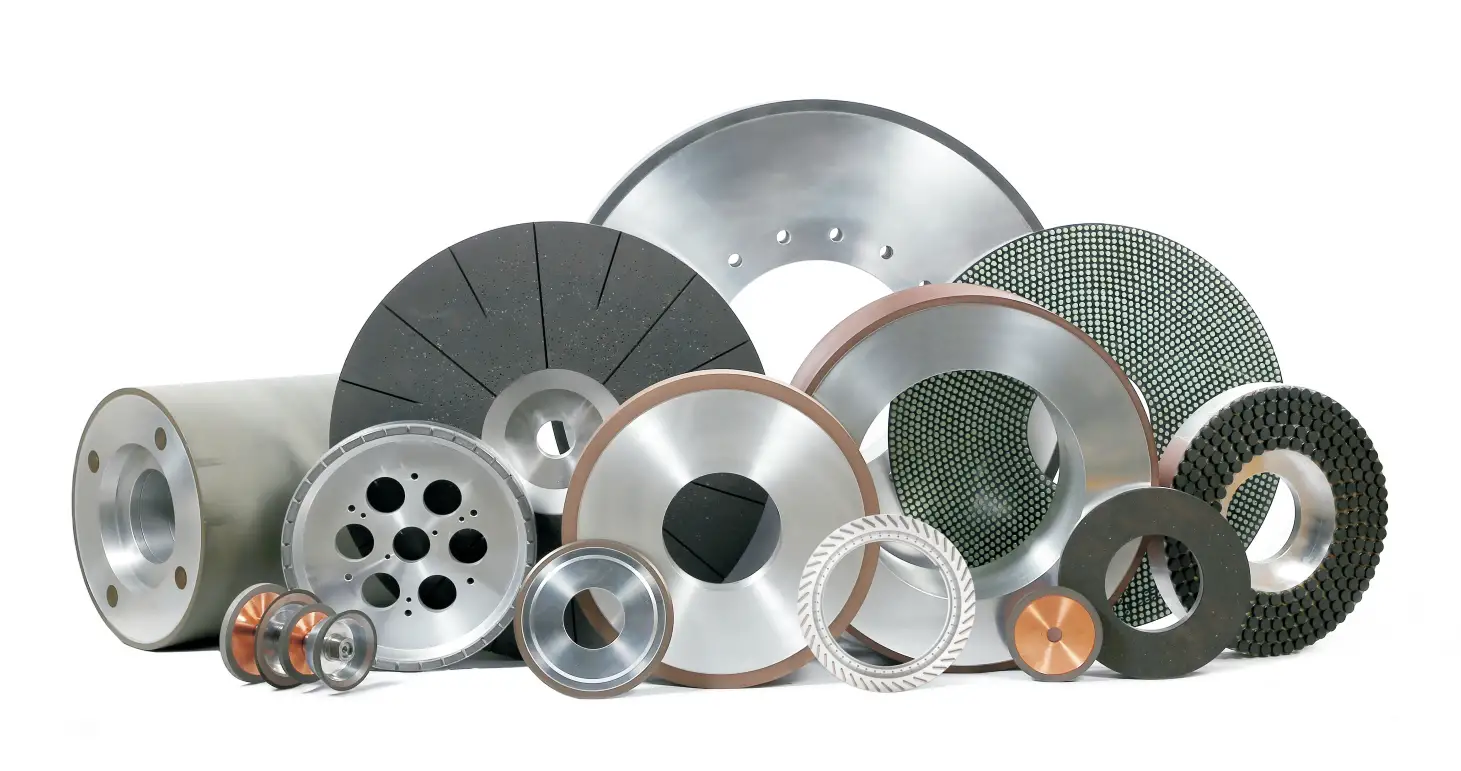
Bond choice for ceramics
- Vitrified — cool, free cutting; ideal for precision and form grinding.
- Resin — excellent finish and easy dressing; good for complex parts.
- Metal — long life for high-volume and structural ceramic parts.
- Electroplated — aggressive removal or thin profiles.
Preventing chipping and cracking
- Use light infeed and multiple passes; never force the wheel.
- Use flood coolant and keep the nozzle close to the contact zone.
- Choose the finest grit that still removes stock for finishing passes.
- Support the workpiece rigidly; vibration causes edge chips.
- Keep the wheel sharp — a glazed wheel rubs and cracks the ceramic.
Typical ceramic grinding jobs
| Component | Bond | Grit (FEPA D) | Note |
|---|---|---|---|
| Seals & rings | Vitrified / Resin | D64–D151 | Precision faces |
| Bearing balls / rollers | Vitrified | D46–D126 | Roundness critical |
| Ceramic substrates | Resin / Metal | D46–D91 | Thin, low damage |
| Structural parts | Metal | D91–D151 | High volume, long life |
Ceramic type matters too: silicon nitride and SiC are harder to grind than alumina and zirconia and generally need finer, sharper diamond.
Which specification should I choose?
| Parameter | Typical value |
|---|---|
| Bond | Vitrified (precision) / Resin (finish) |
| Grit (FEPA D) | D46–D151 |
| Concentration | 75–125% |
| Depth of cut | 0.005–0.03 mm |
| Coolant | Flood water-based |
| Priority | Avoid chipping and cracking |
Silicon nitride and SiC need finer, sharper grit than alumina.
Brittle material, controlled removal
Ceramics do not deform before they break. Every diamond grain that cuts too deeply starts a crack, and that crack either shows up as an edge chip immediately or as a strength loss that appears in service. The goal is therefore to keep the depth of each cut below the threshold where cracks propagate, and to remove the damaged layer in the finishing passes.
In practice that means a fine grit, a softish bond, a high wheel speed and a light infeed, with plenty of coolant. Removal rate is lower than on carbide, and that is normal: the process is designed around strength, not speed.
How do I set up the job?
- Support the part fully. A ceramic part that flexes will chip. Use a fixture that supports the exit edge and clamp evenly, without point loads.
- Select a fine wheel. Vitrified or resin bond, D64–D91 for general work, finer for sealing faces and edges.
- True and open. True with a diamond roll, then dress lightly so the diamond stands proud without a thick bond layer in front of it.
- Grind gently. 25–35 m/s, 0.002–0.01 mm depth, and a table speed that keeps the wheel from dwelling in one spot.
- Add spark-out. Two to four passes at zero infeed remove the damaged layer and stabilise the size.
- Check the edge. Inspect for chips under magnification before the part leaves the machine.
How do I fix common problems?
| Symptom | Most likely cause | What to change |
|---|---|---|
| Edge chipping | Unsupported exit edge, too much infeed | Improve support, halve the depth, use a finer grit |
| Cracks radiating from the ground surface | Thermal or mechanical damage below the surface | Reduce depth, increase coolant, add spark-out |
| Wheel loads and burn appears | Bond too hard, coolant not reaching the contact | Dress more often, re-aim the nozzle, reduce speed |
| Size drift on a long batch | Wheel wear and thermal growth | Re-dress between batches, allow warm-up parts |
| Surface looks matte instead of ground | Wheel glazed, diamond not exposed | Open the face with a dressing stick and check speed |
Chips and cracks in ceramics are process signals - they rarely come from the material alone.
What should an RFQ include?
- Material: alumina, zirconia, silicon nitride, silicon carbide or a composite.
- Feature: edge, flat, slot or bore, and the tolerance on each.
- Wheel: bond, grit, concentration and shape.
- Machine: stiffness, coolant and whether the wheel runs on a horizontal or vertical spindle.
- Strength requirement: whether the part is safety-critical, which sets the finishing allowance.
- Volume and scrap: current chip rate, because scrap usually dominates the cost.
Browse the matching Diamond & CBN Grinding Wheels range for this application.
Ceramic parts are expensive and often made in small batches, so scrap dominates the cost equation. A slightly more expensive fine-grit wheel that eliminates one chipped part per batch pays for itself immediately.
Sub-table 1 — by material family
| Material | Typical operation | Recommended bond | Grit (FEPA D) | Concentration | Typical Ra |
|---|---|---|---|---|---|
| Cemented carbide (WC-Co) | Cutter & tool grinding | Resin / Metal | D91–D181 | 100–150% | 0.1–0.4 µm |
| PCD / PCBN | Edge prep, peripheral | Metal / Vitrified | D46–D91 | 125–150% | 0.05–0.2 µm |
| Advanced ceramics (Al₂O₃, ZrO₂, Si₃N₄) | Surface / form | Vitrified / Resin | D64–D151 | 75–125% | 0.2–0.6 µm |
| Optical / flat glass, quartz | Edge, bevel, CNC | Metal / Resin | D64–D126 | 75–125% | 0.05–0.3 µm |
| Semiconductor (Si, SiC, sapphire) | Back-grind, dicing | Electroplated / Resin | D126–D400+ | 100–200% | <0.02 µm (fine) |
| Ferrite / soft magnetic | Surface / form | Resin / Metal | D91–D181 | 100–150% | 0.2–0.8 µm |
| Graphite / carbon | Form / cut-off | Electroplated / Metal | D181–D301 | 75–125% | — |
| CFRP / composites | Cut, slot | Electroplated | D252–D400 | — | — |
| Thermal-spray coatings | Grind, polish | Resin / Metal | D126–D252 | 75–100% | 0.1–0.4 µm |
| Stone / engineered quartz | Edge, calibrate | Metal / Electroplated | D181–D400 | — | — |
| Zirconia (dental / medical) | Finish, polish | Resin / Vitrified | D46–D126 | 75–100% | 0.1–0.3 µm |
| Steel / cast iron (ferrous) | — | Not diamond — use CBN | — | — | — |
Representative values for planning; confirm final grit, concentration and bond with a grinding trial on your machine.
Boundary rule — when not to use diamond
Diamond is the hardest abrasive and the correct choice for hard, brittle, non-ferrous materials such as cemented carbide, ceramics, glass, silicon, sapphire, ferrite, graphite and composites. It must not be used on ferrous metals — steel, cast iron, and their alloys — because carbon in diamond reacts with iron at grinding temperatures (roughly above 700 °C / 1300 °F). This chemical affinity causes rapid, abnormal diamond wear (graphitisation) and destroys the wheel. For steel, hardened steel, cast iron and other ferrous workpieces, use CBN (cubic boron nitride) instead.