: +86 15874211461

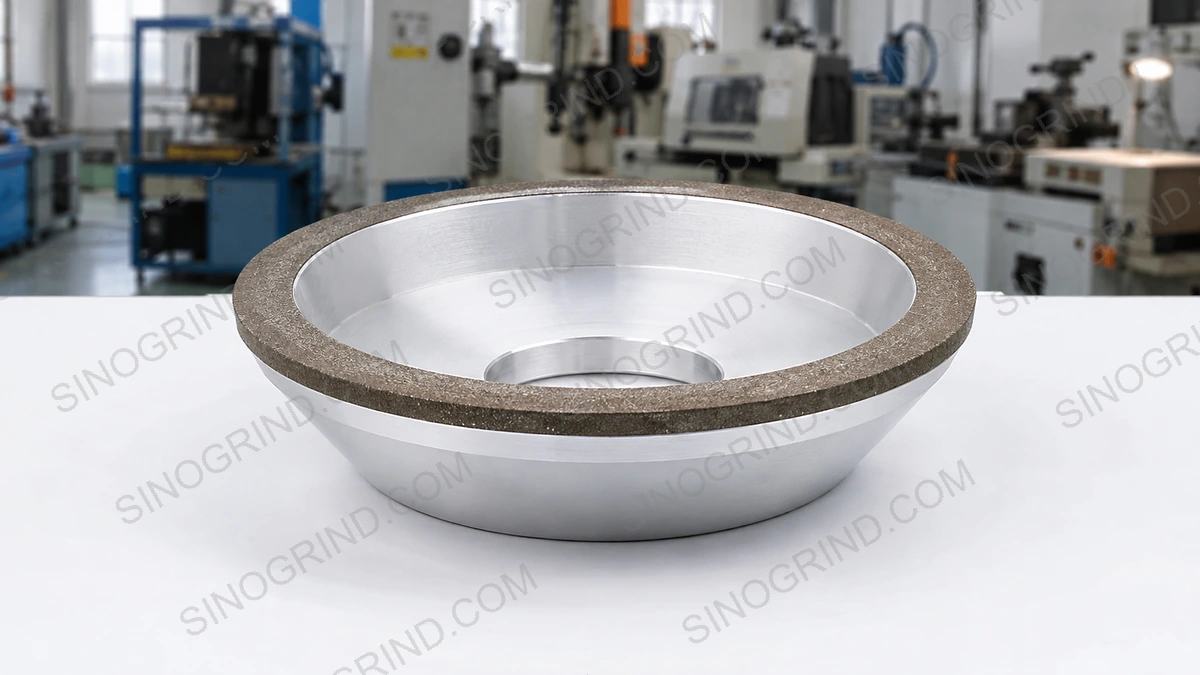
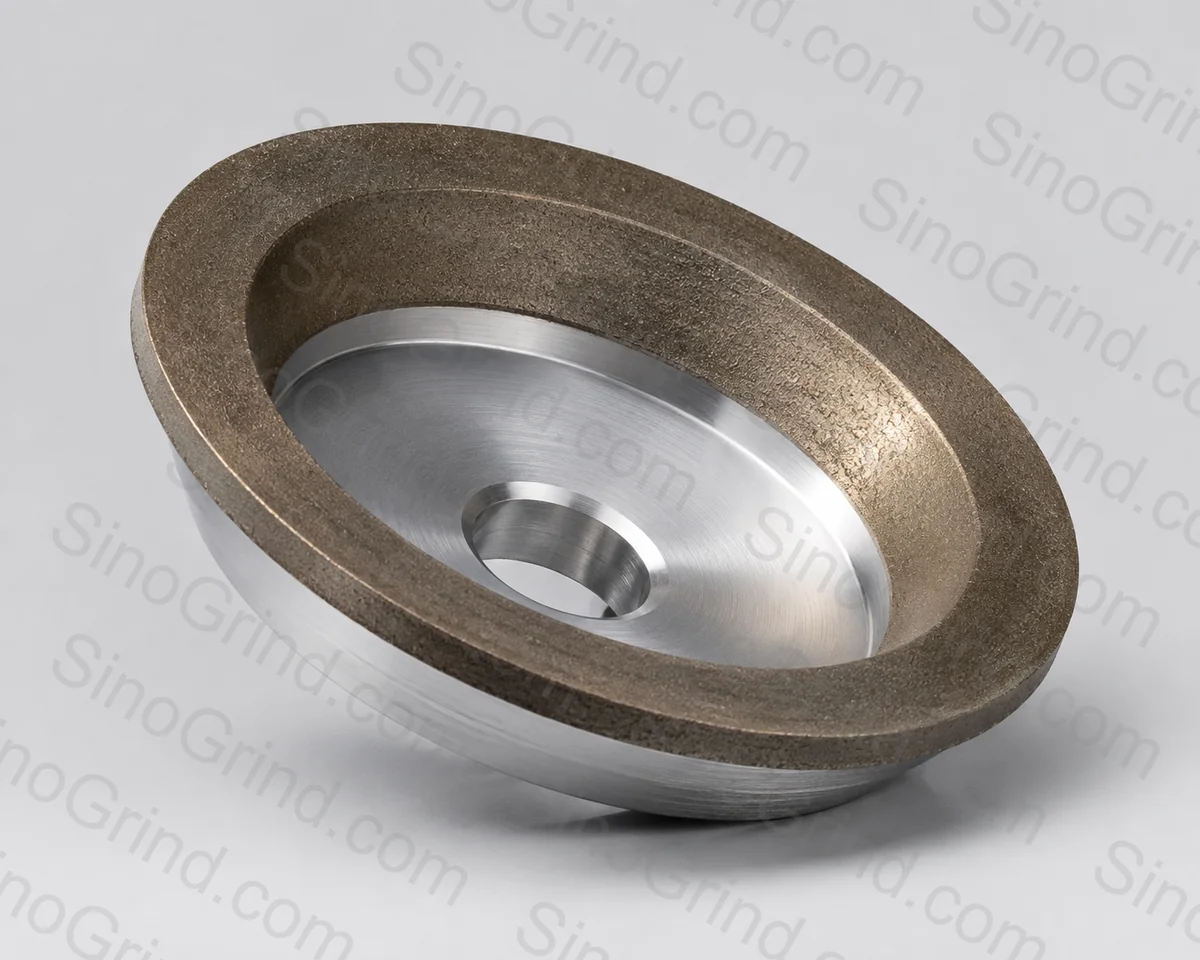
Quick answer: Optical glass, quartz and sapphire are generated and finished with fine diamond wheels — usually metal or resin bond at D46–D126 grit — using coolant and low-force processes to protect surface quality and transparency.
Related reading: Metal Bond Diamond Grinding Wheel · Diamond Wheel for Glass Grinding · Diamond Grit Size Selection.
Why optics use fine diamond
Optical glass, fused quartz and sapphire are hard and brittle, and the surface must be free of damage that would scatter light or weaken the part. Fine diamond grit produces the controlled, low-damage surface that subsequent lapping and polishing can finish. Coarse grit or excessive force leaves subsurface cracks that polishing cannot remove.
Which bond and grit should I use?
| Operation | Bond | Grit (FEPA D) | Note |
|---|---|---|---|
| Generating / roughing | Metal / Electroplated | D91–D126 | Set curve and thickness |
| Fine grinding | Metal / Resin | D46–D91 | Prepare for lapping |
| Sapphire | Metal / Resin | D46–D126 | Harder, needs durable diamond |
| Quartz finishing | Resin / Vitrified | D15–D46 | Low-damage surface |
Sapphire is much harder than glass and quartz and needs more durable diamond and careful process control.
Protecting surface quality
- Fine grit and low force limit subsurface damage.
- Flood coolant to control heat and flush debris.
- Rigid, vibration-free spindles for optical surfaces.
- Sequence rough then fine — damage from roughing must be removed.
- Inspect for cracks before polishing.
Where is it used?
- Lenses and prisms — generating and fine grinding.
- Optical windows and domes.
- Sapphire watch crystals and covers.
- Quartz optics and semiconductor windows.
Which specification should I choose?
| Parameter | Typical value |
|---|---|
| Bond | Metal (generating) / Resin (fine) |
| Grit (FEPA D) | D15–D126 |
| Concentration | 75–125% |
| Coolant | Flood |
| Priority | Low subsurface damage |
| Note | Sapphire is harder than glass/quartz |
Fine diamond sets up the surface; final polish is a separate operation.
Surface quality is measured below the surface
An optical surface can look perfect and still scatter light because of subsurface damage left by the last grinding step. The rule in optics is that each step must remove the damage of the step before it, which is why grinding, lapping and polishing are planned as a chain rather than as separate operations.
Diamond grinding sets the shape and removes the bulk; the fine grinding step determines how much lapping and polishing work remains. A wheel that is too coarse saves minutes at the grinder and costs hours at the polisher.
How do I set up the job?
- Clean the machine. A single stray coarse grain scratches a polished surface; clean the chuck, coolant and guards before a fine operation.
- Choose a fine, free-cutting wheel. Vitrified or resin bond with fine diamond; the bond must release grains before they fracture the surface.
- Control the infeed. Light depth per pass with a constant feed; dwelling creates a low-spatial-frequency error that is hard to polish out.
- Filter the coolant. Fine filtration removes the glass or crystal swarf that would otherwise scratch the next part.
- Measure the damage. Use the agreed inspection method to confirm the damaged layer is shallow enough for the next step.
- Protect the surface. Handle with clean gloves and store the part covered.
How do I fix common problems?
| Symptom | Most likely cause | What to change |
|---|---|---|
| Scratches after polishing | Coarse grain or contaminated coolant | Clean the loop, filter finer, inspect the wheel |
| Edge chips | Unsupported edge or too much infeed | Support the edge, reduce depth |
| Shape error that will not polish out | Wheel run-out or machine geometry | Re-indicate, check the machine, re-true |
| Cloudy finish | Wheel glazed, grains rubbing | Dress the wheel, adjust speed and coolant |
| Long polishing time | Too coarse a grinding step | Move one grit finer at the grinder |
Every minute saved on a coarse wheel is usually paid back several times at the polisher.
What should an RFQ include?
- Material: fused silica, quartz, borosilicate or crystal.
- Geometry: flat, spherical, prism or freeform, with the tolerance.
- Wheel: bond, grit and profile, plus the machine interface.
- Process chain: the lapping and polishing steps that follow.
- Coolant: filtration level and compatibility with the blocking compound.
- Acceptance: surface figure, roughness and scratch specification.
Browse the matching Diamond & CBN Grinding Wheels range for this application.
Optics is a chain process. Optimising the grinder in isolation usually moves cost to the polisher rather than removing it, so specify the whole chain before choosing the wheel.
Blocking, handling and cleanliness
In optics the handling around the grinder matters as much as the wheel. Blocking wax, lapping slurry and even fingerprints become scratches once the part reaches polishing, and a single scratch can scrap a component that has already absorbed hours of work.
Keep the grinder area separate from the polishing area, clean chucks and fixtures before each part, and store finished surfaces covered. Use clean gloves and never wipe a ground surface with a cloth that has been used on the machine.
Sub-table 1 — by material family
| Material | Typical operation | Recommended bond | Grit (FEPA D) | Concentration | Typical Ra |
|---|---|---|---|---|---|
| Cemented carbide (WC-Co) | Cutter & tool grinding | Resin / Metal | D91–D181 | 100–150% | 0.1–0.4 µm |
| PCD / PCBN | Edge prep, peripheral | Metal / Vitrified | D46–D91 | 125–150% | 0.05–0.2 µm |
| Advanced ceramics (Al₂O₃, ZrO₂, Si₃N₄) | Surface / form | Vitrified / Resin | D64–D151 | 75–125% | 0.2–0.6 µm |
| Optical / flat glass, quartz | Edge, bevel, CNC | Metal / Resin | D64–D126 | 75–125% | 0.05–0.3 µm |
| Semiconductor (Si, SiC, sapphire) | Back-grind, dicing | Electroplated / Resin | D126–D400+ | 100–200% | <0.02 µm (fine) |
| Ferrite / soft magnetic | Surface / form | Resin / Metal | D91–D181 | 100–150% | 0.2–0.8 µm |
| Graphite / carbon | Form / cut-off | Electroplated / Metal | D181–D301 | 75–125% | — |
| CFRP / composites | Cut, slot | Electroplated | D252–D400 | — | — |
| Thermal-spray coatings | Grind, polish | Resin / Metal | D126–D252 | 75–100% | 0.1–0.4 µm |
| Stone / engineered quartz | Edge, calibrate | Metal / Electroplated | D181–D400 | — | — |
| Zirconia (dental / medical) | Finish, polish | Resin / Vitrified | D46–D126 | 75–100% | 0.1–0.3 µm |
| Steel / cast iron (ferrous) | — | Not diamond — use CBN | — | — | — |
Representative values for planning; confirm final grit, concentration and bond with a grinding trial on your machine.
Boundary rule — when not to use diamond
Diamond is the hardest abrasive and the correct choice for hard, brittle, non-ferrous materials such as cemented carbide, ceramics, glass, silicon, sapphire, ferrite, graphite and composites. It must not be used on ferrous metals — steel, cast iron, and their alloys — because carbon in diamond reacts with iron at grinding temperatures (roughly above 700 °C / 1300 °F). This chemical affinity causes rapid, abnormal diamond wear (graphitisation) and destroys the wheel. For steel, hardened steel, cast iron and other ferrous workpieces, use CBN (cubic boron nitride) instead.