: +86 15874211461

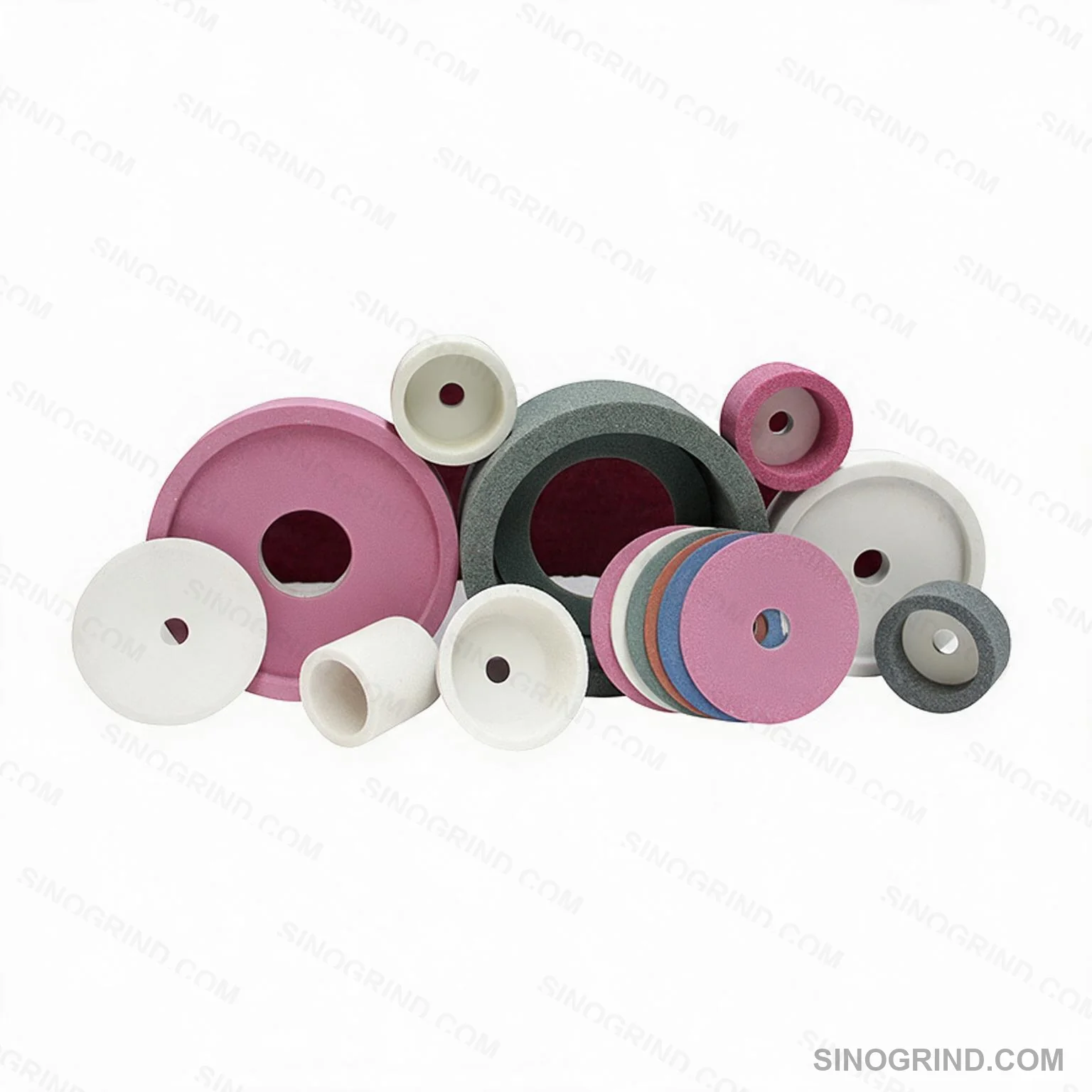
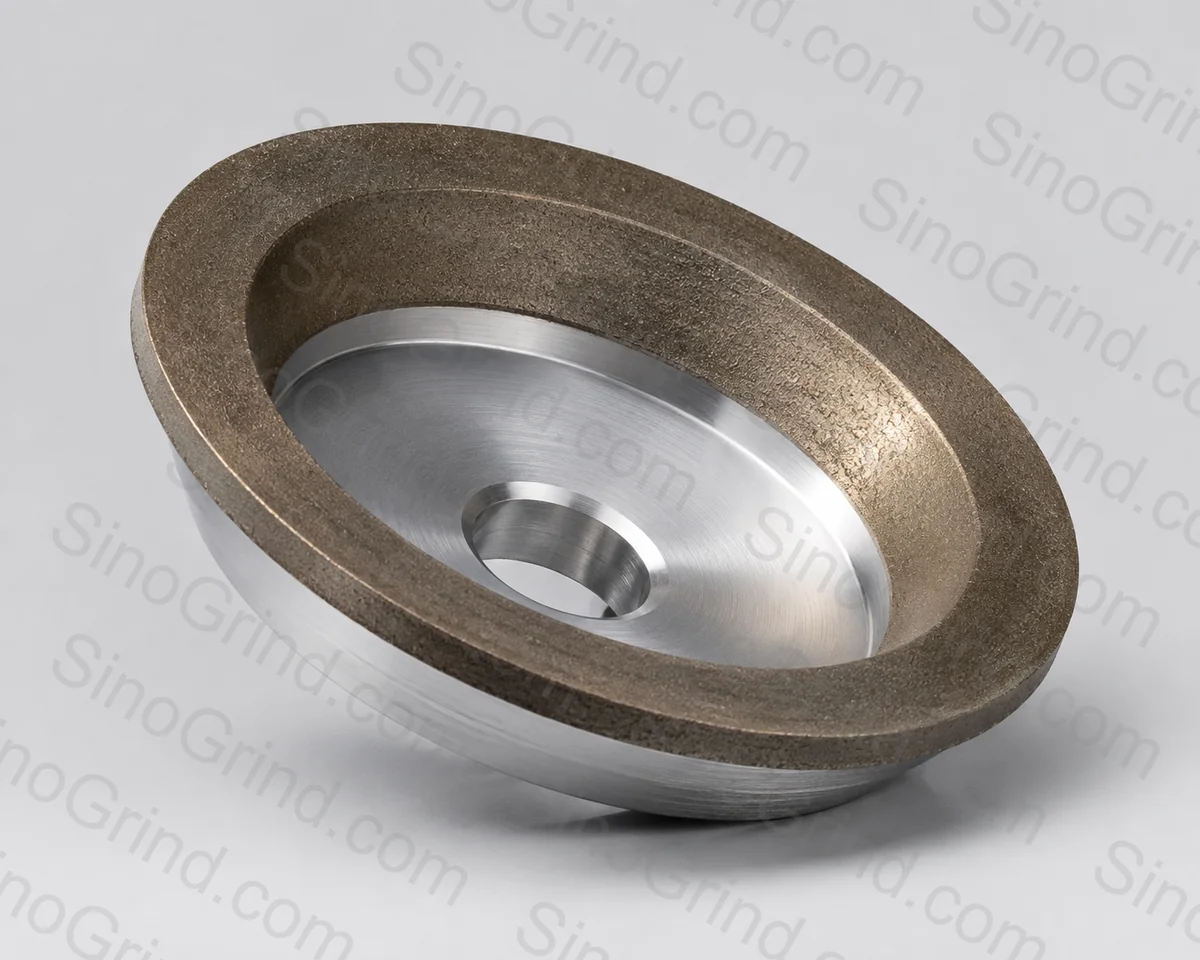
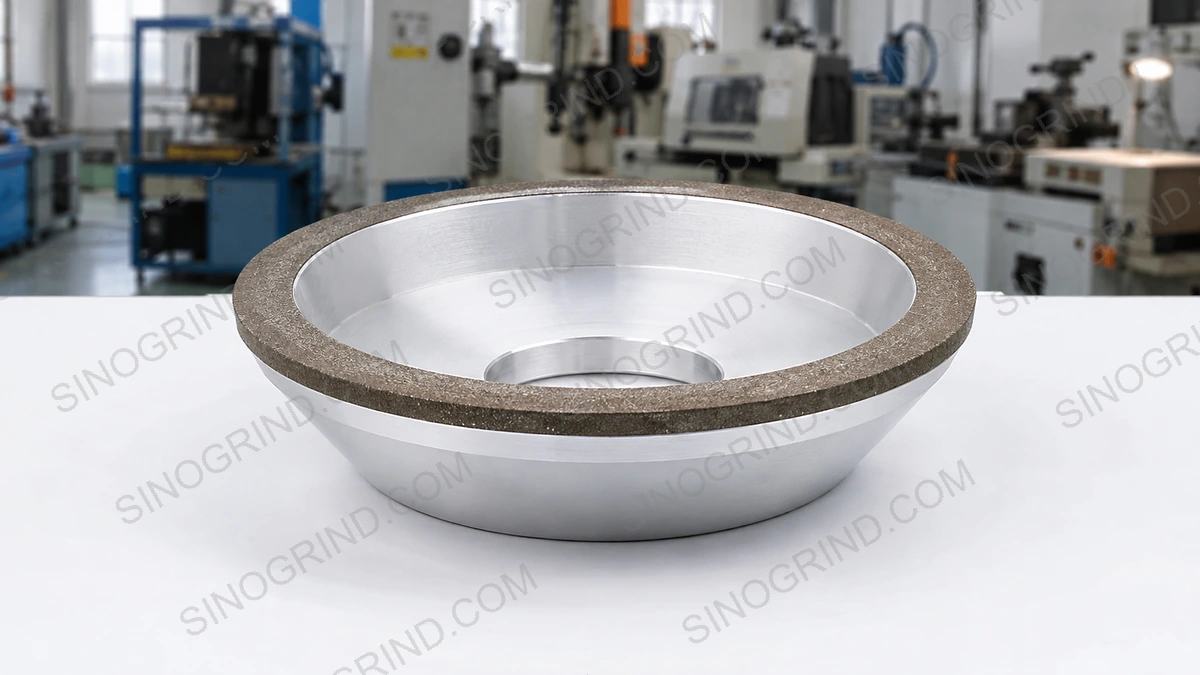
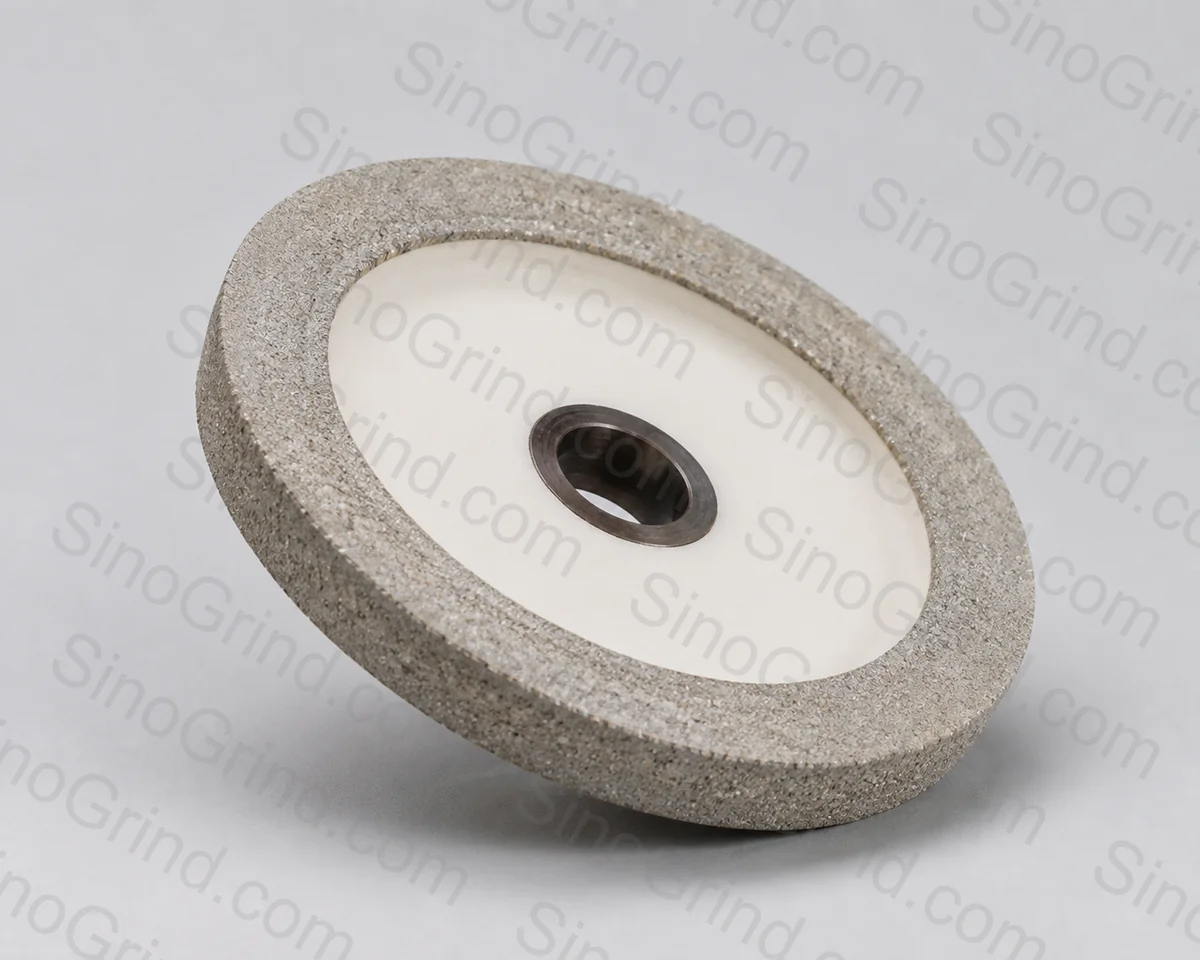
Quick answer: For glass, use a diamond wheel — typically metal or resin bond at D64–D126 grit, 75–125% concentration — with copious water coolant. Glass must be cut, not crushed, so sharp grit and rigid support are essential for chip-free edges.
Related reading: Metal Bond Diamond Grinding Wheel · Diamond Wheel for Optics, Quartz & Sapphire · Diamond Wheel for Ceramics Grinding.
Why glass is ground with diamond
Glass is hard and brittle, with no plastic deformation. Any blunt tool crushes it and leaves chips and micro-cracks that become fracture origins. Diamond stays sharp and removes glass by controlled micro-fracture, giving clean edges — provided the wheel is sharp and the cut is well cooled and supported.
Bond and grit for glass
| Operation | Bond | Grit (FEPA D) | Priority |
|---|---|---|---|
| Rough edge / arrissing | Metal | D91–D181 | Speed, chip control |
| Edge & bevel finish | Metal / Resin | D64–D126 | Chip-free edge |
| CNC / shape grinding | Metal / Resin | D46–D91 | Profile accuracy |
| Drilling / core | Electroplated | D126–D252 | Cut through cleanly |
Metal bond dominates production glass edging because it holds form and lasts, while resin gives the finest edge on demanding work.
Getting a chip-free edge
- Use plenty of water coolant — glass grinding runs wet.
- Keep the wheel sharp; a glazed wheel crushes the edge.
- Match wheel to operation — coarser for roughing, finer for finish.
- Support the glass rigidly and control feed rate to avoid chipping.
- Deburr with a finer pass rather than pressing harder.
Common glass applications
- Architectural / flat glass — edge arrissing and beveling.
- Display and cover glass — precision edges, low chipping.
- Quartz and optical glass — fine, low-damage finishing.
- Automotive glass — high-volume shaped edges.
Which specification should I choose?
| Parameter | Typical value |
|---|---|
| Bond | Metal (production) / Resin (finest edge) |
| Grit (FEPA D) | D64–D181 |
| Concentration | 75–125% |
| Wheel speed | 20–35 m/s |
| Coolant | Copious water, essential |
| Priority | Chip-free, sharp cutting |
Glass type and edge spec set the finishing grit; trial on your edger.
Edge quality is the product
On glass, the ground edge is visible and often structural. Chipping, a white haze or a feather crack along the arris is a defect the customer will see before they measure anything. The job is therefore run as a sequence: coarse diamond to establish the shape, then progressively finer grits to remove the damage from the previous step.
Coolant does two jobs here. It carries away the glass dust that would otherwise scratch the surface, and it keeps the edge below the temperature where thermal cracks start. A dry edge can look perfect and fail during tempering.
How do I set up the job?
- Confirm the glass type. Float, tempered, laminated and borosilicate behave differently; tempered glass cannot be cut or edged after tempering.
- Set the sequence. Typical CNC edging runs a coarse metal-bond cup wheel, then a finer wheel and finally a polishing wheel.
- Mount and indicate. Cup wheels must run true; run-out shows as a wavy edge and uneven wheel wear.
- Set water flow. Flood both sides of the wheel and the exit edge; the water also clears glass dust from the machine table.
- Grind at the right speed. 20–30 m/s with a steady feed; let the wheel cut, do not dwell in one place.
- Inspect the arris. Look for chips and haze under light before the sheet is moved; a second pass on a chipped edge rarely fixes it.
How do I fix common problems?
| Symptom | Most likely cause | What to change |
|---|---|---|
| Shell chips along the edge | Too coarse a first wheel, too much feed | Reduce feed, move one grit finer, check wheel condition |
| White haze that will not polish out | Subsurface damage from a coarse step | Add an intermediate grit, do not skip a step |
| Cracks after tempering | Heat damage during edging | Increase water flow, reduce speed, avoid dry passes |
| Wavy edge | Wheel run-out or worn spindle bearing | Re-indicate, check the spindle, replace the wheel |
| Wheel stops cutting | Metal bond glazed or loaded with glass dust | Condition the face, improve filtration, reduce feed |
Most glass defects are inherited from the previous grit, not created by the last one.
What should an RFQ include?
- Glass: type, thickness and whether it is tempered before or after edging.
- Edge: flat arris, pencil edge, bevel or a drawing with the chip limit.
- Sequence: the wheels you run today and the finish each one must deliver.
- Machine: spindle type, coolant supply and the maximum wheel diameter.
- Throughput: metres of edge per shift, which sets the bond and grit choice.
- Scrap: the chip rate you need to improve, so the quote can target it.
Browse the matching Diamond & CBN Grinding Wheels range for this application.
In glass edging the wheel is cheap compared with the sheet. The real saving comes from running the correct grit sequence and keeping the coolant clean, which together cut chips and rework far more effectively than buying a premium wheel for the last station.
Sub-table 1 — by material family
| Material | Typical operation | Recommended bond | Grit (FEPA D) | Concentration | Typical Ra |
|---|---|---|---|---|---|
| Cemented carbide (WC-Co) | Cutter & tool grinding | Resin / Metal | D91–D181 | 100–150% | 0.1–0.4 µm |
| PCD / PCBN | Edge prep, peripheral | Metal / Vitrified | D46–D91 | 125–150% | 0.05–0.2 µm |
| Advanced ceramics (Al₂O₃, ZrO₂, Si₃N₄) | Surface / form | Vitrified / Resin | D64–D151 | 75–125% | 0.2–0.6 µm |
| Optical / flat glass, quartz | Edge, bevel, CNC | Metal / Resin | D64–D126 | 75–125% | 0.05–0.3 µm |
| Semiconductor (Si, SiC, sapphire) | Back-grind, dicing | Electroplated / Resin | D126–D400+ | 100–200% | <0.02 µm (fine) |
| Ferrite / soft magnetic | Surface / form | Resin / Metal | D91–D181 | 100–150% | 0.2–0.8 µm |
| Graphite / carbon | Form / cut-off | Electroplated / Metal | D181–D301 | 75–125% | — |
| CFRP / composites | Cut, slot | Electroplated | D252–D400 | — | — |
| Thermal-spray coatings | Grind, polish | Resin / Metal | D126–D252 | 75–100% | 0.1–0.4 µm |
| Stone / engineered quartz | Edge, calibrate | Metal / Electroplated | D181–D400 | — | — |
| Zirconia (dental / medical) | Finish, polish | Resin / Vitrified | D46–D126 | 75–100% | 0.1–0.3 µm |
| Steel / cast iron (ferrous) | — | Not diamond — use CBN | — | — | — |
Representative values for planning; confirm final grit, concentration and bond with a grinding trial on your machine.
Boundary rule — when not to use diamond
Diamond is the hardest abrasive and the correct choice for hard, brittle, non-ferrous materials such as cemented carbide, ceramics, glass, silicon, sapphire, ferrite, graphite and composites. It must not be used on ferrous metals — steel, cast iron, and their alloys — because carbon in diamond reacts with iron at grinding temperatures (roughly above 700 °C / 1300 °F). This chemical affinity causes rapid, abnormal diamond wear (graphitisation) and destroys the wheel. For steel, hardened steel, cast iron and other ferrous workpieces, use CBN (cubic boron nitride) instead.