: +86 15874211461

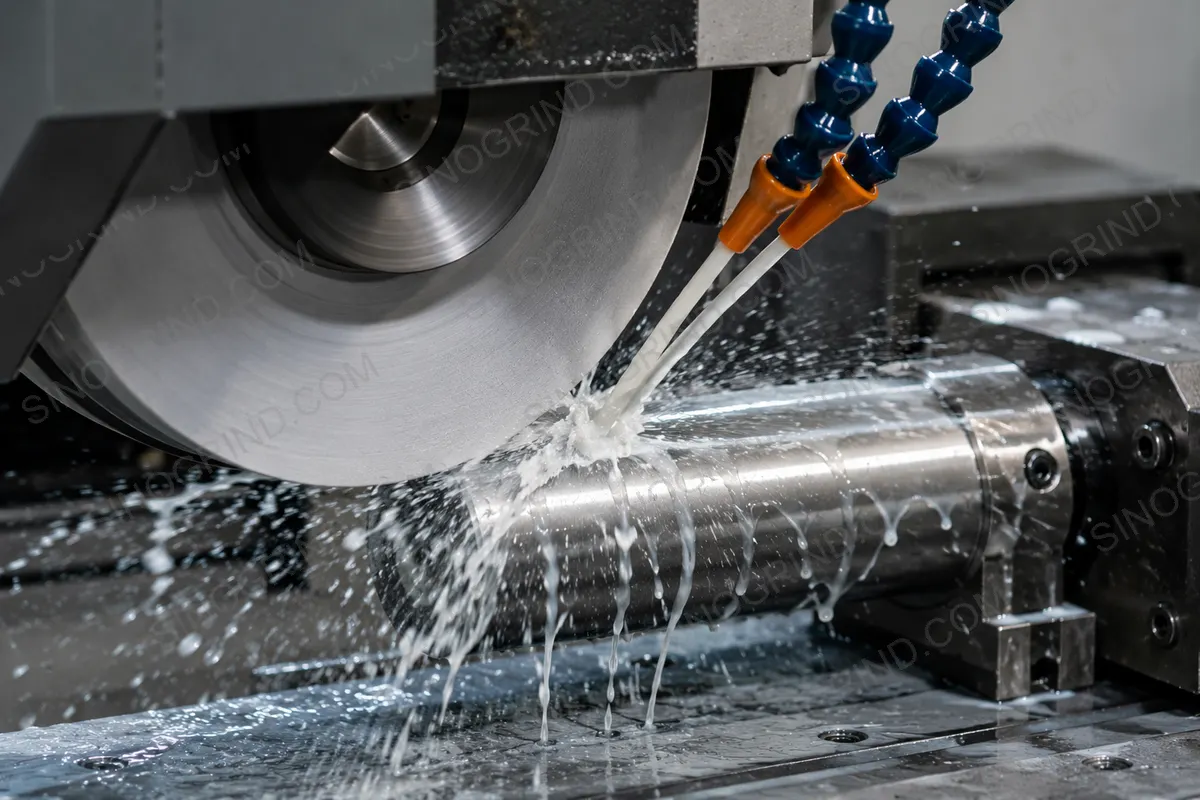
Quick answer: Most diamond wheel problems fall into five groups: loading/glazing, dull cutting, burn marks, chatter/vibration marks, and poor size or chipping. Each has a specific cause — usually the wrong grit, concentration or bond, incorrect speed or feed, poor coolant, or the wrong abrasive for the material.
Related reading: How to Dress a Diamond Grinding Wheel · Diamond Grinding Coolant Guide · Diamond Wheel G-Ratio & Cost.
Symptom, cause and fix
| Symptom | Likely cause | Fix |
|---|---|---|
| Wheel glazes / stops cutting | Bond too hard, speed too low, feed too light, no dressing | Dress the wheel; increase speed or feed slightly; consider a softer/coarser wheel |
| Loading (metal clogging the face) | Poor coolant, wrong bond, soft workpiece | Improve coolant flow and filtration; use a more open/coarser wheel |
| Burn marks on the part | Heat: too much infeed, no coolant, glazed wheel | Reduce infeed, increase coolant, dress the wheel |
| Chatter / vibration marks | Wheel out of balance, run-out, weak setup, wrong speed | Balance and true the wheel; stiffen the setup; adjust speed |
| Poor finish / rough surface | Grit too coarse, wheel dull, vibration | Use finer grit; dress; check balance and spindle |
| Chipping / edge break-out | Too coarse grit, too much force, brittle material | Use finer grit, lighter passes, better support |
| Size drifting / out of tolerance | Wheel wear or glazing, thermal growth | Dress more often; check coolant temperature; verify bond |
| Rapid wheel wear | Wrong abrasive for material | Check the boundary rule (diamond vs CBN) and grit/concentration |
Work from the most likely cause first: coolant, then dressing, then speed/feed, then specification.
The five common failure modes in detail
Glazing and loading
Glazing is a shiny, blunt face where bond has smeared over the diamond. Loading is workpiece material welded into the wheel face. Both stop the wheel cutting and generate heat. Dress to fix glazing; improve coolant and filtration to fix loading.
Burn marks
Burn is thermal damage (oxidation or tempering) on the workpiece. It comes from excessive heat, which usually means too much infeed, too little coolant or a glazed wheel. Reduce infeed, increase coolant and keep the wheel sharp.
Chatter and vibration marks
Regular marks on the surface come from vibration: an unbalanced or out-of-round wheel, a weak setup or the wrong wheel speed. Balance and true the wheel, stiffen the setup and move the speed away from a resonant point.
Poor finish
A rougher-than-expected surface usually means the grit is too coarse, the wheel is dull, or the machine is vibrating. Go finer, dress, and check balance.
Size drift and chipping
Size drift points to wheel wear, glazing or thermal growth — dress more often and control coolant temperature. Chipping points to too coarse a grit, too much force, or insufficient support for a brittle part.
First aid checklist
1) Check coolant flow and concentration. 2) Dress the wheel. 3) Re-check speed and feed. 4) Only then change grit, concentration or bond.
Sub-table 2 — by grinding process
| Process | Typical bond | Grit (FEPA D) | Concentration | Common shapes | Notes |
|---|---|---|---|---|---|
| Tool & cutter grinding (flute, gash) | Resin / Metal | D91–D181 | 100–150% | 11V9, 12V9, 1A1 | Cool cutting protects carbide edges |
| Surface / flat grinding | Resin / Vitrified | D64–D151 | 75–125% | 1A1, 6A2 | Balance finish vs. removal |
| OD cylindrical | Metal / Vitrified | D91–D181 | 100–150% | 1A1, 1F1 | Even coolant coverage |
| ID / internal | Resin / Metal | D46–D126 | 75–125% | Cup, mounted points | Small wheels, high speed |
| Form / profile / creep-feed | Metal / Vitrified | D64–D151 | 100–150% | 6A2, 11V9, 12V9 | Profile retention is critical |
| Centerless | Metal / Resin | D91–D181 | 100–150% | 1A1, 6A2 | High volume, tight roundness |
| Back-grinding / wafer thinning | Electroplated / Resin | D126–D400+ | 100–200% | Cup, 1A1 | Ultra-fine finish, low damage |
| Glass edge / bevel / CNC | Metal / Resin | D64–D126 | 75–125% | 1A1, 1F1, 12A2 | Prevent edge chipping |
| Cut-off / slot / groove | Electroplated / Metal | D181–D400 | — | 1A1R, saw | Thin wheels, rigid setup |
| Dressing & truing (of other wheels) | — | D46–D181 | — | Pen, roller, block | Diamond tools, not diamond wheels |
A systematic diagnostic sequence
Most grinding problems are diagnosed in the wrong order. Changing the wheel first is expensive and usually premature. Work from the cheapest, most likely cause outwards: the mount, the coolant, the dressing, the parameters, and only then the wheel specification.
- Stop and look at the part. Measure the defect: size, position, depth and whether it repeats at the same spindle angle.
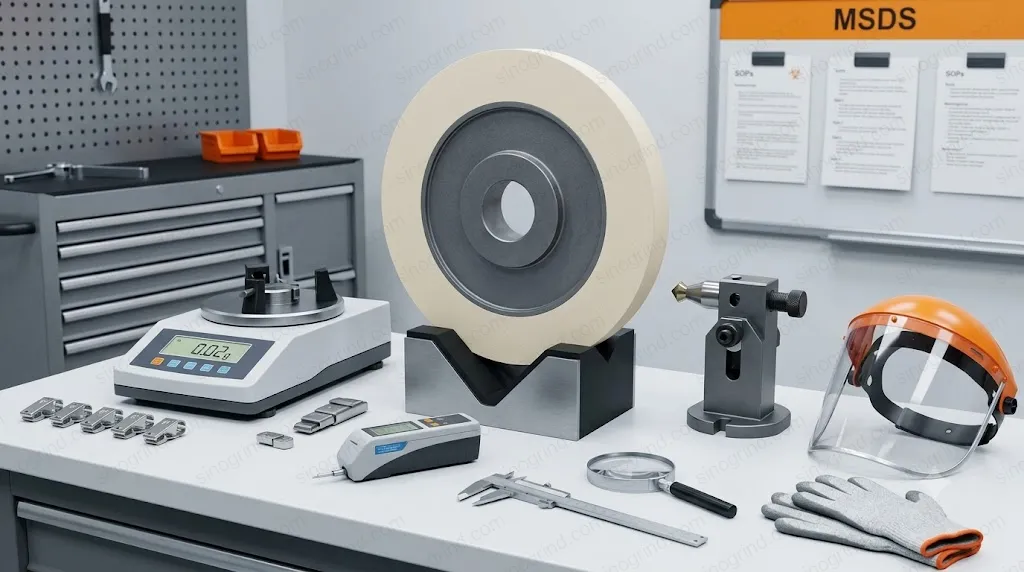
- Check the mount. Run-out, flange condition and cleanliness explain a large share of chips, taper and chatter.
- Check the coolant. Flow, aim, concentration and filtration. Starved contact zones produce both burn and loading.
- Check the dressing. A glazed or wrongly dressed wheel mimics a wrong specification.
- Check the parameters. Speed, infeed and table feed against the process sheet; drift from the sheet is common after a changeover.
- Change one variable. Record the result before trying the next change, or the diagnosis is lost.
- Only then change the wheel. If mount, coolant, dressing and parameters are proven good, the specification is the remaining suspect.
What to record on every job
- Wheel: code, grit, concentration, bond and the diameter after the last dress.
- Mount: measured run-out and flange condition.
- Coolant: type, concentration, pressure and filter condition.
- Parameters: wheel speed, depth per pass, table feed and spark-out.
- Result: size, Ra, edge condition and wheel wear after the batch.
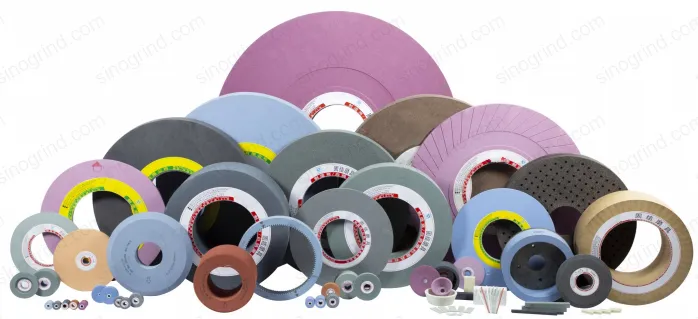
Browse the matching Diamond & CBN Grinding Wheels range for this application.
Wheel or process?
A wheel is the likely cause when the same defect appears across different machines, fixtures and operators with the same specification. A process problem is more likely when the defect appears after a changeover, on one machine, or at one point in the cycle. That single distinction prevents most unnecessary wheel changes.
If the defect is intermittent, look at coolant flow and swarf first. If it is constant and reproducible, look at the mount and the wheel. If it appears only at the end of a batch, look at wheel wear and thermal drift.
Boundary rule — when not to use diamond
Diamond is the hardest abrasive and the correct choice for hard, brittle, non-ferrous materials such as cemented carbide, ceramics, glass, silicon, sapphire, ferrite, graphite and composites. It must not be used on ferrous metals — steel, cast iron, and their alloys — because carbon in diamond reacts with iron at grinding temperatures (roughly above 700 °C / 1300 °F). This chemical affinity causes rapid, abnormal diamond wear (graphitisation) and destroys the wheel. For steel, hardened steel, cast iron and other ferrous workpieces, use CBN (cubic boron nitride) instead.