: +86 15874211461

Quick answer: stay with aluminum oxide for general steel, cast iron, stainless, low-volume work and machines that cannot reach CBN surface speeds. Move to CBN when the part is hardened (roughly 45 HRC and above), volume is high, tolerance and form are tight, and the machine is rigid enough. Compare cost per good part, not wheel price: CBN usually wins on wheel life and dressing frequency, but only if the process can use it.
Related reading: Aluminum oxide grinding wheels · Alumina grit and grade selection · How to choose a CBN grinding wheel · Diamond vs CBN.
What actually differs between alumina and CBN
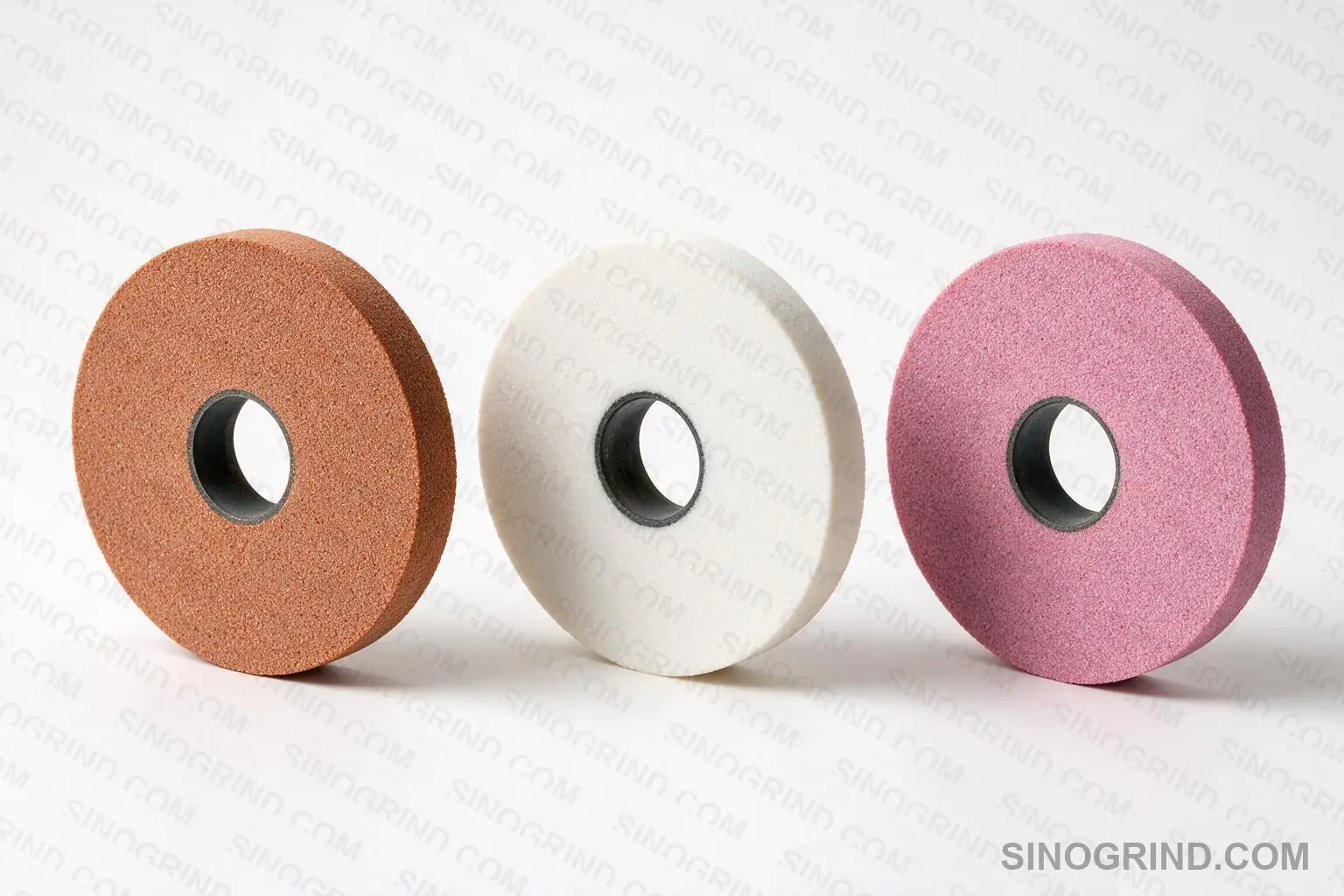
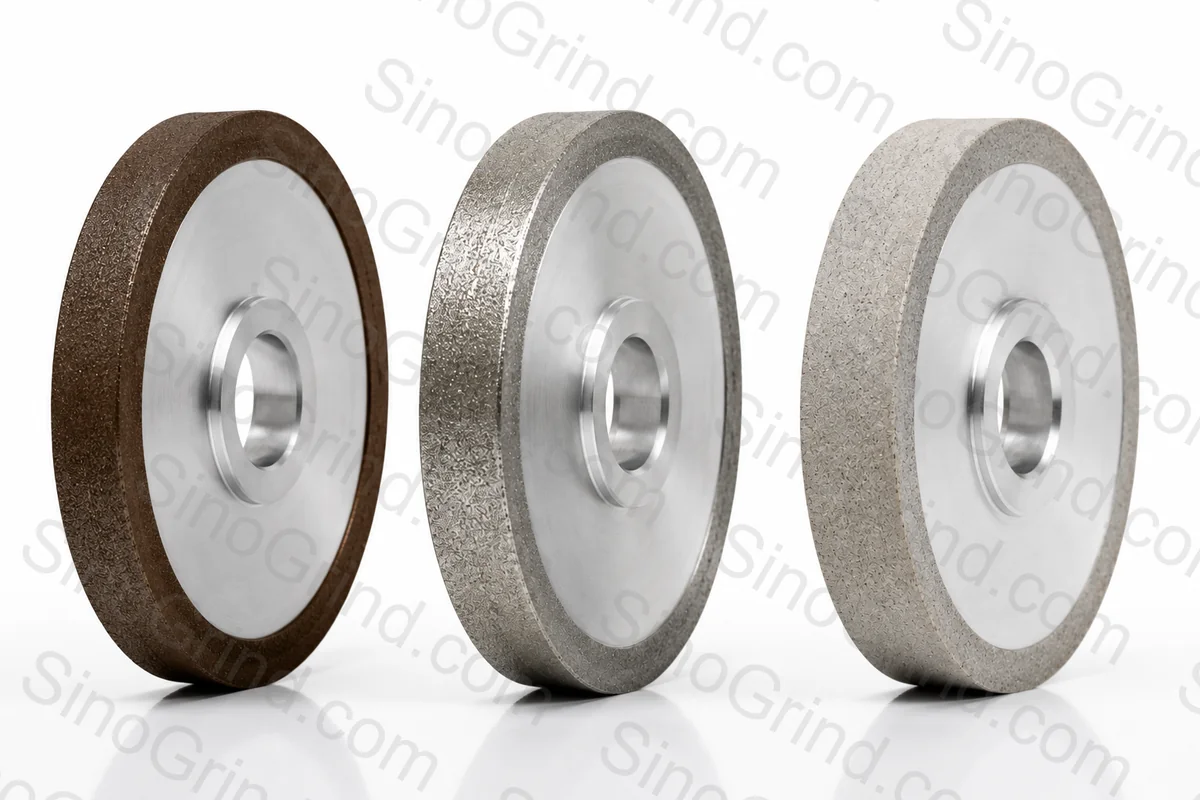
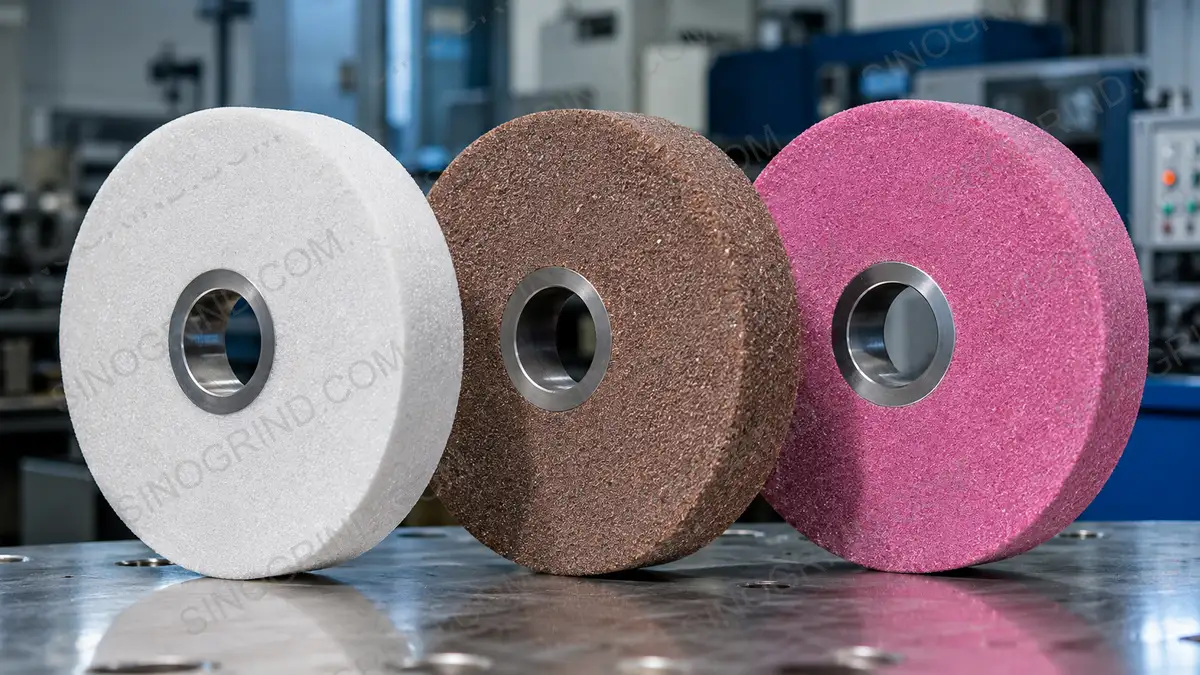
Aluminum oxide and cubic boron nitride are both used on ferrous metals, which is why they get compared. But they are different classes of abrasive. Alumina is a conventional abrasive made from fused aluminum oxide. CBN is a superabrasive made from cubic boron nitride, with a hardness close to diamond and a crystal structure that stays chemically stable against iron at grinding temperature.
| Property | Aluminum oxide (alumina) | CBN |
|---|---|---|
| Abrasive class | Conventional | Superabrasive |
| Hardness | About 9 Mohs; roughly 2,000–2,200 on the Knoop scale | About 9.5 Mohs; roughly twice as hard on the Knoop scale |
| Grain wear | Fractures and self-sharpens; the bond must release worn grain | Stays sharp much longer; bond retention and dressing control performance |
| Thermal conductivity | Low; heat concentrates near the contact arc | High; heat is carried away from the cut more effectively |
| Typical wheel speed | Often 25–35 m/s for vitrified production work | Often 30–60 m/s depending on bond and wheel rating |
| Dressing | Star or diamond dresser; frequent, simple | Diamond truing, then conditioning; less frequent but more critical |
| Wheel cost | Low | High |
| Machine demand | Moderate | High rigidity, sufficient speed and power, good coolant |
| Best material fit | Carbon steel, alloy steel, stainless, cast iron, tool steel | Hardened steel, bearing steel, HSS, some superalloys and cast iron |
Hardness and speed values are general reference ranges. Always use the maximum speed marked on the wheel and the machine rating.
The hardness difference explains the wheel life. The thermal difference explains the part quality. CBN grains conduct heat away from the contact zone far better than alumina, so less heat enters the workpiece. That is why CBN can hold a hardened part to a tight tolerance with less burn risk, provided the machine can deliver the speed and rigidity the wheel needs.
Why hardness alone is a bad reason to switch
“CBN is harder, so it must be better” is the most expensive shortcut in wheel selection. A hard abrasive only helps if the grain stays exposed and the bond can hold it. Put a CBN wheel on a lightly loaded, low-speed bench grinder and it may polish rather than cut, because the grains never see enough pressure to fracture or wear and the bond never releases them. The wheel then needs dressing more often than expected, or it simply rubs.
Alumina, by contrast, is forgiving. It self-sharpens across a wide range of pressures, dresses easily with a star or diamond dresser, and is available in a huge range of grit, grade, structure and bond combinations. For a job shop running mixed work, that flexibility is often worth more than the theoretical life advantage of CBN.
Cost per part: the only comparison that matters
Wheel price is visible; cost per part is not. A CBN wheel can cost many times an alumina wheel and still be cheaper per part, or it can sit on the shelf because the volume never justified it. The comparison has to include everything the wheel touches:
Cost per good part ≈ (wheel cost ÷ parts per wheel) + dressing cost per part + labour per part + machine time per part + scrap and rework per part
| Cost driver | Alumina | CBN | What to measure |
|---|---|---|---|
| Wheel price | Low | High | Purchase price per wheel |
| Parts per wheel | Lower | Much higher on suitable work | Parts between replacements |
| Dressing time | Frequent, short | Less frequent, longer setup | Minutes per shift and consumable dresser cost |
| Cycle time | Baseline | Often shorter at higher speed | Seconds per part at stable quality |
| Scrap and rework | Higher risk on hard parts | Lower risk when process is controlled | Scrap rate and rework hours |
| Machine utilisation | More wheel changes | Fewer interruptions | Unplanned downtime per week |
The break-even point is rarely about the wheel alone. It is about how many good parts come off the machine between interruptions, and how much operator time goes into dressing, checking and reworking. A shop running one hardened part a week will almost never justify CBN. A shop running the same hardened part three shifts a day usually will.
Wheel life and dressing frequency
CBN lasts longer because the grain resists wear and the bond can be formulated to hold it until dressing. On hardened steel, the difference can be dramatic: many times the life of an alumina wheel is common, and the wheel may hold form through a whole batch instead of being dressed every few parts. But that advantage depends on truing the wheel correctly and keeping the coolant clean.
Alumina wears in a different way. The grain fractures, the bond releases it, and a new layer comes to the surface. That is not a defect; it is how a conventional wheel stays sharp. The cost is wheel consumption and dressing time, plus the risk of losing form on a tight profile. On simple cylindrical or surface work with generous tolerance, that trade is usually fine.
If dressing is your bottleneck, calculate the real cost before assuming CBN is the answer. Sometimes a softer alumina grade, a more open structure or a better dresser removes most of the dressing time at a fraction of the CBN price. Our dressing and truing guide covers the practical checks.
Thermal behaviour and part integrity
Hardened steel is sensitive to heat. Grinding heat can temper the surface, create tensile residual stress, produce burn marks or crack the part. Alumina has low thermal conductivity, so heat builds up in the contact zone and much of it goes into the workpiece and chips. CBN conducts heat away through the grain and bond more effectively, which generally lowers the temperature at the workpiece surface for the same removal rate.
That does not make CBN immune to burn. Excessive infeed, a starved coolant supply, a glazed wheel or a poor dress can burn a part with any abrasive. CBN simply gives more thermal headroom, which matters most on hard, high-value parts where scrap is expensive.
For stainless steel, the problem is different: the material is gummy and work-hardens, so the wheel must stay open and sharp. White alumina is often the better choice than CBN on general stainless work because it is cheap, available in the right soft grades and easy to keep open. CBN can be justified on hardened martensitic stainless or high-volume precision work, not on every stainless job.
Where aluminum oxide is still the right answer
- General carbon and alloy steel. A brown A wheel in a medium grade is hard to beat on cost per kilogram removed.
- Cast iron and general machine-shop work. Tough brown grain and a harder grade handle interrupted edges and scale.
- Stainless steel. White WA in a soft, open grade controls heat and loading at low cost.
- Low and medium volume. The wheel price and setup time dominate; CBN rarely pays back.
- Mixed work. One alumina specification can cover many jobs; CBN is less tolerant of being pushed outside its window.
- Large wheels and less rigid machines. Alumina is available in large diameters and does not demand the same stiffness.
- Cut-off, snagging and portable work. Resin-bond alumina is cheap, tough and safe at rated speed.
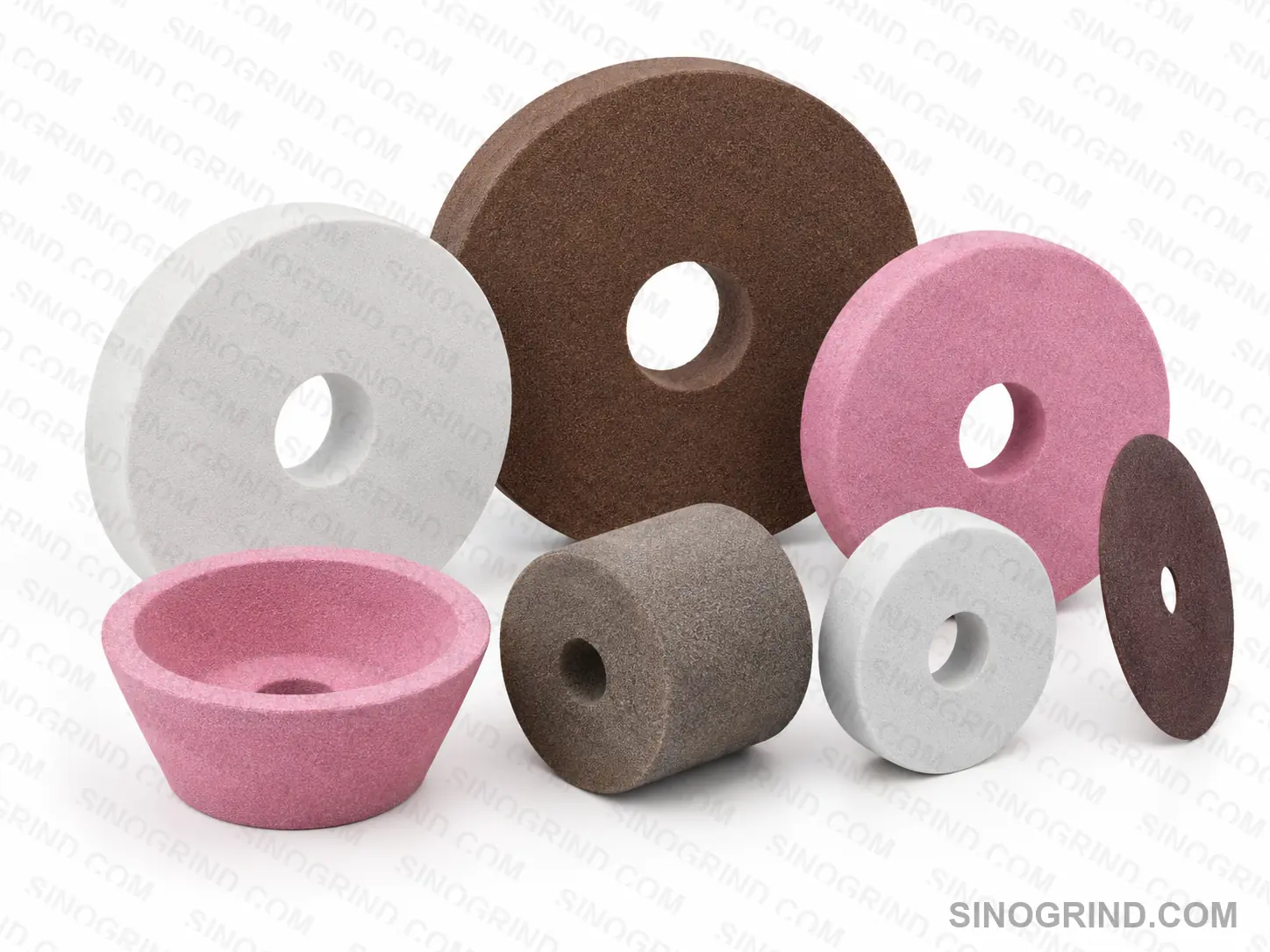
- Occasional tool sharpening. White or pink alumina handles HSS touch-up well; CBN is for production tool grinding.
Where CBN earns its price
- Hardened steel above roughly 45 HRC. The harder the part, the more the alumina wheel struggles and the more CBN’s wear resistance matters.
- High-volume production. The wheel cost is spread over many parts, and dressing downtime becomes the real expense.
- Tight tolerance and form. CBN holds form longer, so the last part in a batch matches the first.
- Hardened bearing and tool steels. Vitrified CBN is a common production choice for races, shafts and tools.
- High-speed grinding. CBN is designed for higher surface speeds, which can shorten cycle time.
- Difficult ferrous alloys. Some nickel-based and high-alloy steels grind more stably with CBN.
- Dry or minimum-coolant processes. CBN’s thermal behaviour can be an advantage where coolant is limited.
Decision table
| Job | First choice | Why | Upgrade trigger |
|---|---|---|---|
| Mild steel, general fabrication | Brown alumina | Cheap, tough, forgiving | Rarely; CBN offers little on soft steel |
| Alloy steel cylindrical grinding | Brown or pink alumina | Good balance of removal and finish | Hardened above ~45 HRC and high volume |
| Stainless steel, general | White alumina, soft/open | Cuts cool and resists loading | Hardened stainless or precision production |
| Cast iron, general | Brown alumina, harder grade | Tough grain suits scale and interrupted cuts | High-volume precision or difficult finish |
| Hardened steel 45–62 HRC, low volume | White or pink alumina | Lower setup cost; CBN may not pay back | Volume rises or scrap/dressing cost dominates |
| Hardened steel 45–62 HRC, high volume | CBN | Long life, form retention, less dressing | — |
| HSS tool sharpening, occasional | White or pink alumina | Simple, inexpensive, easy to dress | Production tool grinding with tight geometry |
| Production tool grinding | CBN (often resin or vitrified) | Holds form and edge quality over many tools | — |
| Carbide and ceramics | Diamond | Harder than the work; CBN is not the answer | — |
| Cut-off and snagging | Resin-bond alumina | Cheap, shock-resistant, high speed | Rarely; CBN is not a cut-off consumable |
Guidance for planning, not a guarantee. Confirm with a trial on your machine and workpiece.
Making the switch: machine and process checklist
- Check spindle speed. Can the machine reach the CBN wheel’s rated surface speed at the wheel diameter you need? If not, the wheel will not perform as intended.
- Check rigidity and power. CBN rewards stiffness. A worn spindle, flexible fixture or undersized motor will show up as chatter or poor finish.
- Plan truing. You need a diamond truing tool and a method. CBN cannot be dressed with a star dresser or an alumina stick in the same way as a conventional wheel.
- Review coolant. Flow, pressure, nozzle aim and filtration all matter more at higher wheel speed. Keep the fluid clean.
- Balance the wheel. Higher speed amplifies imbalance. Balance the wheel and check run-out before the first cut.
- Update the safety case. Check the wheel rating, guard, flanges and maximum RPM. Never exceed the marked speed.
- Trial a small batch. Compare finish, cycle time, dress frequency, wheel wear and scrap against the alumina baseline.
- Calculate cost per good part. Only scale up if the total number improves and the process is stable across shifts.
If you are unsure which side of the line your job sits on, describe the material, hardness, volume, tolerance and machine to our engineers through the contact page. We can quote both an alumina and a CBN option so the comparison is like for like.
Common misconceptions
- “CBN never needs dressing.” It needs less frequent dressing, but truing and conditioning are still part of the process.
- “CBN can grind anything.” It is a ferrous abrasive. Carbide and ceramics need diamond.
- “CBN runs cool, so coolant does not matter.” Coolant still controls chips, heat and wheel life; poor delivery will burn parts.
- “Alumina is obsolete.” Most grinding in the world is still done with conventional abrasives, for good economic reasons.
- “A harder wheel always lasts longer.” A wheel that glazes can wear faster in practice because it rubs instead of cutting.