: +86 15874211461

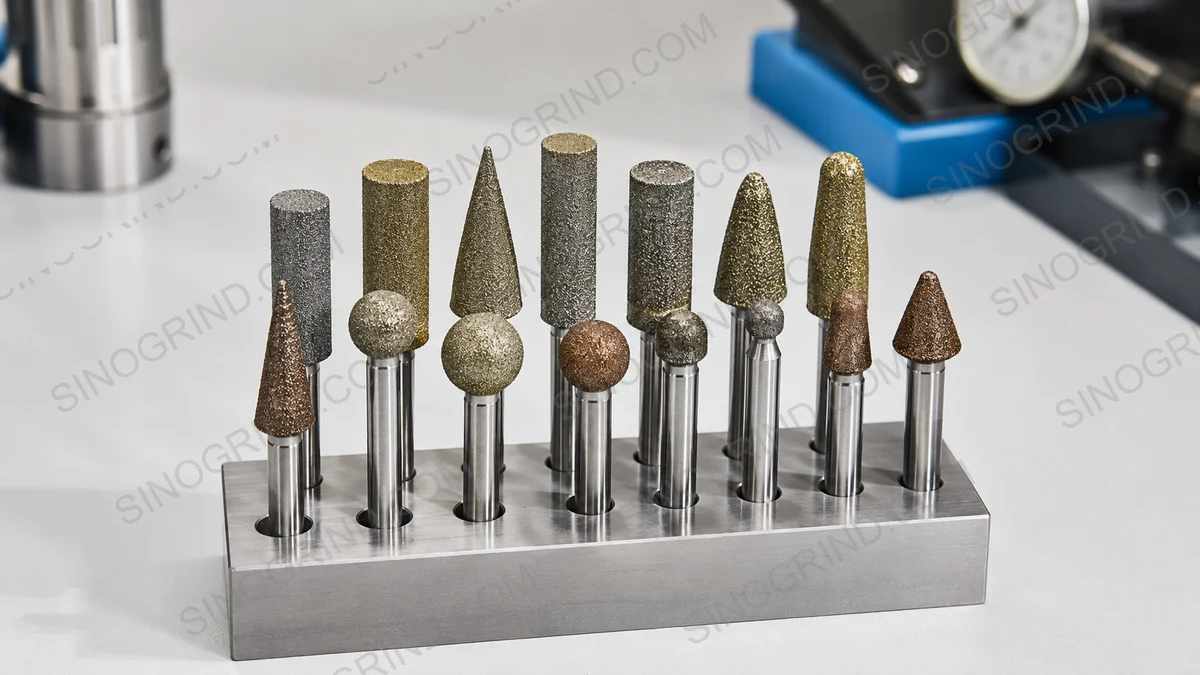
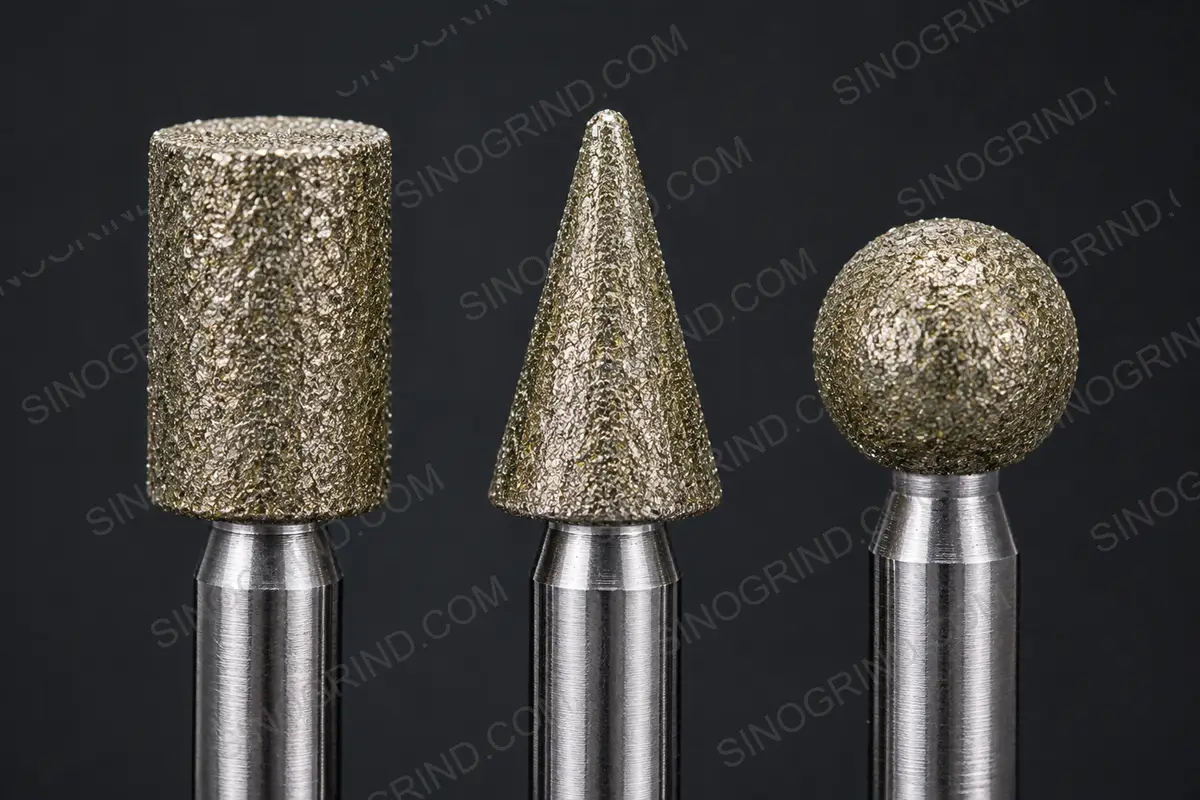
Diamond mounted points are precision abrasive tools consisting of diamond grains bonded to a small head mounted on a steel shank. They are used for internal grinding, slot grinding, profile grinding, and deburring of hard materials such as carbide, hardened steel, glass, and ceramic.
What Are Diamond Mounted Points?
A diamond mounted point is a small abrasive wheel mounted on a steel shank, driven by a rotary tool or internal grinding spindle. The head is made from diamond grains in a resin or metal bond, and the shank diameter (typically 3mm, 6mm, or 8mm) fits standard collets.
Mounted Point Shapes and Sizes
Diamond mounted points are classified by shape (cylinder A1, A3, A11, ball A12, etc.) and by shank size. Common shapes include the A1 cylinder for internal grinding, the A11 pointed cone for deburring and slot work, and the A12 ball shape for concave radii.
Diamond vs CBN Mounted Points
Diamond mounted points grind carbide, ceramic, glass, and other non-ferrous hard materials. CBN mounted points grind hardened steel and high-alloy tool steels. Choosing the right abrasive type depends on the workpiece material you are grinding.
Mounted Point Bonds: Resin and Metal
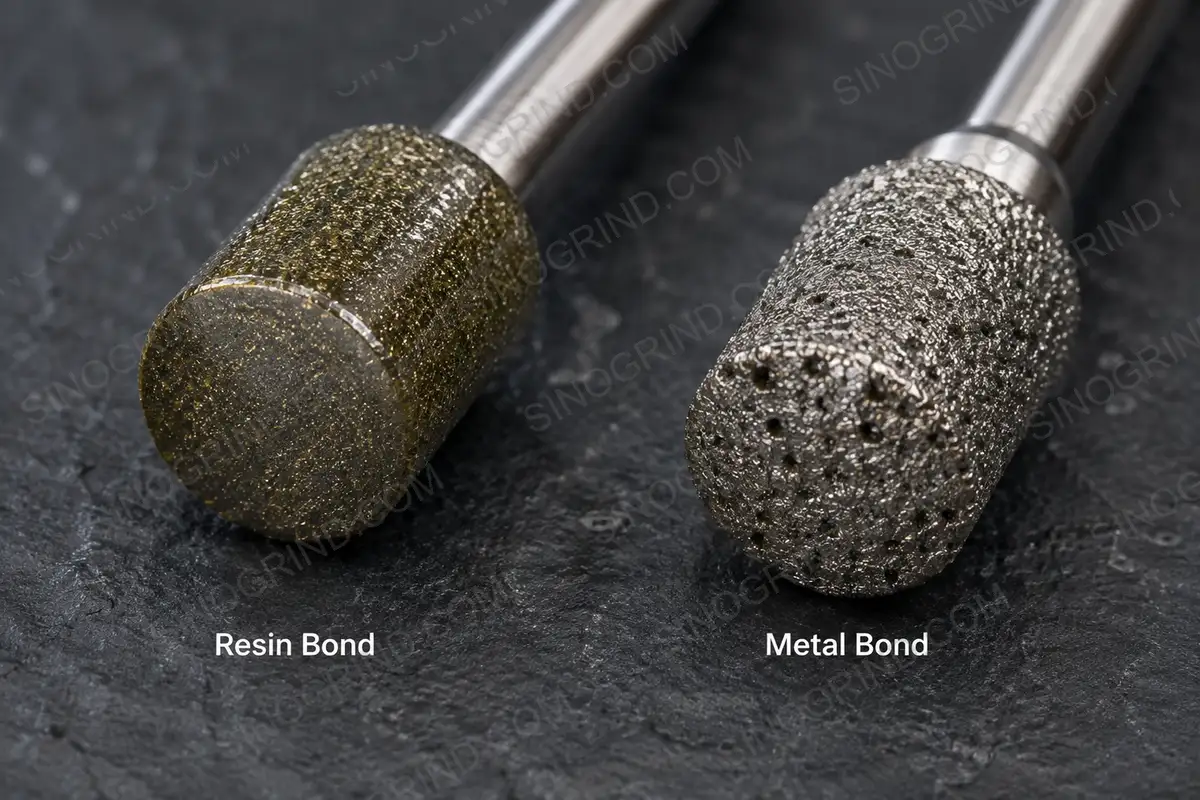
Resin bond mounted points give a fine finish and are easy to use, ideal for finishing and tool grinding. Metal bond mounted points hold grains firmly for heavy stock removal and long life, ideal for production grinding of carbide and ceramic.
How to Choose a Mounted Point
- Shape: A1 cylinder for internal grinding, A11 cone for slot and deburring, A12 ball for radii.
- Shank size: 3mm, 6mm, or 8mm to fit your spindle collet.
- Abrasive: Diamond for carbide, ceramic, glass; CBN for hardened steel.
- Grit: Coarse (D151-D213) for stock removal; fine (D46-D91) for finishing.
- Bond: Resin for finish and easy use; metal for heavy removal and long life.
Common Mounted Point Applications
To choose a mounted point, match the shape to the geometry you need, select diamond or CBN based on the workpiece material, pick a grit size for the finish you want, and confirm the shank diameter fits your spindle. Higher concentration gives faster removal; lower concentration gives smoother finish.
Choosing a Mounted Point Manufacturer
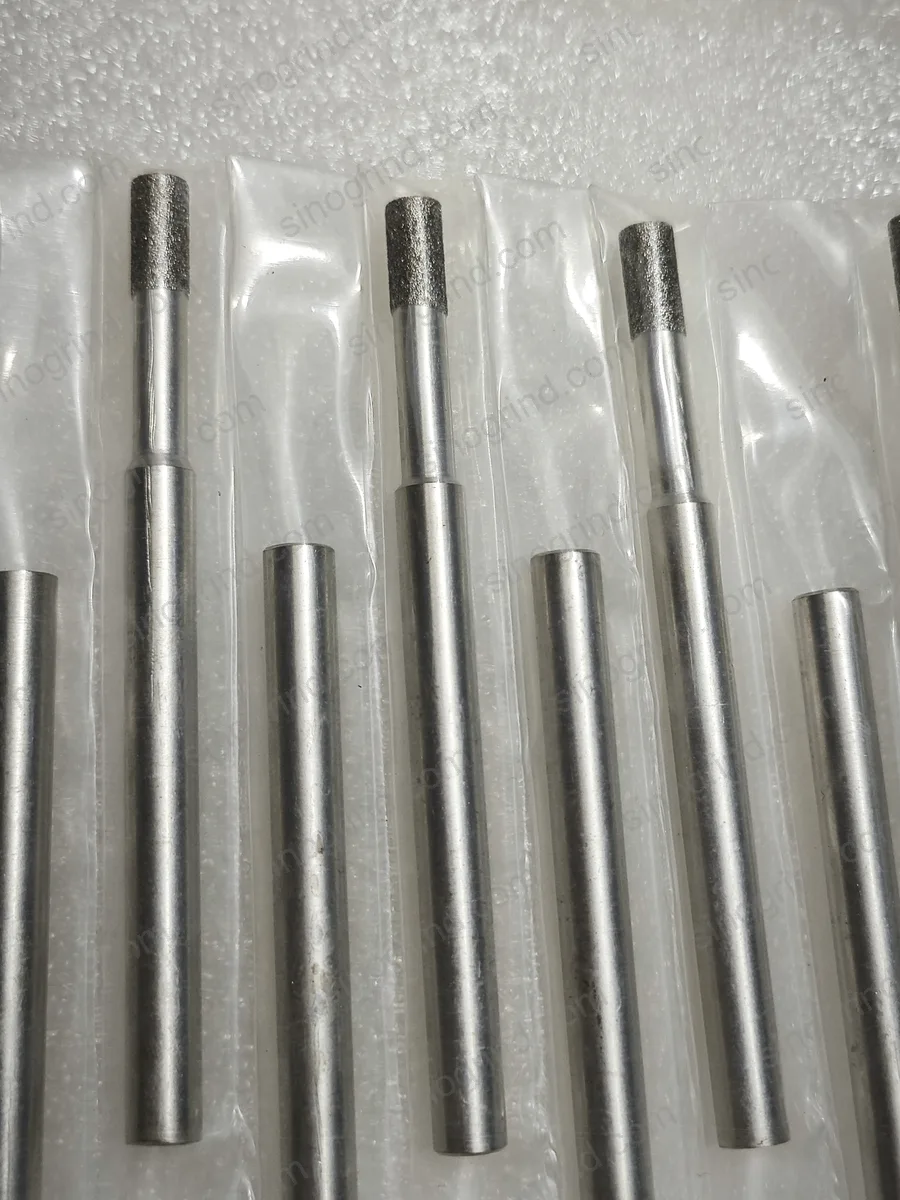
For a wide range of grinding rods and mounted points, contact our engineers with your material, shape, and shank size requirements.
Mounted points are widely used for internal bore grinding, die and mold finishing, deburring, and precision contour work on carbide tools, ceramic components, and hardened steel parts. They are essential accessories for tool rooms and CNC grinding machines.
.webp)