: +86 15874211461

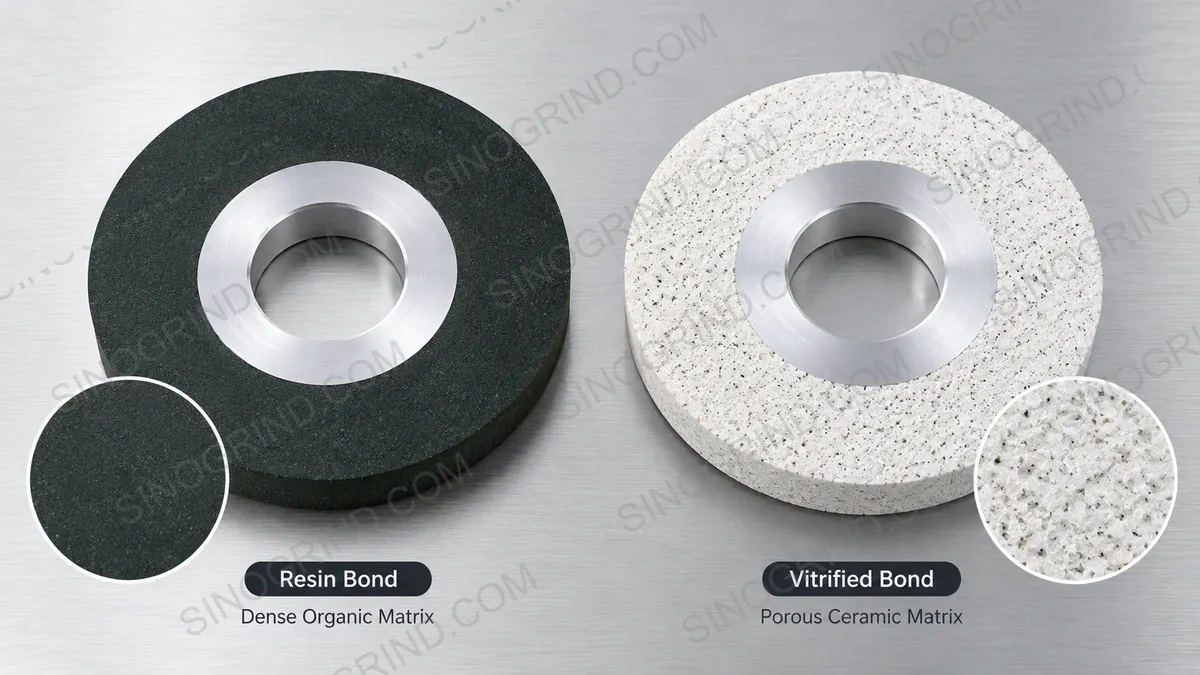
Selecting the right grinding wheel bond is one of the most critical decisions in any grinding operation. The bond type determines how abrasives are held, how the wheel wears, how much heat is generated, and ultimately the quality of the finished workpiece. Two of the most widely used bond types in precision grinding are resin bond and vitrified bond. Understanding the differences between these two bond systems is essential for optimizing your grinding process, reducing costs, and achieving the surface finish your application demands.
What Is a Resin Bond Grinding Wheel?
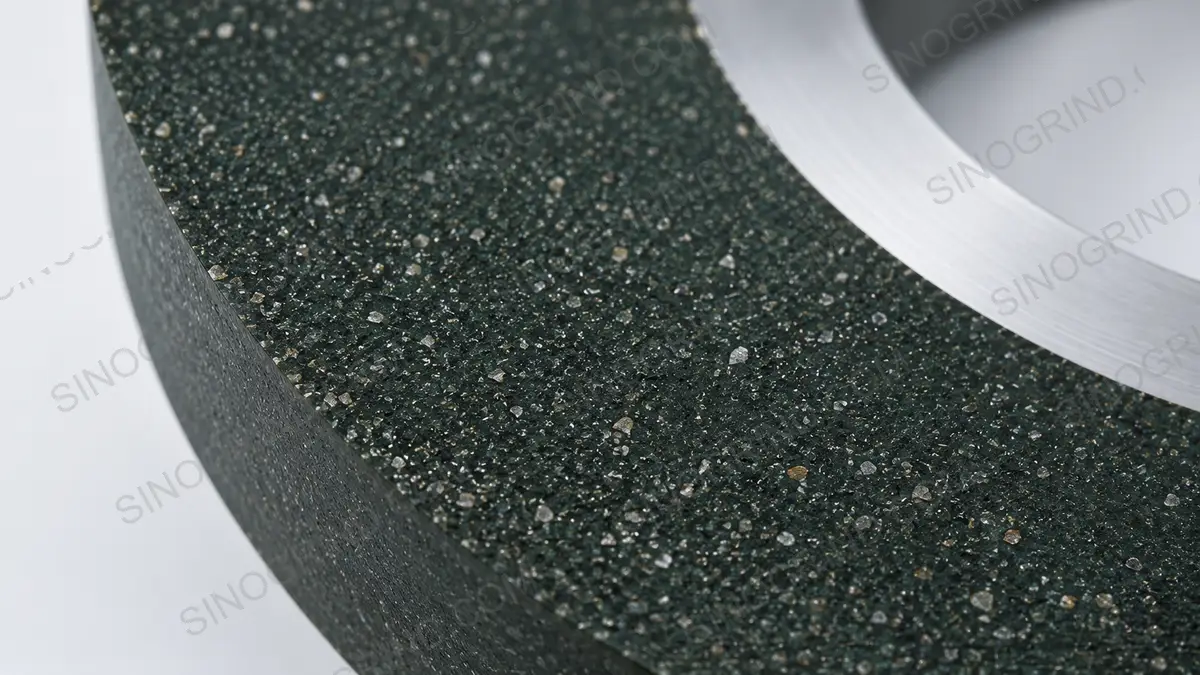
A resin bond grinding wheel uses an organic resin matrix—typically phenolic, polyimide, or epoxy resin—to hold abrasive grains in place. The resin is cured under heat and pressure, creating a bond that is inherently more flexible than ceramic or metal alternatives. This flexibility gives resin bond wheels several distinct advantages in grinding operations.
Resin bond wheels are particularly effective when surface finish quality is the primary concern. The slightly compliant matrix absorbs vibration and chatter, producing smoother finishes with fewer marking patterns. The organic bond also generates less heat during grinding, making resin bond wheels ideal for heat-sensitive materials where thermal damage must be minimized.
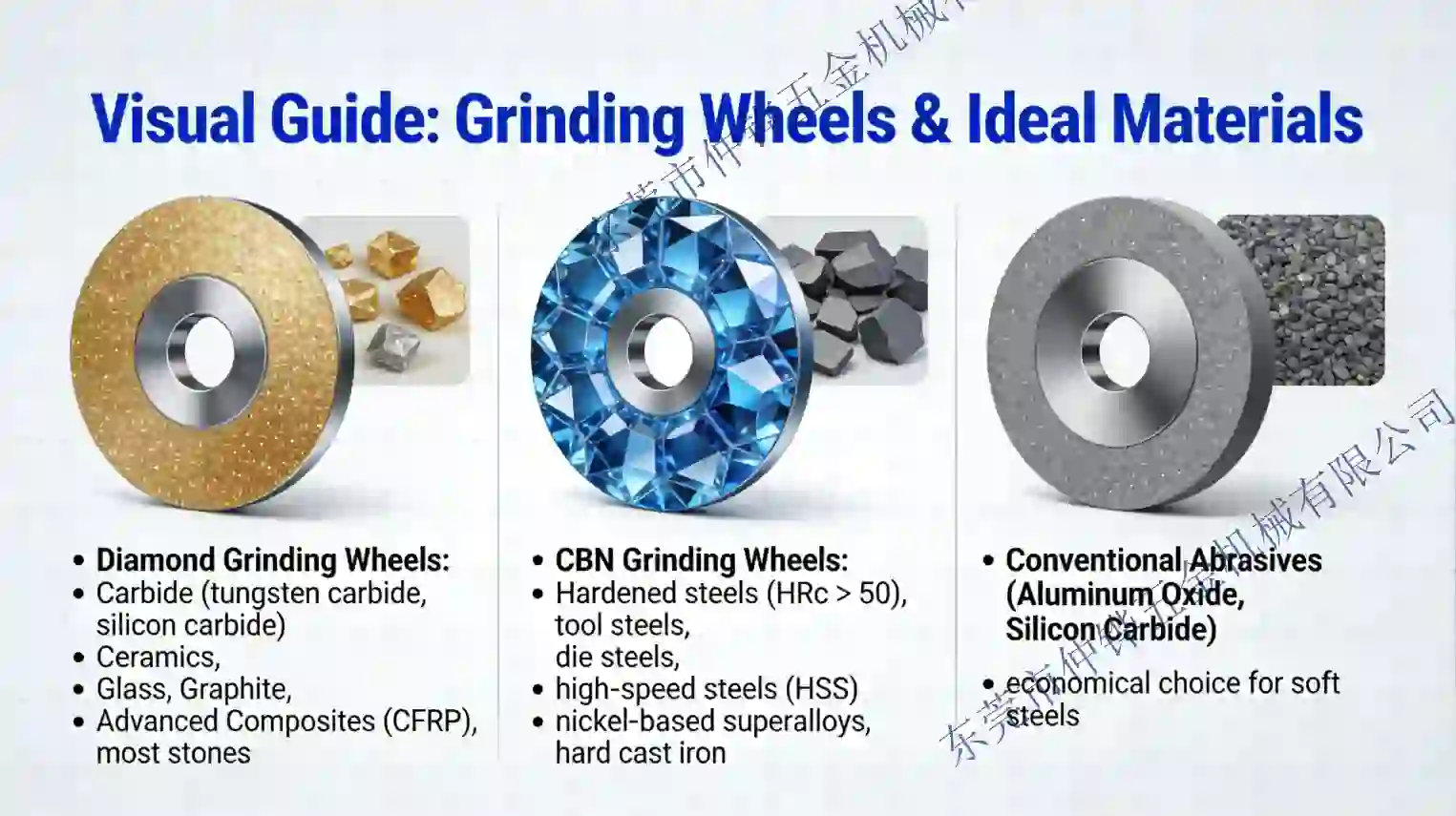
Common abrasive types paired with resin bonds include diamond (for carbide, ceramic, and non-ferrous materials) and CBN (for hardened steels and tool steels). Resin bond diamond wheels are widely used in the automotive, aerospace, and electronics industries for precision grinding of carbide inserts, ceramic components, and semiconductor materials.
What Is a Vitrified Bond Grinding Wheel?
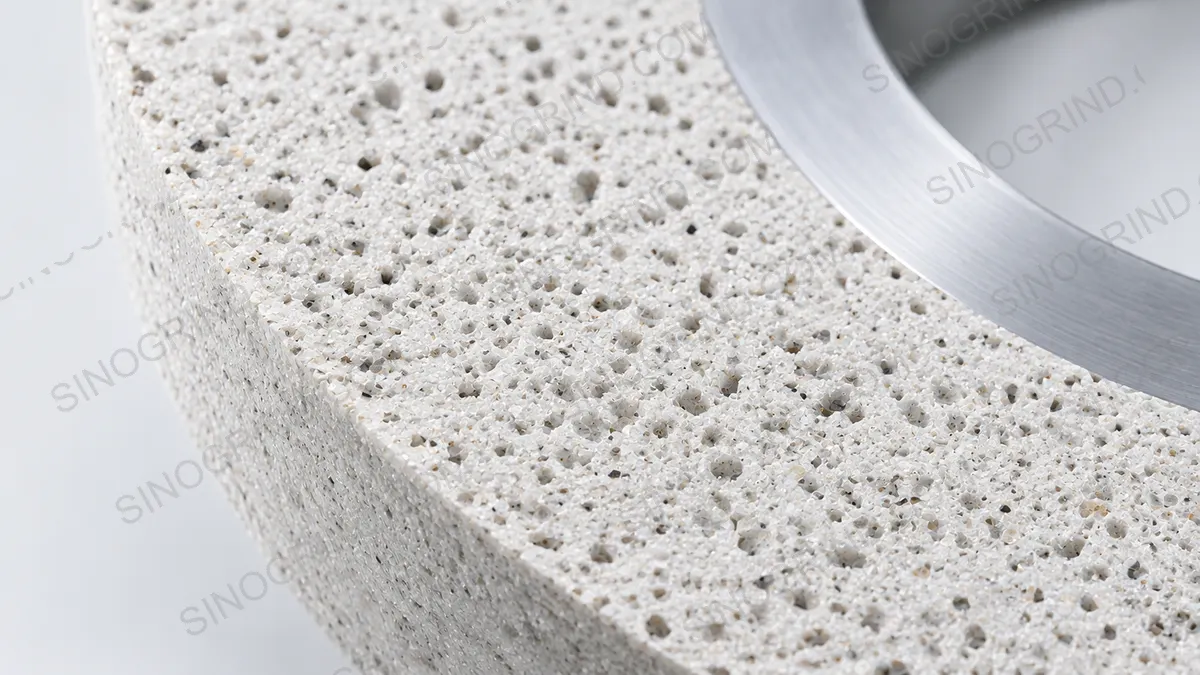
A vitrified bond grinding wheel uses a ceramic glass-like matrix formed by firing clay, feldspar, and other ceramic materials at high temperatures. The resulting bond is rigid, porous, and inherently self-sharpening. As the wheel wears, the ceramic matrix fractures gradually, releasing dull abrasive grains and exposing fresh, sharp cutting edges underneath.
The porosity of vitrified bond wheels is one of their greatest assets. The interconnected pore structure allows coolant to flow freely through the wheel to the grinding zone, reducing heat buildup and preventing workpiece burn. The pores also provide chip clearance, preventing material from loading onto the wheel surface and maintaining cutting efficiency throughout the wheel's life.
Vitrified bond wheels are the preferred choice for precision internal, external, and form grinding operations where high material removal rates and dimensional accuracy are required. They are especially effective for grinding hardened steels, tool steels, and high-speed steels where the self-sharpening action maintains consistent cutting performance without frequent dressing.
Resin Bond vs Vitrified Bond: Side-by-Side Comparison
| Characteristic | Resin Bond | Vitrified Bond |
|---|---|---|
| Bond Matrix | Organic resin (phenolic, polyimide, epoxy) | Ceramic glass-like (clay, feldspar, glass) |
| Hardness | Softer, more flexible | Harder, more rigid |
| Self-Sharpening | No — requires dressing to expose fresh abrasive | Yes — matrix fractures gradually to expose new grains |
| Heat Generation | Lower — ideal for heat-sensitive materials | Moderate — mitigated by porosity and coolant flow |
| Surface Finish | Excellent — smoother finishes due to vibration dampening | Very good — consistent finishes with proper dressing |
| Material Removal Rate | Moderate — better for finishing than roughing | High — aggressive cutting with self-sharpening action |
| Coolant Compatibility | Good — less porosity limits coolant flow | Excellent — porous structure enables free coolant flow |
| Wheel Life | Moderate — wears faster under heavy loads | Long — self-sharpening extends usable life |
| Cost | Lower initial cost, may need more frequent replacement | Higher initial cost, longer life offsets price |
| Best Applications | Carbide grinding, ceramic grinding, finishing operations, heat-sensitive materials | Hardened steel, tool steel, roughing and finishing, precision cylindrical grinding |
| Diamond Compatibility | Excellent for carbide and non-ferrous materials | Good — used for carbide with high removal needs |
| CBN Compatibility | Good for hardened steel finishing | Excellent — preferred for hardened steel roughing and finishing |
Diamond and CBN Considerations for Each Bond Type
When working with superabrasives like diamond and CBN, the bond choice becomes even more critical because these materials have very different grinding characteristics than conventional abrasives.
Resin bond with diamond: This combination is the industry standard for grinding cemented carbide, tungsten carbide, and non-ferrous materials like ceramics, glass, and semiconductor wafers. The resin matrix's flexibility prevents micro-cracking in brittle materials, while the lower heat generation protects against thermal damage. Resin bond diamond wheels are available in concentrations from 50 to 200, with finer grit sizes (120/140 to 400/500) typically used for finishing applications.
Vitrified bond with diamond: Vitrified diamond wheels are chosen when higher material removal rates are needed for carbide or ceramic grinding. The self-sharpening action maintains cutting efficiency even during heavy stock removal, and the porosity helps prevent thermal damage to the workpiece. These wheels are particularly effective for grinding carbide inserts in production environments where wheel life and productivity are priorities.
Resin bond with CBN: Resin bond CBN wheels excel at finish grinding of hardened steels, tool steels, and high-speed steels. The flexible matrix reduces vibration and produces excellent surface finishes, making them ideal for final grinding operations where Ra values below 0.4 micrometers are required. They are commonly used in gear grinding, spline grinding, and thread grinding applications.
Vitrified bond with CBN: This is the preferred combination for precision grinding of hardened steels in automotive, aerospace, and tool-making applications. The self-sharpening action and coolant-friendly porosity make vitrified CBN wheels exceptionally productive for cylindrical grinding, centerless grinding, and crankshaft grinding. They maintain dimensional accuracy over long production runs with minimal dressing intervals.
Application-Specific Recommendations
Surface grinding: For surface grinding operations on hardened steels, vitrified bond CBN wheels provide the best combination of material removal rate and surface finish. For carbide or ceramic workpieces, resin bond diamond wheels are preferred for their gentle cutting action and excellent finish quality.
Cylindrical grinding: External cylindrical grinding of hardened steel shafts and rollers benefits from vitrified bond CBN wheels, which maintain roundness and cylindricity over long production runs. For finish grinding where surface integrity is critical, resin bond CBN wheels may be preferred.
Internal grinding: Internal grinding operations, especially those involving hardened bores and Bushings, work well with both bond types. Vitrified bond CBN wheels are preferred for material removal efficiency, while resin bond wheels are chosen when bore surface finish is the primary concern.
Centerless grinding: Centerless grinding for high-volume production of pins, rollers, and cylindrical components typically uses vitrified bond wheels due to their self-sharpening action and ability to maintain consistent dimensions over long runs. The coolant-friendly porosity prevents thermal damage during continuous operation.
Carbide grinding: Grinding cemented carbide tools, dies, and components almost always requires diamond abrasives. Resin bond diamond wheels are the most common choice for finish grinding, while vitrified bond diamond wheels are selected when higher removal rates are needed for roughing operations.
Cost and Wheel Life Considerations
The total cost of grinding is not determined by the initial wheel price alone. Wheel life, dressing frequency, material removal rate, and surface finish quality all contribute to the overall cost per part. When evaluating resin bond vs vitrified bond wheels, consider the complete cost equation:
- Initial cost: Resin bond wheels typically cost less upfront than vitrified bond wheels, making them attractive for lower-volume operations or applications where the wheel is consumed relatively quickly.
- Wheel life: Vitrified bond wheels generally last longer due to their self-sharpening mechanism, which continuously exposes fresh abrasive without requiring frequent dressing. This longer life often offsets the higher initial cost in production environments.
- Dressing requirements: Resin bond wheels require periodic diamond dressing to re-expose the abrasive layer, adding time and cost to the grinding process. Vitrified bond wheels are easier to dress and true, often requiring only a simple diamond stick or rotary dresser.
- Material removal rate: Vitrified bond wheels typically achieve higher material removal rates, reducing cycle times and increasing productivity. This can significantly reduce cost per part in high-volume operations.
- Surface finish quality: If surface finish is critical, resin bond wheels may reduce or eliminate secondary finishing operations, offsetting their higher per-part grinding cost with savings in downstream processing.
When to Use Resin Bond vs When to Use Vitrified Bond
The decision between resin bond and vitrified bond ultimately comes down to your specific application requirements. Here is a practical guide to help you choose:
Choose resin bond when:
- Surface finish quality is the top priority
- You are grinding heat-sensitive materials that require low grinding temperatures
- The workpiece is brittle or prone to thermal cracking (carbide, ceramics, glass)
- You need flexibility for profile or form grinding operations
- Production volumes are moderate and wheel replacement is acceptable
- Vibration dampening is important for thin or delicate workpieces
Choose vitrified bond when:
- High material removal rates are required for productivity
- You are grinding hardened steels, tool steels, or high-speed steels
- Self-sharpening capability is needed for consistent cutting performance
- Coolant flow to the grinding zone is critical for thermal control
- Long wheel life and minimal dressing interruptions are priorities
- Precision dimensional accuracy must be maintained over long production runs
If you are not sure which bond type is right for your application, send us your workpiece material, grinding parameters, and surface finish requirements. Our engineers will recommend the optimal resin bond or vitrified bond grinding wheel for your specific job.
Frequently Asked Questions
Q: What is the main difference between resin bond and vitrified bond grinding wheels?
A: The main difference is the bonding matrix: resin bond wheels use an organic resin matrix that provides flexibility and good surface finish with lower heat generation, while vitrified bond wheels use a ceramic glass-like matrix that offers rigidity, self-sharpening capability, and higher material removal rates.
Q: Which bond type produces a better surface finish?
A: Resin bond wheels generally produce a finer surface finish due to their flexible matrix that conforms slightly during grinding, reducing chatter and vibration. Vitrified bond wheels can also achieve excellent finishes, especially in precision grinding, but are more commonly chosen for their material removal efficiency.
Q: Can both resin and vitrified bonds be used with diamond and CBN abrasives?
A: Yes, both resin and vitrified bonds are widely used with diamond and CBN (Cubic Boron Nitride) superabrasives. Resin bond diamond wheels are popular for carbide and ceramic grinding, while vitrified bond CBN wheels are preferred for hardened steel applications due to their self-sharpening and coolant-friendly porosity.
Q: Which bond type has a longer wheel life?
A: Vitrified bond wheels typically have longer wheel life because their self-sharpening mechanism continuously exposes fresh abrasive grains as the bond wears. Resin bond wheels may wear faster under heavy loads but can be more economical for applications requiring frequent profile changes or where surface finish is the priority.
Q: When should I choose resin bond over vitrified bond?
A: Choose resin bond when you need excellent surface finish, lower heat generation, flexibility for profile grinding, or are working with heat-sensitive materials. Choose vitrified bond when you need high material removal rates, self-sharpening capability, rigidity for precision grinding, or are working with hardened steels that require aggressive cutting.