: +86 15874211461

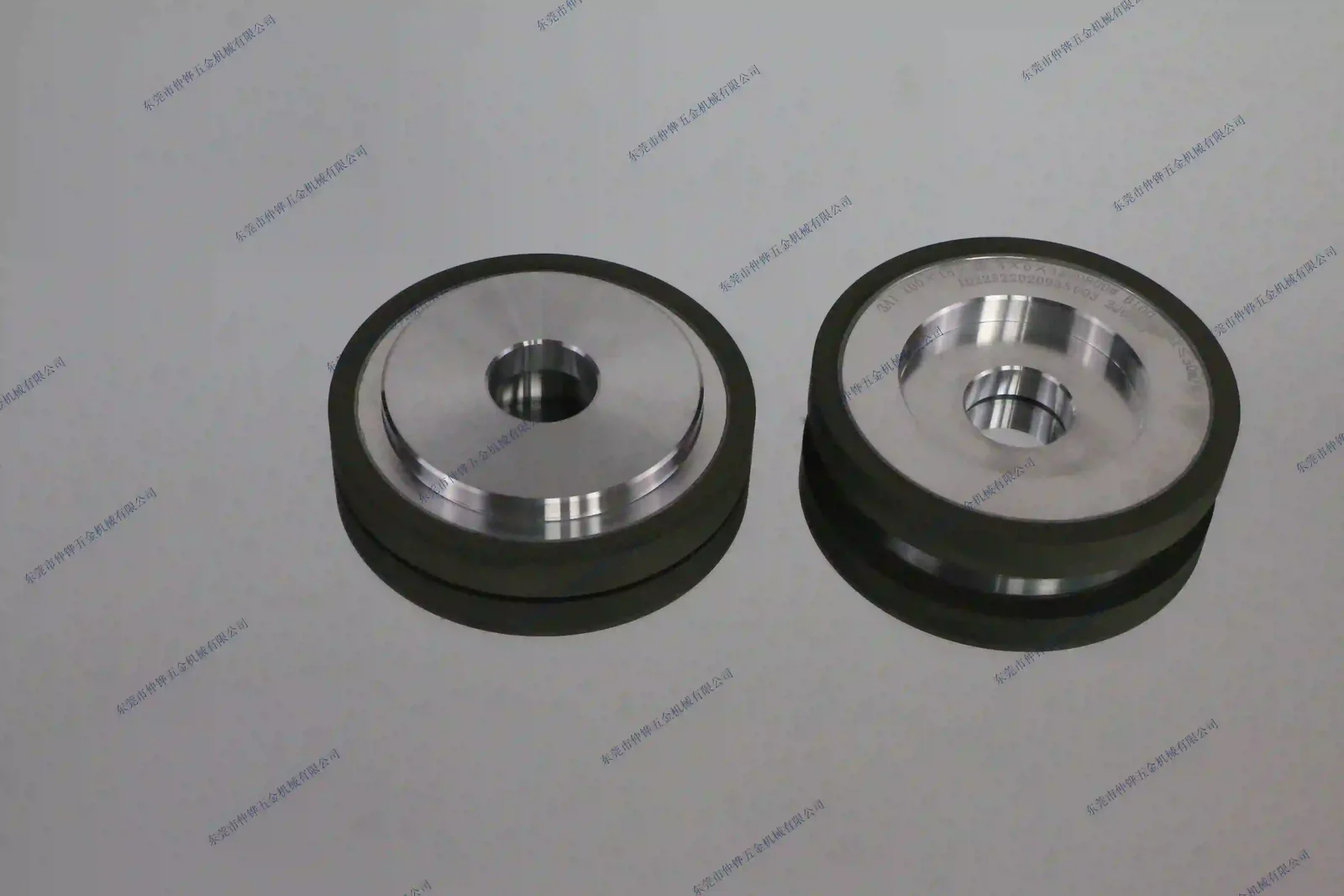
Quick answer: A diamond wheel price is a specification price, not a catalogue price. The main drivers are abrasive, grit, concentration, bond, diameter and width, shape complexity, tolerance, core material, inspection and order quantity. Compare cost per part — wheel price divided by parts per wheel, plus dressing, downtime and scrap — rather than price per wheel.
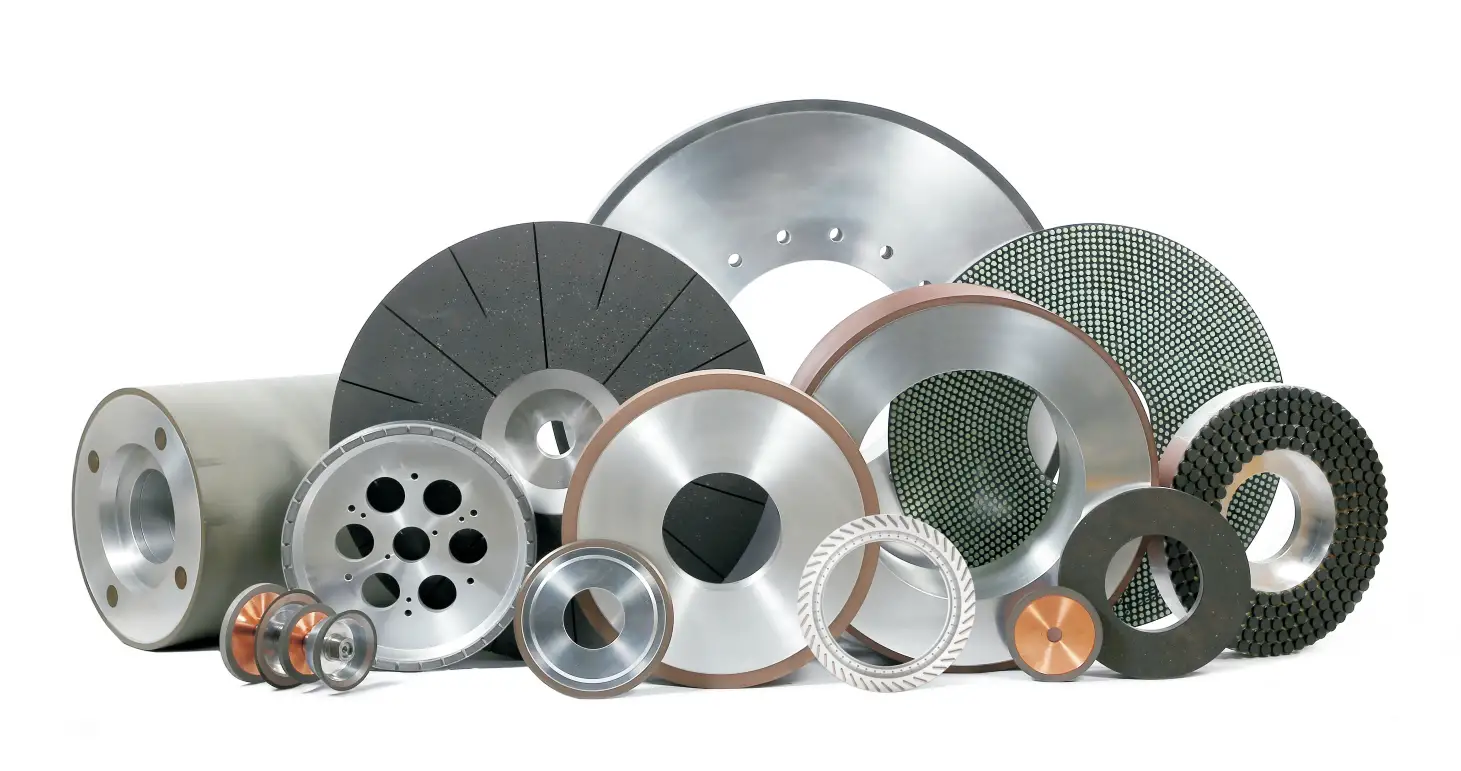
What drives the price
| Cost driver | Effect on price | Why |
|---|---|---|
| Abrasive | Diamond and CBN cost more than AO/SiC | Superabrasive grain and processing |
| Grit size | Finer grits cost more | Classification and yield |
| Concentration | Higher concentration costs more | More diamond in the working layer |
| Bond | Metal and vitrified usually cost more than resin | Raw materials and firing/sintering |
| Diameter and width | Larger wheels cost more | More abrasive volume and core material |
| Shape complexity | Profiles and thin walls cost more | Forming, tooling and yield |
| Tolerance | Tighter tolerance costs more | Inspection, fixturing and scrap |
| Core material | Steel, aluminium and composite cores differ | Machining and weight |
| Testing | Runout, balance and inspection add cost | Measurement time and documentation |
| Order quantity | Higher volume lowers unit price | Setup and tooling amortisation |
Relative cost by wheel type
Use this only for early budgeting. Actual quotes depend on the full specification.
| Wheel type | Relative cost | Notes |
|---|---|---|
| Resin bond diamond, small | Low–medium | Common tool-room sizes |
| Resin bond diamond, large/profile | Medium | Size and form add cost |
| Metal bond diamond | Medium–high | Sintering and tight tolerances |
| Vitrified bond diamond/CBN | Medium–high | Firing, porosity control and profiling |
| Electroplated diamond, small | Low–medium | Single layer; replaced when worn |
| Large vitrified CBN | High | Size, form and precision |
| Custom PCD/PCBN tools | High | Design, tolerance and low volume |
Cost per part, not price per wheel
A wheel that costs twice as much but lasts four times longer can halve the abrasive cost per part. The full comparison is:
Cost per part = (wheel price ÷ parts per wheel) + dressing cost + downtime cost + scrap cost
Measure parts per wheel and cycle time on a trial. Use the G-ratio and cost guide to compare wheel life in a consistent way.
What to include in an RFQ
- Workpiece material, hardness and required stock removal.
- Wheel drawing or dimensions: D x T x H x W, shape code and profile.
- Abrasive, grit (FEPA D) and concentration.
- Bond type and any core material requirement.
- Machine, spindle speed, coolant and clamping method.
- Tolerance, balance grade and inspection requirements.
- Order quantity, annual usage and sample/trial requirements.
Do not buy on price alone
A cheap wheel that burns, loads or needs frequent dressing can cost more per part than a premium wheel. Ask for a trial and compare parts per wheel, cycle time and scrap.
Common ways buyers overpay
- Specifying a finer grit or higher concentration than the finish requires.
- Choosing a complex profile when a standard shape would work.
- Ignoring dressing time and downtime in the comparison.
- Ordering small quantities of a custom wheel without a trial plan.
- Not checking whether a standard stock size can be adapted.
Boundary rule — when not to use diamond
Diamond is the hardest abrasive and the correct choice for hard, brittle, non-ferrous materials such as cemented carbide, ceramics, glass, silicon, sapphire, ferrite, graphite and composites. It must not be used on ferrous metals — steel, cast iron, and their alloys — because carbon in diamond reacts with iron at grinding temperatures (roughly above 700 °C / 1300 °F). This chemical affinity causes rapid, abnormal diamond wear (graphitisation) and destroys the wheel. For steel, hardened steel, cast iron and other ferrous workpieces, use CBN (cubic boron nitride) instead.