: +86 15874211461

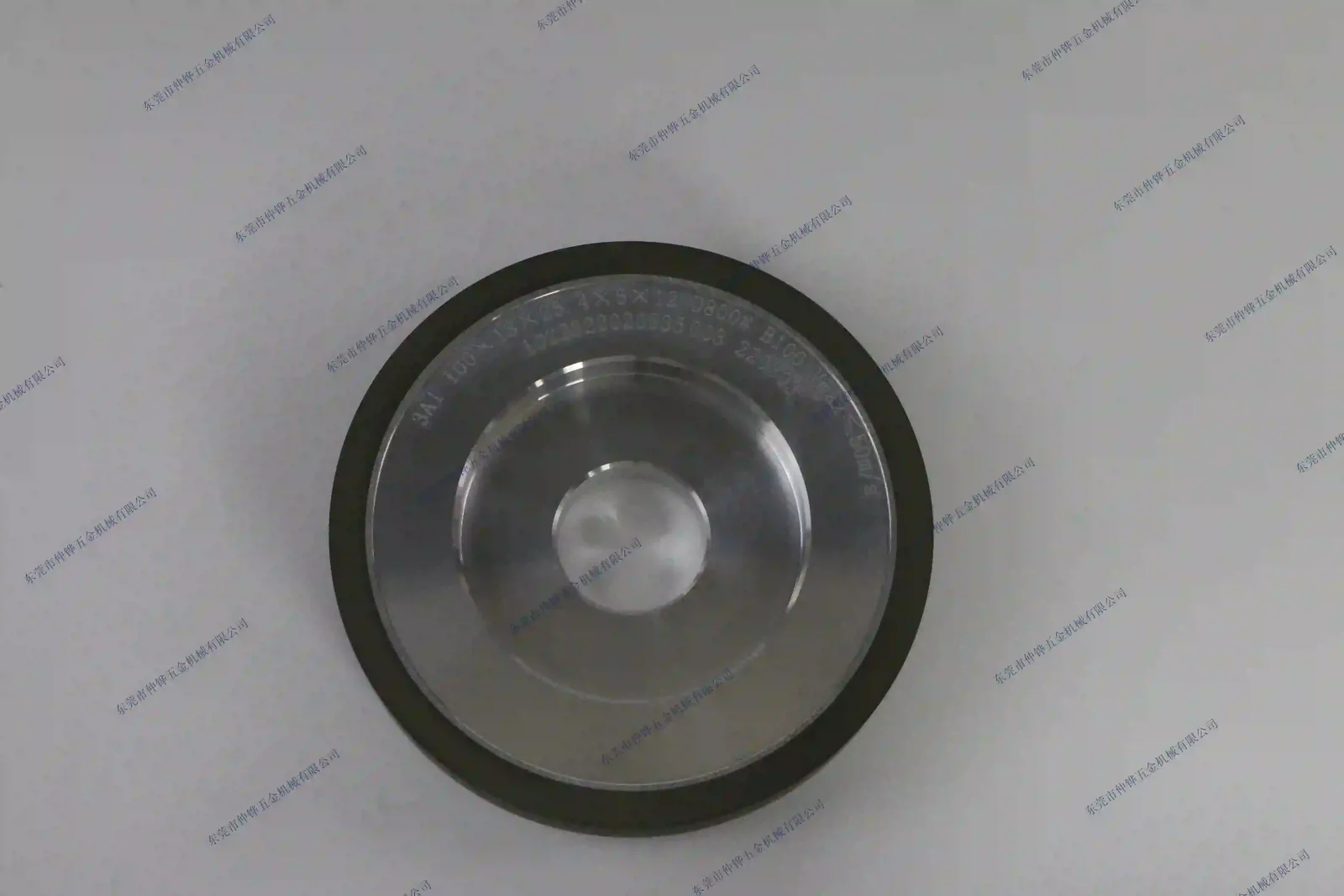
Quick answer: For diamond and CBN, use the FEPA D micron size as the primary number. Mesh is a sieve designation and is only an approximate cross-reference; two grits with the same mesh number can have different micron distributions. Finer FEPA D gives a lower Ra but slower stock removal. Start at D126–D181 for roughing, D91–D126 for general grinding, D46–D64 for fine finishing and D15 or finer for polishing.
FEPA D, mesh and micron
The table below is an approximate cross-reference for diamond grit. Use it to interpret supplier data, not to convert a specification without checking the supplier's actual particle size distribution.
| FEPA D | Approx. micron | Approx. mesh | Typical use | Indicative Ra |
|---|---|---|---|---|
| D181 | 180 | 80 | Roughing, heavy stock removal | 0.6–1.0 µm |
| D151 | 150 | 100 | Roughing / semi-finishing | 0.5–0.8 µm |
| D126 | 125 | 120 | General grinding | 0.4–0.6 µm |
| D107 | 105 | 140 | General grinding | 0.3–0.5 µm |
| D91 | 90 | 170 | Carbide tool grinding | 0.25–0.4 µm |
| D76 | 75 | 200 | Fine grinding | 0.2–0.35 µm |
| D64 | 63 | 230 | Fine finishing | 0.15–0.3 µm |
| D54 | 53 | 270 | Fine finishing | 0.12–0.25 µm |
| D46 | 45 | 325 | Precision finishing | 0.1–0.2 µm |
| D39 | 38 | 400 | Precision finishing | 0.08–0.15 µm |
| D31 | 30 | 500 | Fine precision | 0.06–0.12 µm |
| D25 | 25 | 600 | Fine precision | 0.05–0.1 µm |
| D20 | 20 | 800 | Polishing / fine finishing | <0.08 µm |
| D15 | 15 | 1000 | Polishing | <0.05 µm |
| D10 | 10 | 1500 | Polishing | <0.04 µm |
| D7 | 7 | 2000 | Superfinishing | <0.03 µm |
| D5 | 5 | 3000 | Superfinishing | <0.02 µm |
Mesh values are approximate. Ra depends on bond, concentration, wheel speed, coolant, machine stiffness and dressing.
Why mesh and FEPA D are not the same
Mesh is defined by the sieve through which the grain passes. FEPA D is defined by the measured particle size distribution. Diamond and CBN grains are blocky and can pass a sieve differently from a rounded conventional abrasive, so a direct mesh-to-micron conversion is unreliable. When a specification matters, ask for the FEPA D size and the supplier's distribution data.
Choosing grit by operation
| Operation | Starting grit | Reason |
|---|---|---|
| Roughing / heavy stock removal | D181–D126 | Higher removal, acceptable finish |
| General carbide grinding | D126–D91 | Balance of finish and efficiency |
| Fine finishing | D64–D46 | Lower Ra, lower stock removal |
| Precision finishing | D39–D25 | Tight tolerance and fine surface |
| Polishing / superfinishing | D15–D5 | Very low Ra; slow removal |
Common mistakes
- Treating a mesh number as an exact micron size. Check the FEPA D value.
- Jumping several grit sizes to fix a finish problem caused by balance, dressing or coolant.
- Using a fine grit for heavy stock removal, which causes burn and slow cycle times.
- Forgetting that concentration and bond also change the achieved Ra.
Use the converter for a quick check
The Diamond & CBN Grit Size Converter cross-checks FEPA D, micron and mesh; confirm critical specifications with the wheel supplier.
Boundary rule — when not to use diamond
Diamond is the hardest abrasive and the correct choice for hard, brittle, non-ferrous materials such as cemented carbide, ceramics, glass, silicon, sapphire, ferrite, graphite and composites. It must not be used on ferrous metals — steel, cast iron, and their alloys — because carbon in diamond reacts with iron at grinding temperatures (roughly above 700 °C / 1300 °F). This chemical affinity causes rapid, abnormal diamond wear (graphitisation) and destroys the wheel. For steel, hardened steel, cast iron and other ferrous workpieces, use CBN (cubic boron nitride) instead.