: +86 15874211461

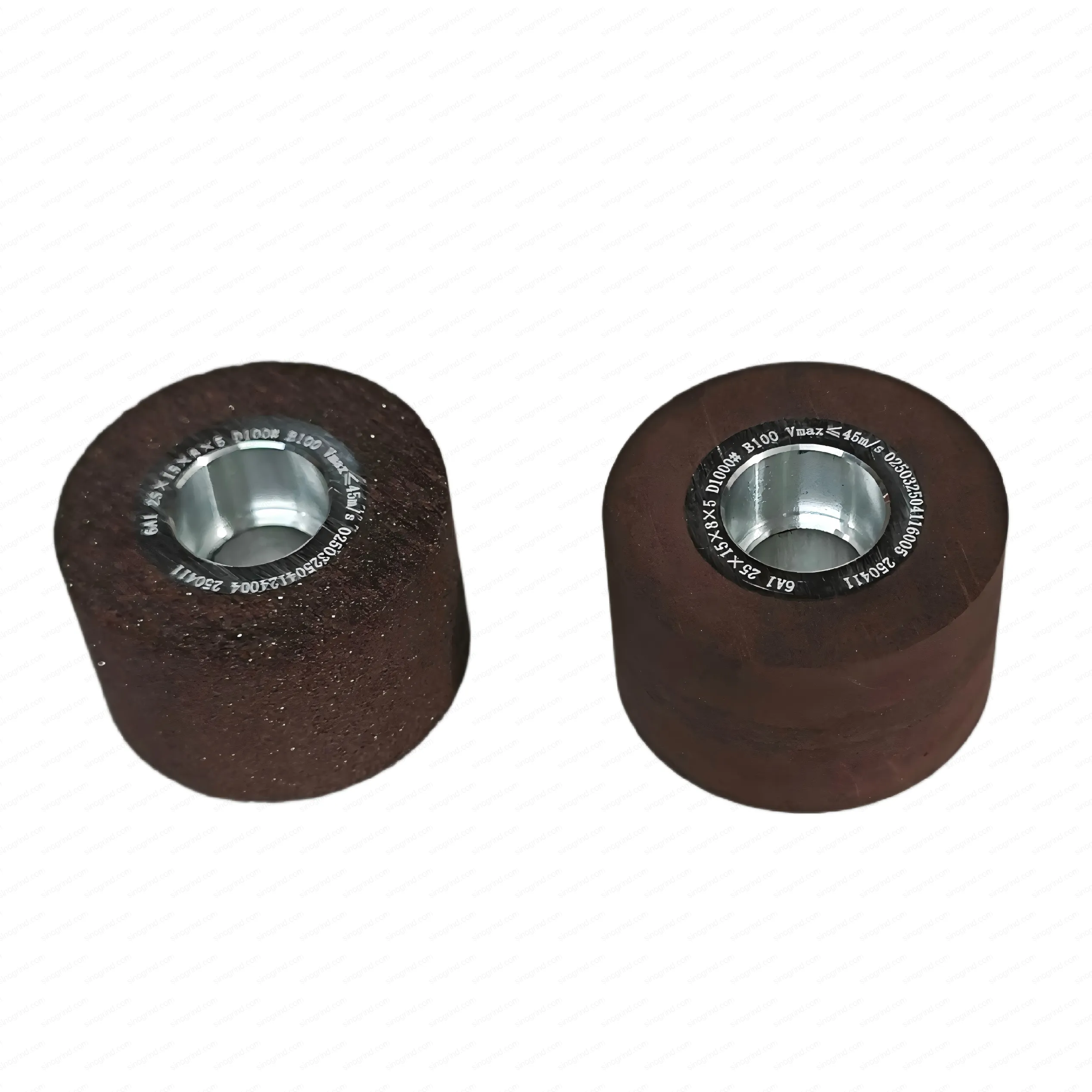
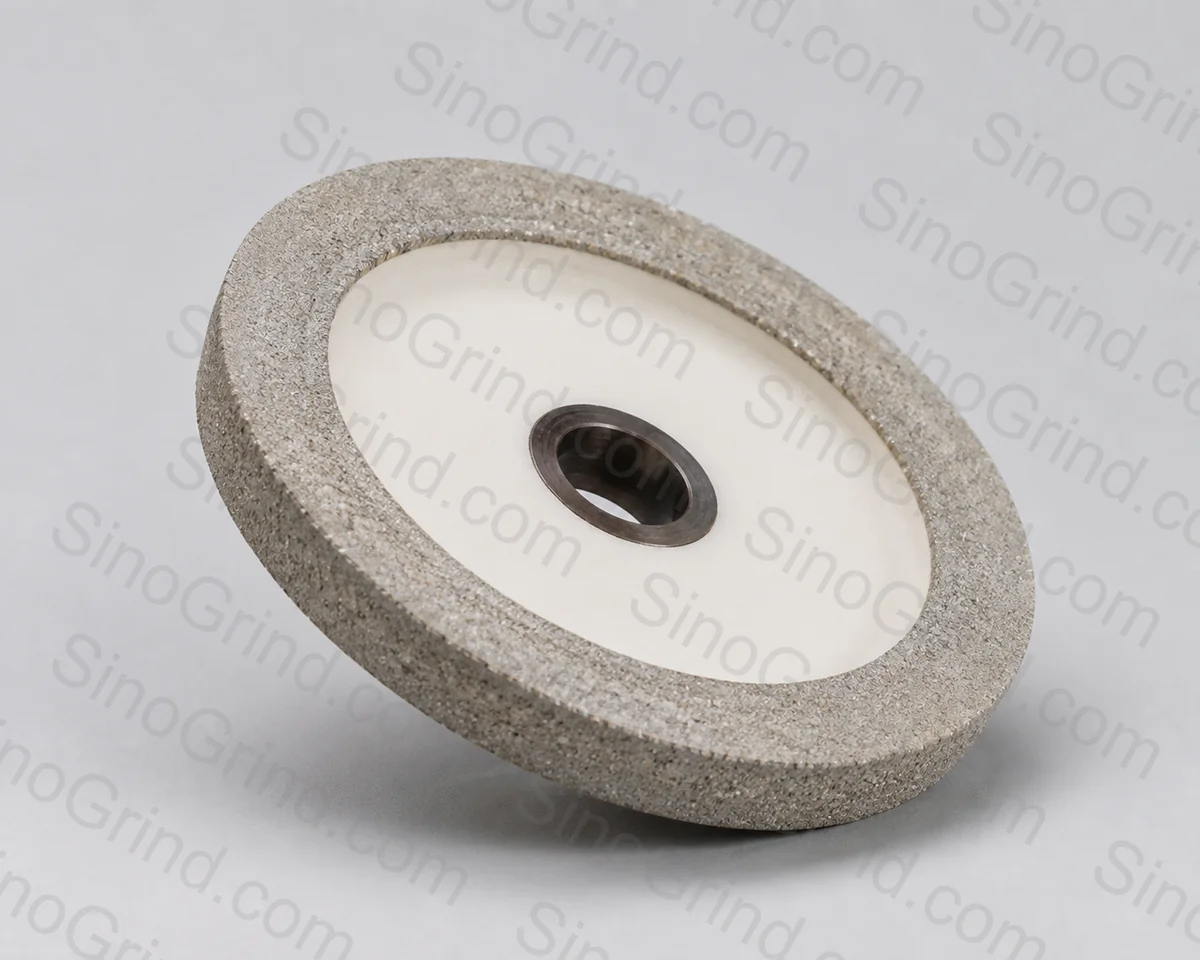
Quick answer: Ferrite and soft magnetic cores are brittle and non-ferrous, so grind them with a diamond wheel — usually resin or metal bond at D91–D181 grit, 100–150% concentration — and use coolant to prevent edge chipping.
Related reading: Resin Bond Diamond Grinding Wheel · Diamond Wheel for Ceramics Grinding · Diamond Wheel for Carbide Grinding.
Why ferrite is ground with diamond
Ferrite (and related soft magnetic materials) is hard, brittle and non-ferrous. It chips easily, so a sharp diamond wheel that cuts rather than crushes gives far better results than a conventional abrasive. Because ferrite is magnetic, swarf often clings to the wheel and workpiece, so good coolant and cleaning matter.
Which bond and grit should I use?
| Operation | Bond | Grit (FEPA D) | Concentration |
|---|---|---|---|
| Surface / flat grinding | Resin | D91–D151 | 100–150% |
| Form / profile | Metal / Resin | D91–D126 | 100–150% |
| Core / rod grinding | Metal | D91–D181 | 100–150% |
| Fine finishing | Resin | D46–D64 | 75–100% |
Resin gives the coolest cut and best finish for precision cores; metal bond suits production and form retention.
Avoiding chips and magnetic-swelling problems
- Keep the grit sharp; a glazed wheel chips brittle ferrite.
- Use coolant and clean filters to remove clinging magnetic swarf.
- Light infeed and rigid support to prevent edge chips.
- Use fine grit for finishing to protect the core edge.
Where is it used?
- Soft ferrite cores for inductors and transformers.
- Mn-Zn and Ni-Zn ferrites for power and signal components.
- Magnetic sensor and motor parts.
- Microwave / RF ferrite components.
Which specification should I choose?
| Parameter | Typical value |
|---|---|
| Bond | Resin (finish) / Metal (production) |
| Grit (FEPA D) | D91–D181 (fine D46–D64) |
| Concentration | 100–150% |
| Wheel speed | 20–35 m/s |
| Coolant | Water-based, well filtered |
| Priority | Chip-free edges |
Magnetic swarf must be flushed; keep filters clean for consistent finish.
Brittle, magnetic and unforgiving
Ferrite is a sintered ceramic: hard, brittle and a poor conductor of heat. It chips at the edge as readily as any technical ceramic, and the chips are magnetic, so they cling to the machine, the coolant tank and the part. Grinding therefore has to control three things at once: mechanical load, heat, and contamination.
The reward is a part with tight dimensional control and no shorted magnetic path. Because ferrite is usually a core or a magnet, a small edge chip can change the electrical performance of the whole assembly.
How do I set up the job?
- Clean the machine. Remove ferrite dust from the table, guards and coolant tank before starting; old swarf scratches the next part.
- Use a fine, free-cutting wheel. Resin or metal bond, D91–D181 for general work, finer for pole faces and air gaps.
- Support the part. Ferrite is weak in tension; back up thin sections so the wheel cannot flex them.
- Grind cool. Light infeed, flood coolant, and a wheel speed that keeps the chip small.
- Demagnetise and clean. Blow off coolant, demagnetise where the specification requires it, and handle with clean gloves.
- Measure electrically. Where the part is a core, check the magnetic parameter as well as the dimension.
How do I fix common problems?
| Symptom | Most likely cause | What to change |
|---|---|---|
| Chipped edges | Too much infeed or an unsupported thin section | Reduce depth, add support, move one grit finer |
| Cracks in the core | Thermal shock or mechanical flexing | Increase coolant, reduce force, check fixture flatness |
| Scratches from recirculated swarf | Magnetic dust in the coolant | Filter and clean the tank, use a magnet trap |
| Size drift | Wheel wear and thermal growth | Re-dress between batches, allow warm-up |
| Wheel loads | Bond too hard for the fine cut | Open the face, reduce speed, use a softer bond |
Ferrite dust is abrasive and magnetic - the coolant system deserves as much attention as the wheel.
What should an RFQ include?
- Grade: MnZn or NiZn ferrite, and whether the part is a core, magnet or substrate.
- Feature: flat, pole face, air gap or bore, with tolerances.
- Wheel: bond, grit and shape, plus the machine's maximum speed.
- Coolant: water-based, with filtration sized for magnetic dust.
- Acceptance: dimensional and magnetic performance criteria.
- Volume: parts per month and the current chip rate.
Browse the matching Diamond & CBN Grinding Wheels range for this application.
Because ferrite parts are often cheap individually but expensive to sort, the cheapest improvement is usually the coolant and cleaning routine, not a new wheel. Fix contamination first, then tune grit and bond.
Demagnetising and cleaning after grinding
Grinding can leave a ferrite core lightly magnetised, and magnetic swarf then clings to the air gap and the winding slots. Demagnetise after grinding where the specification allows it, then clean with filtered air and a soft brush rather than a cloth that redistributes the dust.
For cores, measure the electrical parameter after cleaning, not before. Trapped swarf can make a good core read as a failure, and the same measurement after cleaning proves whether the part is actually scrap.
Sub-table 1 — by material family
| Material | Typical operation | Recommended bond | Grit (FEPA D) | Concentration | Typical Ra |
|---|---|---|---|---|---|
| Cemented carbide (WC-Co) | Cutter & tool grinding | Resin / Metal | D91–D181 | 100–150% | 0.1–0.4 µm |
| PCD / PCBN | Edge prep, peripheral | Metal / Vitrified | D46–D91 | 125–150% | 0.05–0.2 µm |
| Advanced ceramics (Al₂O₃, ZrO₂, Si₃N₄) | Surface / form | Vitrified / Resin | D64–D151 | 75–125% | 0.2–0.6 µm |
| Optical / flat glass, quartz | Edge, bevel, CNC | Metal / Resin | D64–D126 | 75–125% | 0.05–0.3 µm |
| Semiconductor (Si, SiC, sapphire) | Back-grind, dicing | Electroplated / Resin | D126–D400+ | 100–200% | <0.02 µm (fine) |
| Ferrite / soft magnetic | Surface / form | Resin / Metal | D91–D181 | 100–150% | 0.2–0.8 µm |
| Graphite / carbon | Form / cut-off | Electroplated / Metal | D181–D301 | 75–125% | — |
| CFRP / composites | Cut, slot | Electroplated | D252–D400 | — | — |
| Thermal-spray coatings | Grind, polish | Resin / Metal | D126–D252 | 75–100% | 0.1–0.4 µm |
| Stone / engineered quartz | Edge, calibrate | Metal / Electroplated | D181–D400 | — | — |
| Zirconia (dental / medical) | Finish, polish | Resin / Vitrified | D46–D126 | 75–100% | 0.1–0.3 µm |
| Steel / cast iron (ferrous) | — | Not diamond — use CBN | — | — | — |
Representative values for planning; confirm final grit, concentration and bond with a grinding trial on your machine.
Boundary rule — when not to use diamond
Diamond is the hardest abrasive and the correct choice for hard, brittle, non-ferrous materials such as cemented carbide, ceramics, glass, silicon, sapphire, ferrite, graphite and composites. It must not be used on ferrous metals — steel, cast iron, and their alloys — because carbon in diamond reacts with iron at grinding temperatures (roughly above 700 °C / 1300 °F). This chemical affinity causes rapid, abnormal diamond wear (graphitisation) and destroys the wheel. For steel, hardened steel, cast iron and other ferrous workpieces, use CBN (cubic boron nitride) instead.