: +86 15874211461

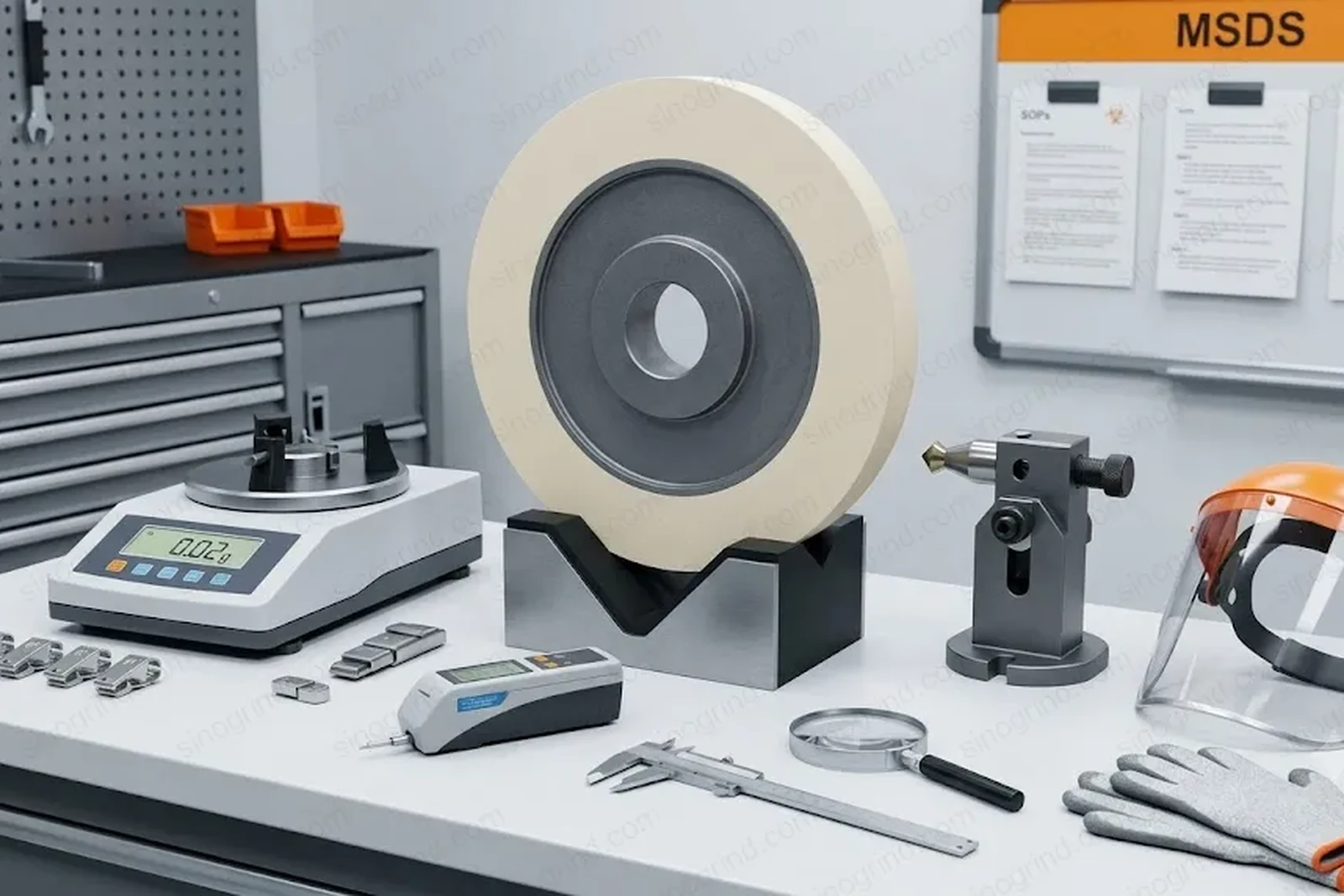
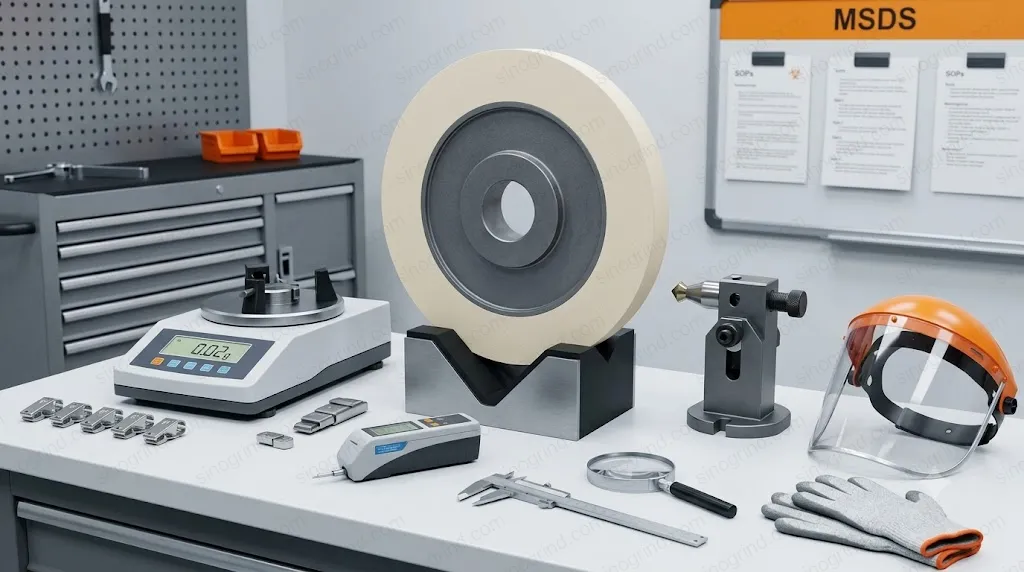
Quick answer: Balance a wheel to reduce vibration, chatter and spindle load. Static balancing is usually sufficient for narrow wheels; dynamic balancing is needed for wide, large or high-speed wheels. Balance after mounting and dressing, check the flanges and runout, and re-check after a wheel change or significant wear.
Why balancing matters
An unbalanced wheel creates a rotating force that grows with speed. The result is vibration, chatter marks, poor finish, faster wheel wear and extra spindle load. On precision work, the effect can be larger than the error from grit or bond choice.
Static vs dynamic balancing
| Method | What it corrects | Best for | Limitations |
|---|---|---|---|
| Static balancing | Centre-of-mass offset in one plane | Narrow wheels, bench and surface grinding | Does not correct couple imbalance in wide wheels |
| Dynamic balancing | Imbalance in two planes, including couple | Wide, large and high-speed wheels | Needs a balancing machine or on-machine system |
| On-machine balancing | Imbalance in the mounted spindle system | Production spindles, high-speed grinding | Requires suitable spindle/balancer hardware |
Balance grades
Balance quality is often expressed as an ISO 1940 balance grade (G number). A lower G number means a tighter balance. Grinding wheels commonly use G16 or G6.3; precision or high-speed applications may require G2.5 or better. The correct grade depends on speed, wheel mass and the acceptable vibration level, so confirm with the machine and wheel supplier.
| Balance grade | Relative vibration | Typical use |
|---|---|---|
| G16 | Moderate | General grinding, larger wheels |
| G6.3 | Low | Precision grinding, medium-speed spindles |
| G2.5 | Very low | High-precision and high-speed grinding |
| G1 / G0.4 | Extremely low | Special precision spindles and instruments |
The grade alone does not guarantee a good finish; mounting, runout, dressing and machine rigidity also matter.
Mounting and flanges
- Clean the wheel bore, flanges and spindle taper; a chip or burr creates runout.
- Use the correct flange diameter and a soft gasket/washer as specified by the wheel maker.
- Tighten evenly and do not over-torque; distortion from over-tightening is a common error.
- Check the wheel for cracks or damage before mounting; never mount a damaged wheel.
- After mounting, dress the wheel in place to true the working face.
Runout and dressing
Runout is the total indicated eccentricity of the mounted wheel. Measure it with a dial indicator and compare with the machine or wheel specification. If runout is high, re-mount and re-check before dressing. Dressing removes the high spot but cannot correct a bent spindle or damaged flange.
Symptoms of an unbalanced wheel
| Symptom | Possible balance cause | Check |
|---|---|---|
| Chatter marks at a regular spacing | Imbalance or runout | Balance grade, mounting, spindle |
| Taper or size drift | Vibration and thermal growth | Balance, coolant, wheel wear |
| Poor finish on one side | Wheel or spindle eccentricity | Runout and flange contact |
| High spindle load | Imbalance or wheel loading | Balance, dressing, coolant |
| Vibration that rises with speed | Residual imbalance | Dynamic balance at operating speed |
Balancing checklist
- Inspect the wheel and flanges; clean all seating surfaces.
- Mount the wheel and tighten evenly to the specified torque.
- Measure runout with a dial indicator.
- Static-balance narrow wheels; dynamic-balance wide or high-speed wheels.
- Dress the wheel in place and re-check runout.
- Run at operating speed and check vibration and finish.
- Re-check balance after a wheel change or significant wear.
Safety first
Always use the guard, check the maximum speed and stand clear when starting a new or re-mounted wheel. A cracked or over-speeded wheel can burst.
Boundary rule — when not to use diamond
Diamond is the hardest abrasive and the correct choice for hard, brittle, non-ferrous materials such as cemented carbide, ceramics, glass, silicon, sapphire, ferrite, graphite and composites. It must not be used on ferrous metals — steel, cast iron, and their alloys — because carbon in diamond reacts with iron at grinding temperatures (roughly above 700 °C / 1300 °F). This chemical affinity causes rapid, abnormal diamond wear (graphitisation) and destroys the wheel. For steel, hardened steel, cast iron and other ferrous workpieces, use CBN (cubic boron nitride) instead.