: +86 15874211461

Quick answer: Troubleshoot in this order: mounting and run-out, coolant delivery and filtration, dressing and face condition, parameters, then the wheel specification. Burn usually means coolant starvation, excessive infeed or a dull face. Loading means the face is too closed or the grit too fine. Chatter points to balance, rigidity or wheel grade. Short life points to bond, concentration, speed or contaminated coolant.
Related reading: CBN speed and coolant · CBN dressing and truing · CBN wheel bond types.
Diagnose in the right order
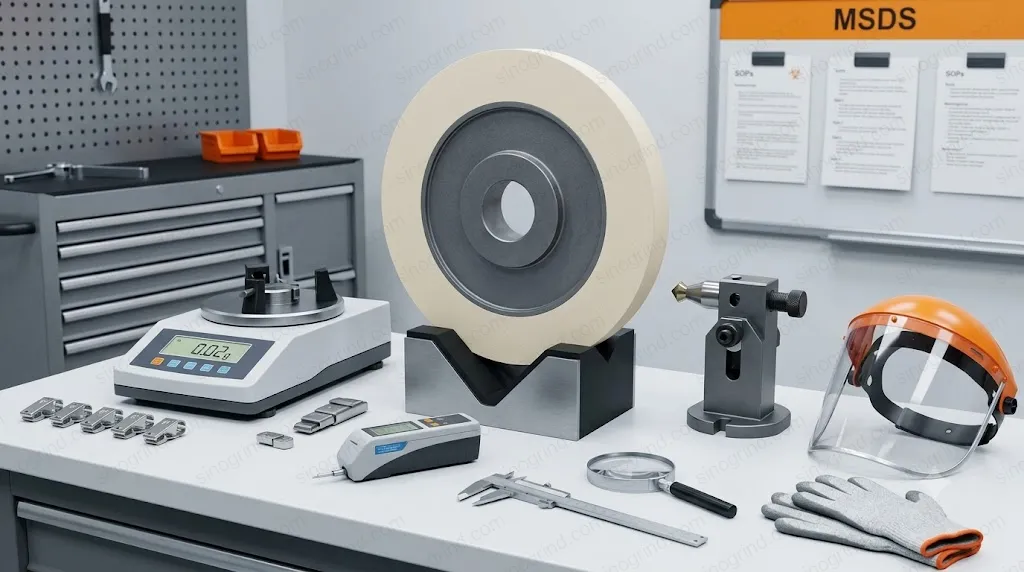
When a CBN wheel performs badly, the instinct is to change the wheel. That is usually the most expensive and slowest response. Most faults are introduced before the wheel reaches the spindle: a dirty taper, a damaged flange, a wheel mounted without indicating, a nozzle that no longer points at the arc, a filter bypassing, or a dresser that has been worn for weeks.
Work through the checks in a fixed order. It feels slower than swapping the wheel, but it prevents the same fault from repeating with the new one. Only after the process basics are confirmed should the specification be revisited.
- Mounting: clean taper and flanges, correct torque, wheel indicated, balance checked.
- Coolant: type, concentration, flow, pressure, nozzle aim, filtration, temperature.
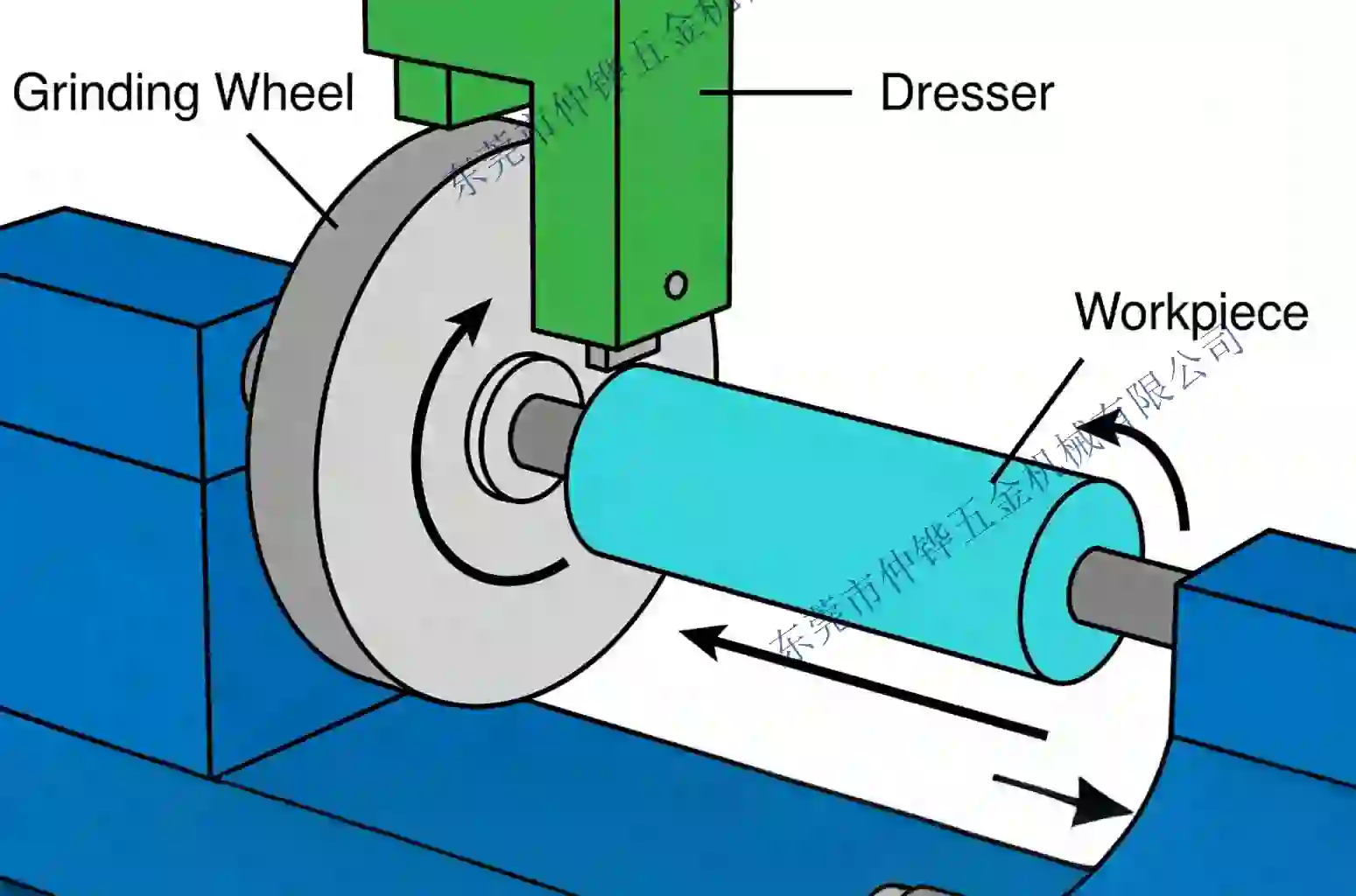
- Dressing: dresser condition, depth, traverse, conditioning, face appearance.
- Parameters: speed, infeed, traverse, spark-out, dwell, cycle time.
- Machine: spindle stiffness, slide play, fixture support, thermal stability.
- Specification: bond, grit, concentration, grade and shape.
Master symptom table
| Symptom | Likely cause | Fix | Confirm by |
|---|---|---|---|
| Burn, temper colours, hardness drop | Coolant starved, infeed high, dull or loaded face | Restore nozzle aim and flow; dress; reduce infeed | Power drop and clean finish after fix |
| Loading, shiny metal on the face | Grit too fine, bond too tight, dirty coolant | Open the face; coarser grit or more open bond; clean coolant | Face looks open and cuts freely |
| Glazing, wheel rubs instead of cutting | Dull dresser, dressing too deep or too fine, wheel too hard | Replace or index dresser; condition; adjust grade | Spindle power falls to baseline |
| Chatter, vibration marks | Imbalance, run-out, weak fixture, wheel too hard | Balance and indicate; improve support; adjust grade | Mark spacing changes with speed |
| Poor surface finish | Dull or loaded wheel, grit too coarse, dress too rough | Dress finer; use finer grit; check dresser | Ra improves across the face |
| Short wheel life | Bond too soft, concentration low, speed high, contamination | Stronger bond or higher concentration; verify speed; filter coolant | Wear rate normalises over several parts |
| Form loss / size drift | Concentration or bond too weak, dress too deep, dresser wear | Higher concentration; stronger bond; lighter dress | Profile trace stays within tolerance |
| Edge chipping on the part | Wheel too coarse, vibration, dwell, poor support | Finer grit; reduce dwell; improve support | Edge inspection under magnification |
| Spindle power high from the start | Wheel too hard or closed, wrong speed, excessive contact | Open the face; reduce contact; verify speed | Power returns to expected range |
| Wheel breakage or rim chip | Impact, mounting damage, overspeed, thermal shock | Remove from service; inspect handling and guards | No cracks after replacement |
Burn: the first suspect is coolant
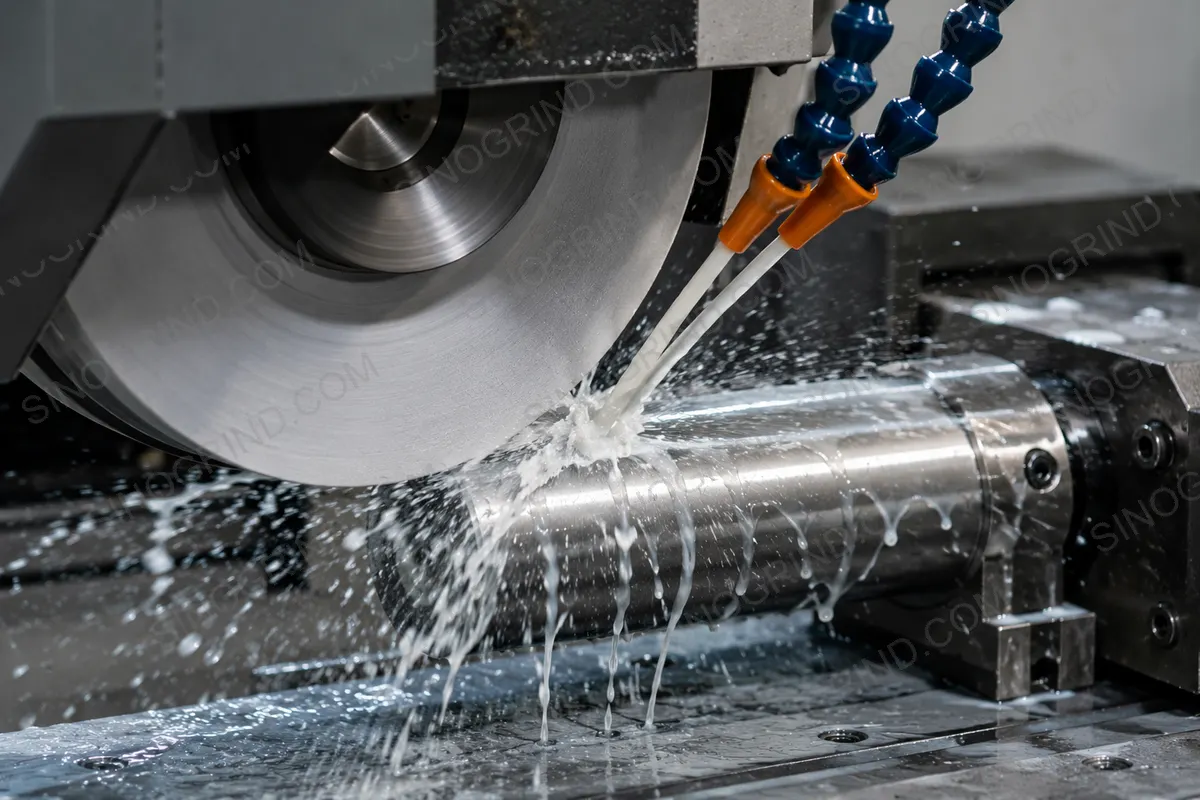
Burn is thermal damage, and CBN grinding generates heat at the contact arc even when the wheel is free cutting. Before changing the wheel, verify that coolant actually reaches the arc. A nozzle can look correct while the stream is deflected by the guard, blocked by swarf, or too far away to penetrate the air barrier. Check flow at the nozzle, not only pump pressure.
If coolant is correct, inspect the face. A glazed or loaded wheel rubs and converts spindle power into heat. Dress and condition it, then run a short cycle. If burn persists at low infeed with a clean face and good coolant, the wheel may be too hard or too fine for the contact area. That is the point to discuss specification with the manufacturer, not before.
Check the part, not just the colour
Temper colours are not a reliable burn test on every steel. A burned surface can look normal and still have lost hardness or developed a white layer. Use hardness checks or a controlled etch on a sample when the process is new, the material changes, or a customer requires surface-integrity evidence.
Loading and glazing
Loading is workpiece material embedded in the wheel face; glazing is a dull, shiny surface where the grains have flattened but the bond has not released them. Both reduce cutting and raise heat, but the fixes differ. Loading often responds to better filtration, more coolant and a more open face. Glazing often responds to a sharper dresser and a lighter dress, or to a softer grade if the wheel is genuinely too hard for the operation.
Do not increase infeed to “force” a glazed wheel to cut. That adds heat and can damage the part. Restore the face first.
Chatter and vibration
Chatter is a vibration problem, not a finish problem. Common causes are wheel imbalance, mounting run-out, a weak fixture, a worn spindle bearing, a wheel that is too hard for the load, or a natural frequency in the machine-fixture-workpiece system. The mark spacing often changes with spindle speed, which helps distinguish forced vibration from a resonance.
Balance and indicate the wheel first, then check fixture support and clamping. If the wheel is the source, a softer grade or a more open structure can reduce the force that drives the vibration. Do not attempt to dress out chatter until the mounting is correct.
Short wheel life
Short life can mean the wheel is wearing too fast, or that it is being dressed too often. Separate the two by recording wheel wear per part and dress frequency. If wear per part is high, check bond strength, concentration, speed and coolant contamination. If wear is normal but dressing is frequent, the wheel may be glazing because the grade or dress is wrong.
Contaminated coolant accelerates wear by abrasion and can clog the face. A filter that bypasses under pressure sends debris straight back to the cut. Check the filter differential and clean the tank before ordering a more expensive wheel.
Poor finish and form loss
Finish problems usually come from the wheel face, the grit or the dressing. Inspect the face under light: a uniform open face should look like a fine abrasive surface, not a mirror. If the face is shiny, dress and condition. If the finish is still rough, check the dresser for a worn point and the grit for outliers. If the finish is inconsistent across the face, check coolant distribution and wheel taper.
Form loss is a wear or dressing issue. Higher concentration and a stronger bond improve form retention, but excessive dress depth can remove the profile faster than grinding does. Track the number of dresses per part and the profile trace after each dress.
Three patterns worth recognising
Burn that appears only at the end of the shift. The wheel and coolant are probably fine when cold. As the machine and coolant warm up, flow behaviour, viscosity and thermal growth change. Check coolant temperature, tank level and chiller performance, and compare the power trace at the start and end of the shift. A process that is stable only when cold is not stable.
Loading that starts after a wheel change. The new wheel may be a different grade, but the more common cause is that the coolant was disturbed during the change, a rag or chip is blocking the nozzle, or the new wheel was not conditioned. Inspect the face and the nozzle before assuming the wheel is wrong.
Chatter that appears on one feature only. If the same wheel cuts quietly elsewhere, the problem is likely fixture support or part geometry, not the wheel. Check clamping, support under the cut and the rigidity of thin sections. A wheel change will not fix a flexible part.
Wheel wear or machine wear?
Not every size drift is wheel wear. A spindle that grows thermally, a slide with lost preload, a fixture that creeps or a tailstock that deflects can all produce a drift that looks like wheel wear. Separate them by grinding a short run with a fixed wheel and no dressing, then measuring size and form at the start and end. If the drift is smooth and repeatable with temperature, suspect the machine. If it correlates with wheel wear or dressing, suspect the wheel or dresser.
This distinction matters because a harder wheel will not fix a thermal drift; it will only make the burn worse. Machine checks are also cheaper than a new specification.
Preventive checks that avoid repeat faults
- Log spindle power for a known-good part and compare it after every wheel or coolant change.
- Inspect the wheel face under light at the start of each shift; a glazed face is visible before the part burns.
- Check nozzle aim with the wheel running and the guard in place, not with the machine stopped.
- Track dresser life and rotate or replace before the point dulls.
- Record coolant concentration, filter pressure and tank temperature weekly.
- Keep a photo of a good face and a good part finish as a visual reference.
When to call the wheel manufacturer
Call when you can describe the fault with evidence: material and hardness, wheel specification, machine, coolant, speed, infeed, dress procedure, power trace, finish and a photo of the wheel face and part. That information lets an application engineer distinguish a grade problem from a process problem. A request that says only “the wheel burns” cannot be answered reliably.
Use the diamond and CBN wheel selection tool to check the current specification against the application, then send the details for review.