: +86 15874211461

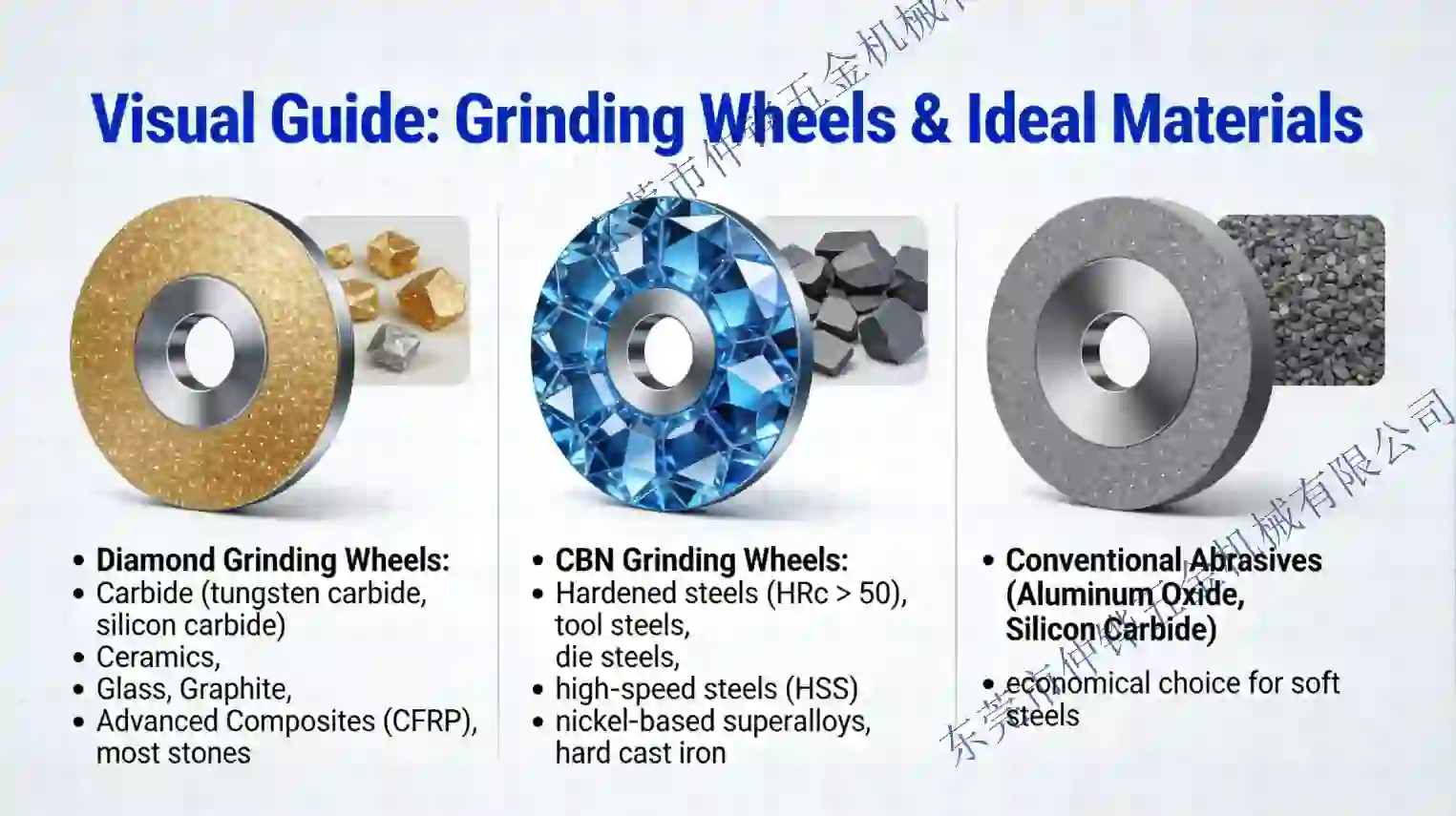
Quick answer: Choose the abrasive by the workpiece, not by the wheel colour. Diamond is for hard, brittle, non-ferrous materials (carbide, ceramics, glass, silicon, composites). CBN is for ferrous metals (hardened steel, HSS, cast iron, superalloys). Aluminium oxide is the economical general-purpose abrasive for carbon and tool steels. Silicon carbide suits non-ferrous, brittle or low-tensile materials such as aluminium, cast iron, ceramics and stone.
The four abrasive families
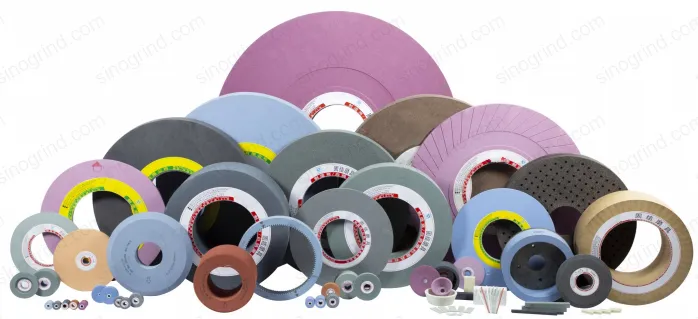
Almost every bonded grinding wheel uses one of four abrasives. The differences are hardness, toughness and chemical reaction with the workpiece — not just price.
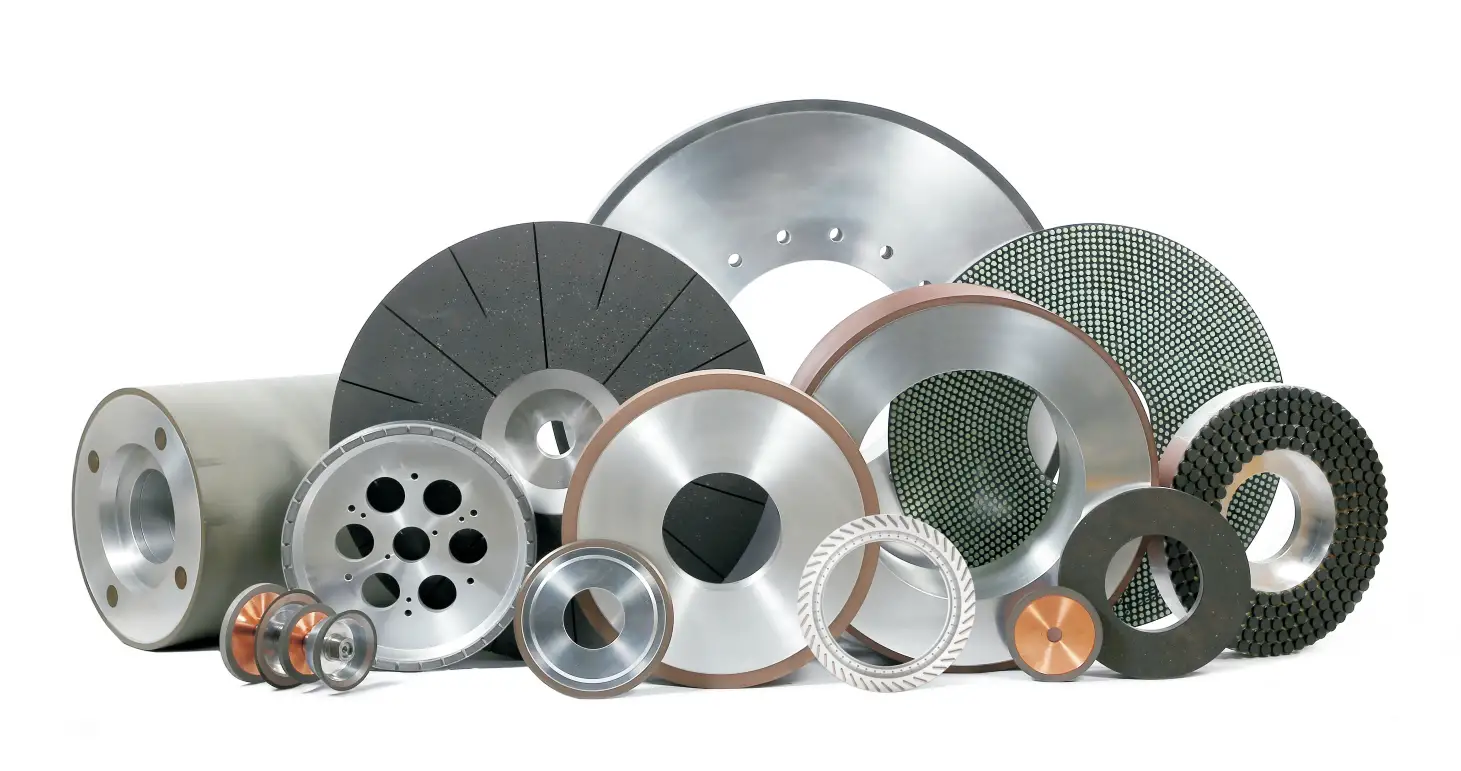
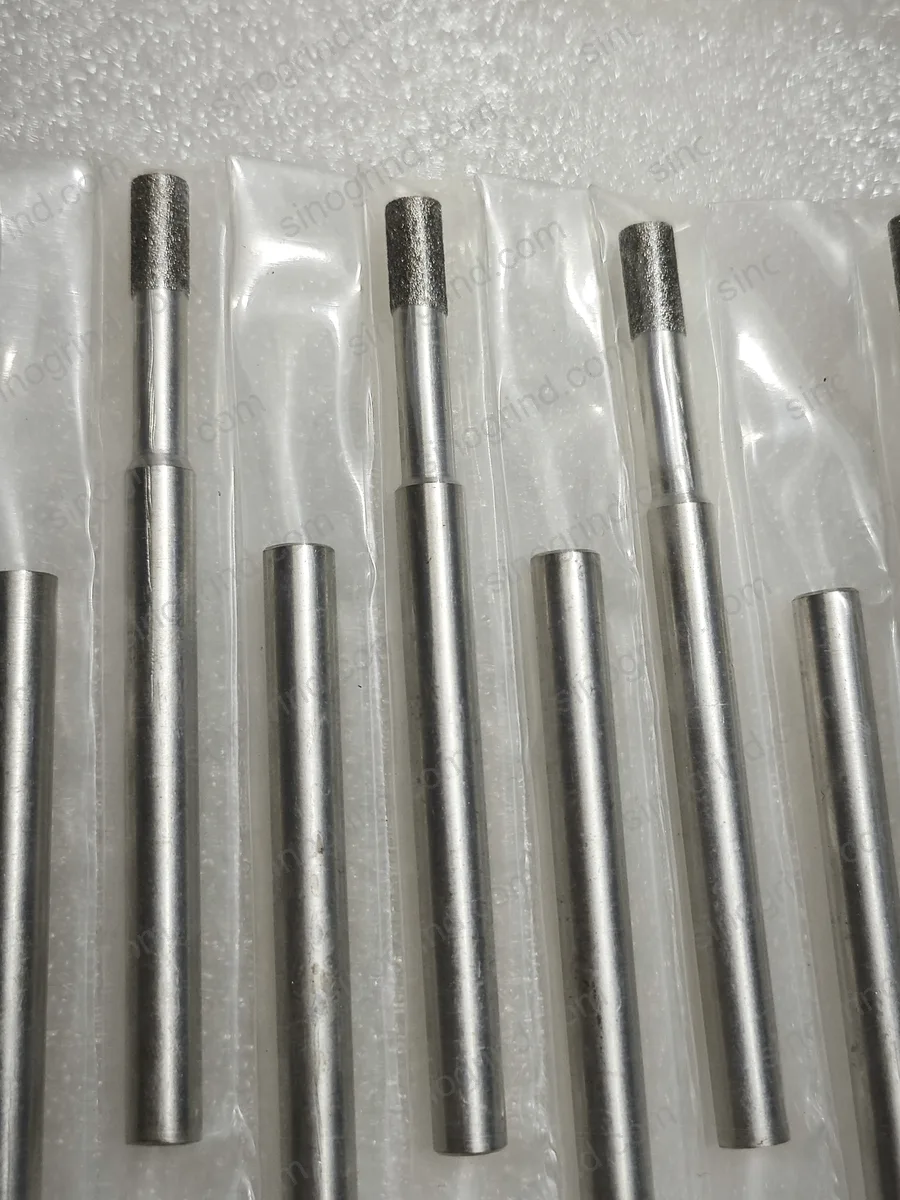
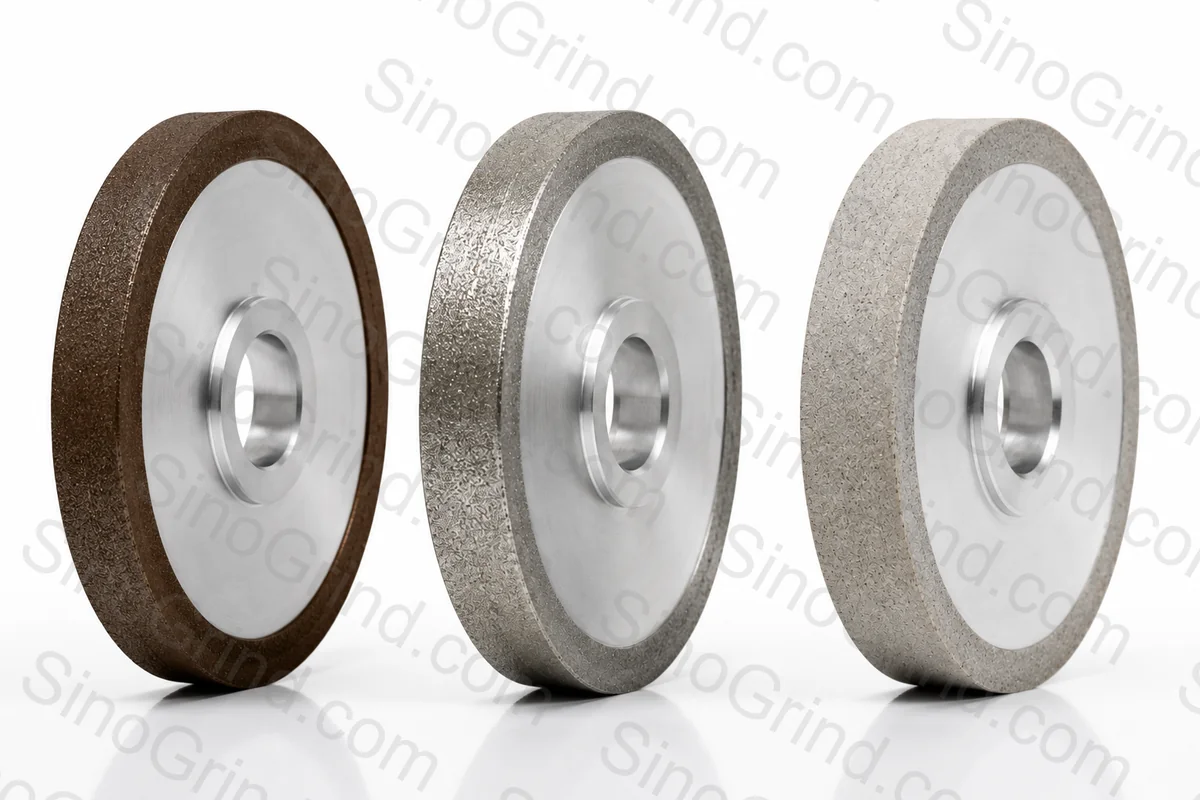
- Diamond is the hardest abrasive. It stays sharp on carbide, ceramics, glass, silicon, sapphire, ferrite, graphite and composites. It must not be used on steel or cast iron: carbon in diamond reacts with iron at grinding temperature, so the wheel wears abnormally fast.
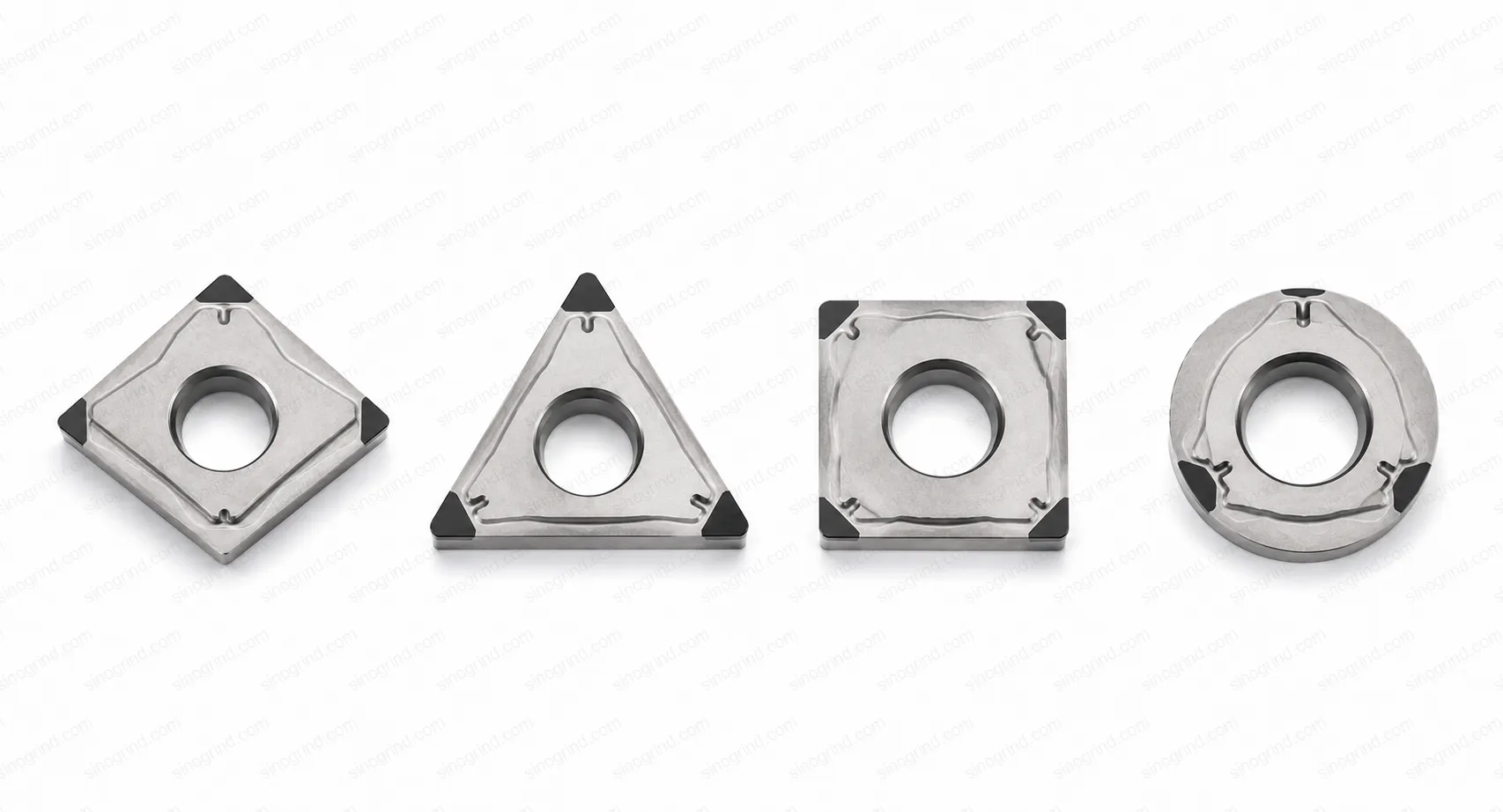
- CBN (cubic boron nitride) is the second-hardest abrasive and is chemically stable against iron. It is the correct choice for hardened steel, HSS, cast iron, bearing steel and many nickel-based superalloys.
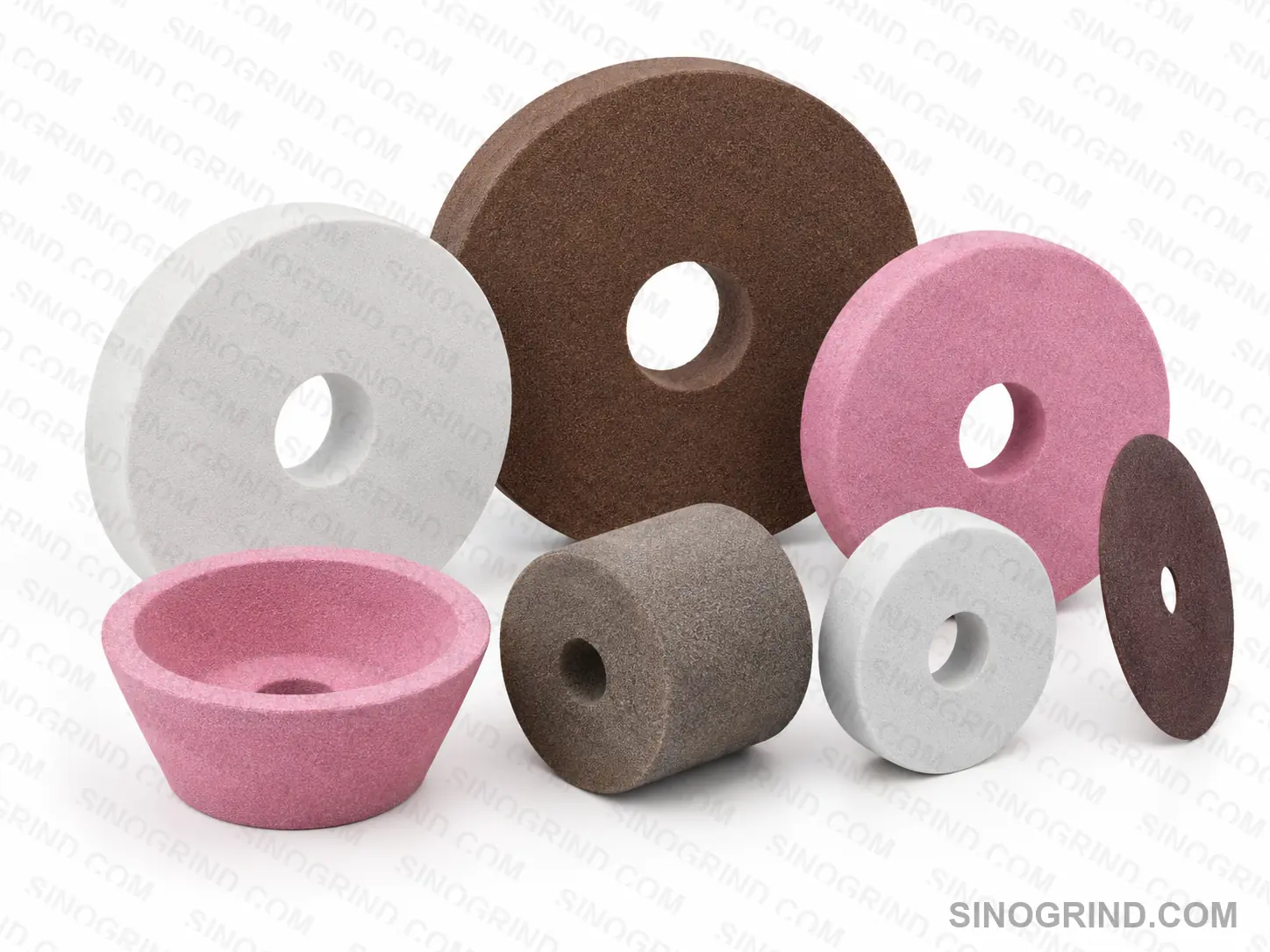
- Aluminium oxide (white, brown, pink, ruby) is a tough, economical abrasive for carbon steel, alloy steel, tool steel and cast iron. It is the default in general workshop grinding.
- Silicon carbide (black and green) is harder and more brittle than aluminium oxide. It is used for aluminium, cast iron, ceramics, glass, stone and other low-tensile or non-ferrous materials, especially where a cool, free cut is needed.
| Abrasive | Relative hardness | Typical workpieces | Avoid | Common bonds | Relative cost |
|---|---|---|---|---|---|
| Diamond | Highest | Carbide, ceramics, glass, silicon, sapphire, CFRP, graphite | Steel, cast iron, nickel alloys | Resin, metal, vitrified, electroplated | High |
| CBN | Very high | Hardened steel, HSS, cast iron, bearing steel, superalloys | Carbide, ceramics, glass | Vitrified, resin, metal, electroplated | High |
| Aluminium oxide | Medium | Carbon steel, alloy steel, tool steel, cast iron | Carbide, glass, ceramics | Vitrified, resin, shellac | Low–medium |
| Silicon carbide | High | Aluminium, cast iron, ceramics, glass, stone, rubber | Steel at high load (chemically unstable) | Vitrified, resin, rubber | Low–medium |
Relative cost is indicative only; wheel size, bond, precision and order quantity dominate the final price.
Selection by workpiece
Use this table as a first filter. The second filter is the bond and the third is grit and concentration — see the bond types guide and the wheel selection tool.
| Workpiece | First choice | Alternative | Reason |
|---|---|---|---|
| Cemented carbide (WC-Co) | Diamond | – | Diamond stays sharp; CBN reacts with cobalt binder |
| Hardened steel >45 HRC | CBN | Aluminium oxide for light work | CBN is chemically stable against iron |
| HSS and tool steel | CBN or aluminium oxide | – | CBN for life and form; AO for cost |
| Cast iron | CBN or silicon carbide | Aluminium oxide | CBN for production; SiC for cost-sensitive work |
| Stainless steel | CBN or white aluminium oxide | – | Avoid loading; use cool cutting and sulphur-free coolant |
| Aluminium and copper alloys | Silicon carbide | Diamond for high-silicon Al | SiC cuts cool; diamond may load |
| Ceramics and glass | Diamond | – | Diamond is the only economical abrasive at this hardness |
| CFRP and composites | Diamond | – | Clean shearing, low delamination |
| Stone and concrete | Diamond | Silicon carbide for soft stone | Diamond segments resist abrasion |
| Rubber and plastics | Silicon carbide | – | Sharp, brittle grain cuts without smearing |
Hardness is not the whole story
Two abrasives can be hard enough for a job and still behave differently. Diamond and CBN are superabrasives: they stay sharp far longer, but they cost more and need the right bond and machine stiffness to deliver that life. Aluminium oxide and silicon carbide are conventional abrasives: they wear faster, self-sharpen more readily and tolerate less rigid machines.
Bond choice changes the same abrasive dramatically. A resin-bond diamond wheel cuts cool and finishes finely; a metal-bond wheel holds form and lasts longer but needs different dressing. Read the resin vs vitrified comparison before fixing the specification.
Common mistakes
- Using diamond on steel because it is the hardest abrasive. The wheel will glaze, burn and wear out; use CBN.
- Using aluminium oxide on carbide. The abrasive is too soft and the wheel will not hold form.
- Choosing a fine grit to fix a finish problem caused by wheel balance or dressing.
- Ignoring coolant: the same wheel can double its life with the correct flow and concentration.
- Buying on price per wheel instead of cost per part; G-ratio and dressing time usually matter more.
How to decide in the shop
- Identify the workpiece material and hardness (HRC, HV or material family).
- Decide the abrasive family from the table above: diamond, CBN, AO or SiC.
- Choose the bond for the operation: resin for finish, metal for form and life, vitrified for free cutting, electroplated for small or complex tools.
- Set grit and concentration from the required finish and stock removal.
- Confirm wheel speed, machine stiffness and coolant before ordering.
- Run a trial and measure G-ratio, Ra and cycle time; adjust one variable at a time.
The boundary rule
Diamond must not be used on ferrous metals. For steel, cast iron and their alloys, use CBN. This single rule prevents most premature wheel failures in mixed workshops.
Boundary rule — when not to use diamond
Diamond is the hardest abrasive and the correct choice for hard, brittle, non-ferrous materials such as cemented carbide, ceramics, glass, silicon, sapphire, ferrite, graphite and composites. It must not be used on ferrous metals — steel, cast iron, and their alloys — because carbon in diamond reacts with iron at grinding temperatures (roughly above 700 °C / 1300 °F). This chemical affinity causes rapid, abnormal diamond wear (graphitisation) and destroys the wheel. For steel, hardened steel, cast iron and other ferrous workpieces, use CBN (cubic boron nitride) instead.