: +86 15874211461


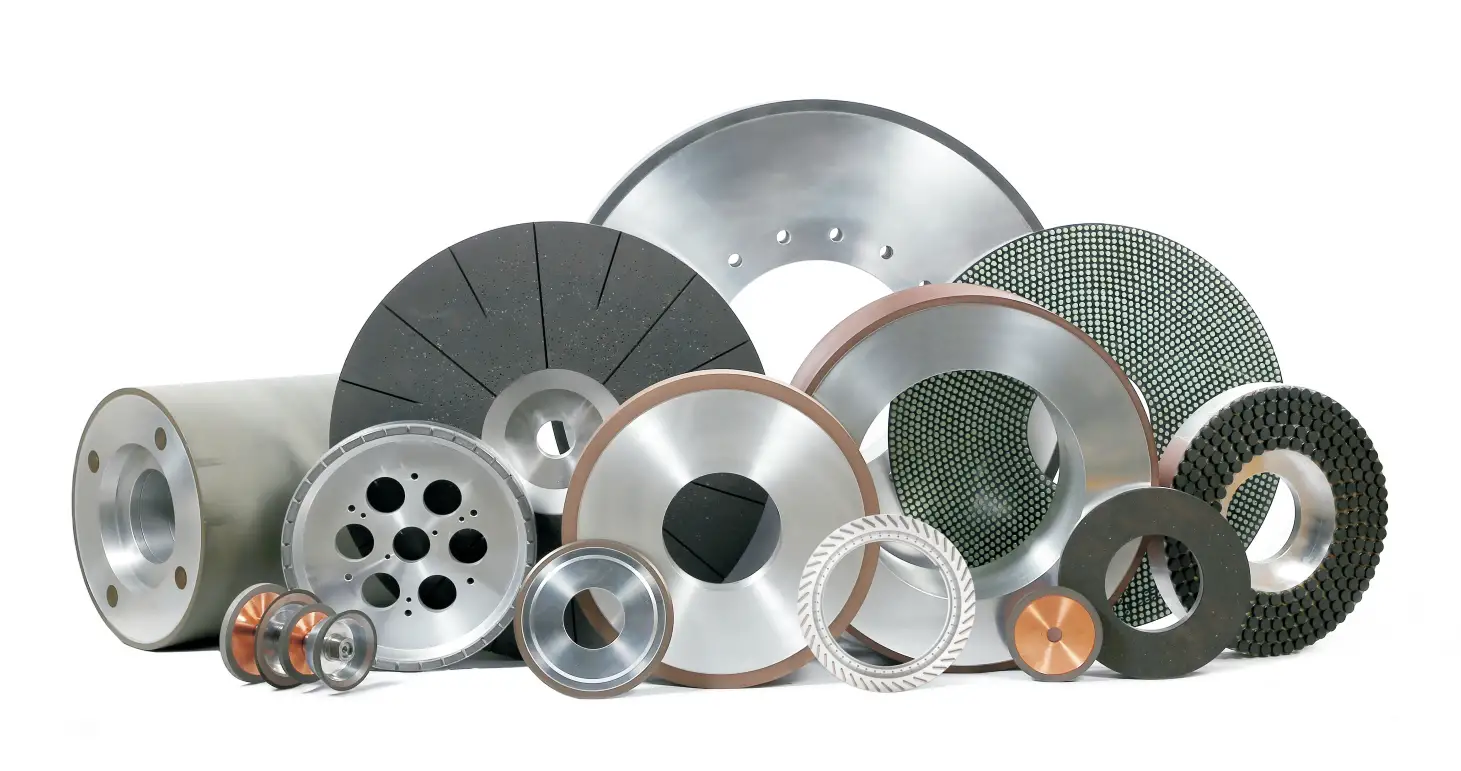
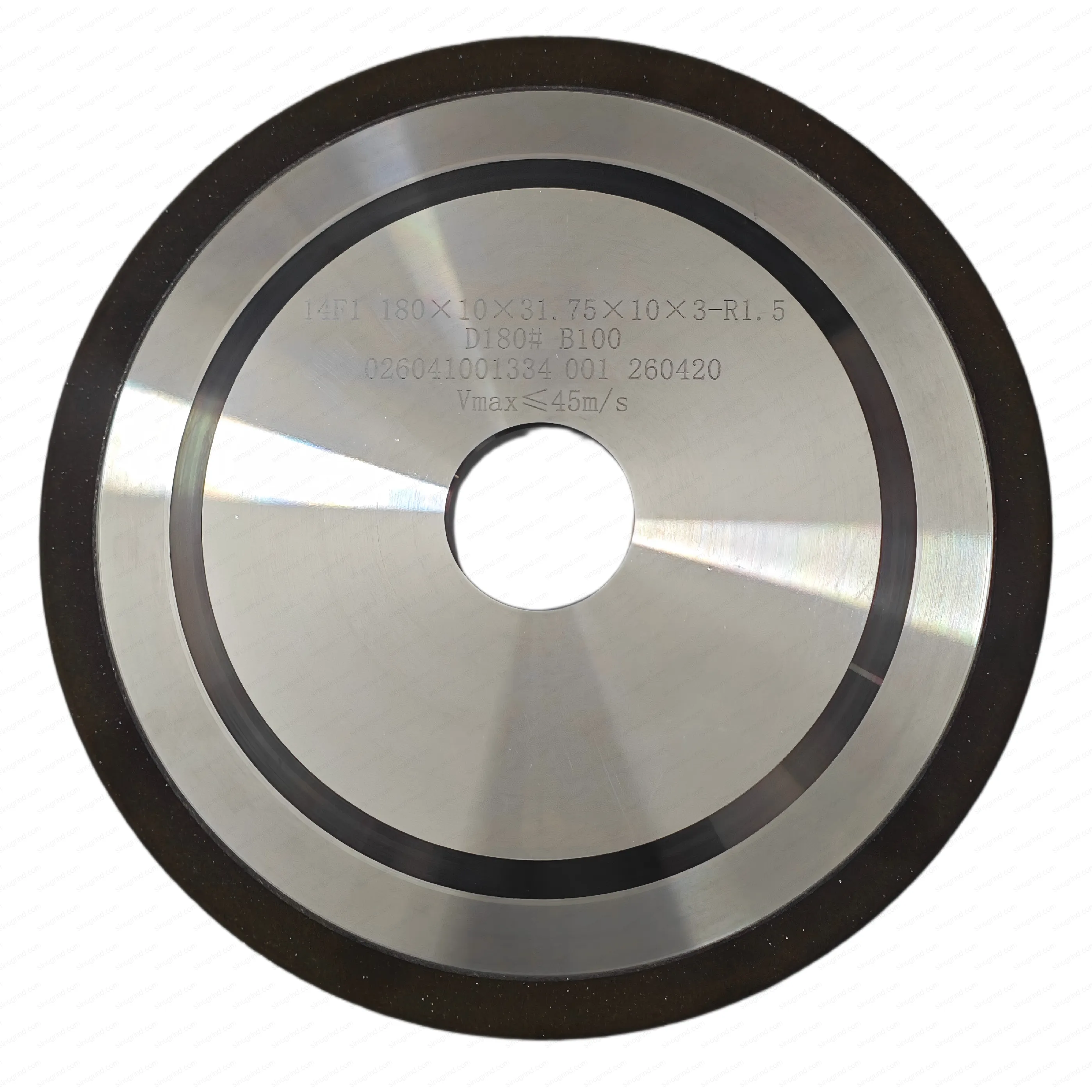
Quick answer: Thermal-spray coatings are hard, thin and bonded to a softer substrate, so finish them with a diamond wheel — usually resin or metal bond at D126–D252 grit, 75–100% concentration — using light passes to avoid coating pull-out.
Related reading: Resin Bond Diamond Grinding Wheel · Diamond Wheel for Carbide Grinding · Diamond Grinding Coolant Guide.
Why diamond finishes thermal-spray coatings
Coatings such as WC-Co, WC-CrC, alumina-titania and HVOF carbides are much harder than conventional abrasives can handle efficiently. Diamond removes them cleanly, and because the coating is thin and bonded to a softer substrate, the process must be gentle enough not to pull the coating off or generate through-thickness cracks.
Which bond and grit should I use?
| Coating | Bond | Grit (FEPA D) | Concentration |
|---|---|---|---|
| WC-Co (HVOF/HVAF) | Resin / Metal | D126–D181 | 75–100% |
| Ceramic (Al2O3-TiO2) | Resin | D91–D151 | 75–100% |
| CrC-NiCr | Resin / Metal | D126–D181 | 75–100% |
| Fine finish / seal | Resin | D46–D91 | 75% |
| Superfinish | Vitrified / Resin | D15–D46 | 50–75% |
Resin bond dominates because it cuts cool and can be dressed to keep a sharp, free-cutting face on thin coatings.
Avoiding coating damage
- Light infeed and multiple passes — never force the cut.
- Sharp, freshly dressed wheel — a dull wheel pulls the coating.
- Flood coolant to control heat and avoid thermal cracking.
- Do not grind through the coating into the substrate.
- Check for pull-out and porosity as part of quality control.
Where is it used?
- Aerospace and turbine components.
- Hydraulic and pump parts with wear coatings.
- Rolls and cylinders finished after HVOF.
- Valve and seal faces in WC-Co.
Which specification should I choose?
| Parameter | Typical value |
|---|---|
| Bond | Resin (cool cut) / Metal |
| Grit (FEPA D) | D46–D252 |
| Concentration | 75–100% |
| Depth of cut | 0.005–0.02 mm |
| Coolant | Flood |
| Priority | No pull-out, no through-cracks |
Coatings are thin; gentle passes protect adhesion and integrity.
Grinding a coating is not grinding a solid
A thermally sprayed coating is a stack of flattened droplets with pores and oxide stringers between them. It is hard, but it is not homogeneous, and it is bonded to a substrate that is usually much softer. A wheel that is too coarse or too aggressive will pull whole patches of coating out of the surface instead of cutting them flat.
The finishing strategy is therefore fine grit, light pressure and plenty of coolant, with enough stock left for the finishing wheel to remove the damage from the roughing pass. Porosity that is opened by grinding can also trap coolant, so cleaning between steps matters.
How do I set up the job?
- Check the coating. Know the coating type, thickness and porosity; WC-Co, alumina and chrome oxide behave very differently under the wheel.
- Leave finishing stock. Rough grinding should leave 0.05–0.15 mm for the finishing wheel, depending on coating thickness.
- Choose a fine, free-cutting wheel. Resin or metal bond, D126–D252 for roughing, finer for the finish; avoid a hard bond that pulls the coating.
- Grind wet. Flood coolant from the first contact; the substrate conducts heat away and the coating does not.
- Control pressure. Light infeed and a steady table speed; dwelling in one spot overheats the bond and the coating.
- Inspect for pull-out. Look for pits and torn patches before polishing; they cannot be blended out later.
How do I fix common problems?
| Symptom | Most likely cause | What to change |
|---|---|---|
| Coating pulled out in patches | Too coarse a wheel or too much infeed | Finer grit, lighter pass, more coolant |
| Porous, smeared surface | Wheel loading and heat | Dress the wheel, increase flow, reduce speed |
| Coating cracks at the edge | Substrate deflection or thermal shock | Support the part, reduce depth, keep coolant continuous |
| Substrate exposed in spots | Too little stock control | Measure the coating before grinding and set a stock allowance |
| Poor finish after polishing | Damage left by the grinding step | Add an intermediate grit instead of polishing longer |
Pull-out is the signature failure of coating grinding - it starts with too much force.
What should an RFQ include?
- Coating: chemistry, thickness, porosity and spraying method.
- Substrate: material and stiffness, which controls deflection.
- Wheel: bond, grit and shape for the geometry.
- Stock: as-sprayed thickness and the final dimension.
- Machine: coolant supply and the table speed range.
- Acceptance: porosity, finish and any non-destructive test.
Browse the matching Diamond & CBN Grinding Wheels range for this application.
Coating grinding is a low-stock operation: the value is in the coating, and every extra pass risks it. The cheapest wheel is rarely the best choice because a pull-out scraps the whole part, not just the finish.
Sub-table 1 — by material family
| Material | Typical operation | Recommended bond | Grit (FEPA D) | Concentration | Typical Ra |
|---|---|---|---|---|---|
| Cemented carbide (WC-Co) | Cutter & tool grinding | Resin / Metal | D91–D181 | 100–150% | 0.1–0.4 µm |
| PCD / PCBN | Edge prep, peripheral | Metal / Vitrified | D46–D91 | 125–150% | 0.05–0.2 µm |
| Advanced ceramics (Al₂O₃, ZrO₂, Si₃N₄) | Surface / form | Vitrified / Resin | D64–D151 | 75–125% | 0.2–0.6 µm |
| Optical / flat glass, quartz | Edge, bevel, CNC | Metal / Resin | D64–D126 | 75–125% | 0.05–0.3 µm |
| Semiconductor (Si, SiC, sapphire) | Back-grind, dicing | Electroplated / Resin | D126–D400+ | 100–200% | <0.02 µm (fine) |
| Ferrite / soft magnetic | Surface / form | Resin / Metal | D91–D181 | 100–150% | 0.2–0.8 µm |
| Graphite / carbon | Form / cut-off | Electroplated / Metal | D181–D301 | 75–125% | — |
| CFRP / composites | Cut, slot | Electroplated | D252–D400 | — | — |
| Thermal-spray coatings | Grind, polish | Resin / Metal | D126–D252 | 75–100% | 0.1–0.4 µm |
| Stone / engineered quartz | Edge, calibrate | Metal / Electroplated | D181–D400 | — | — |
| Zirconia (dental / medical) | Finish, polish | Resin / Vitrified | D46–D126 | 75–100% | 0.1–0.3 µm |
| Steel / cast iron (ferrous) | — | Not diamond — use CBN | — | — | — |
Representative values for planning; confirm final grit, concentration and bond with a grinding trial on your machine.
Boundary rule — when not to use diamond
Diamond is the hardest abrasive and the correct choice for hard, brittle, non-ferrous materials such as cemented carbide, ceramics, glass, silicon, sapphire, ferrite, graphite and composites. It must not be used on ferrous metals — steel, cast iron, and their alloys — because carbon in diamond reacts with iron at grinding temperatures (roughly above 700 °C / 1300 °F). This chemical affinity causes rapid, abnormal diamond wear (graphitisation) and destroys the wheel. For steel, hardened steel, cast iron and other ferrous workpieces, use CBN (cubic boron nitride) instead.